The organization’s report on greenhouse gas emissions and absorption
The organization recognizes the importance of addressing climate change and is committed to reducing its environmental impacts through effective greenhouse gas (GHG) management. This report presents the assessment of greenhouse gas emissions and carbon sequestration activities within the organization. The findings provide essential information for evaluating the organization’s carbon footprint, identifying emission reduction opportunities, and supporting the development of sustainable strategies toward a low-carbon future. Tha date for report is on June 19th 2025 and the time limit for follow-up action between October 2023 to September 2024 for 1 year. Following the data as table below;
All activities of the organization
Facility
Activities of the organization (Facility)
Scope 1
Scope 2
Scope 3
Office buildings and School building
The burning of diesel fuel from the organization’s vehicles
Electricity consumption
–
The burning of gasoline from the organization’s vehicles
Summary of Greenhouse gas emissions
Sources of greenhouse gas emissions
Greenhouse gas emissions (Ton Co2e)
Total greenhouse gas (Ton Co2e)
Co2
Fossil CH4
CH4
N2O
SF6
NF3
HFCs
PFCs
Scope 1
1The burning of diesel fuel from the organization’s vehicles
14.83
0.00
–
0.21
–
–
–
–
15.06
2The burning of gasoline from the organization’s vehicles
20.71
0.01
–
0.25
–
–
–
–
21.26
Scope 2
1Electricity consumption
–
–
–
–
–
–
–
–
1,224.78
Summary of Greenhouse gas emissions
Sources of greenhouse gas
Amount
Unit
Type 1
36.32
Ton Co2e
Type 2
1,224.78
Ton Co2e
Type 3
–
Ton Co2e
Total (Type 1+2)
1,261.1
Ton Co2e
Total (Type 1+2+3)
1,261.1
Ton Co2e
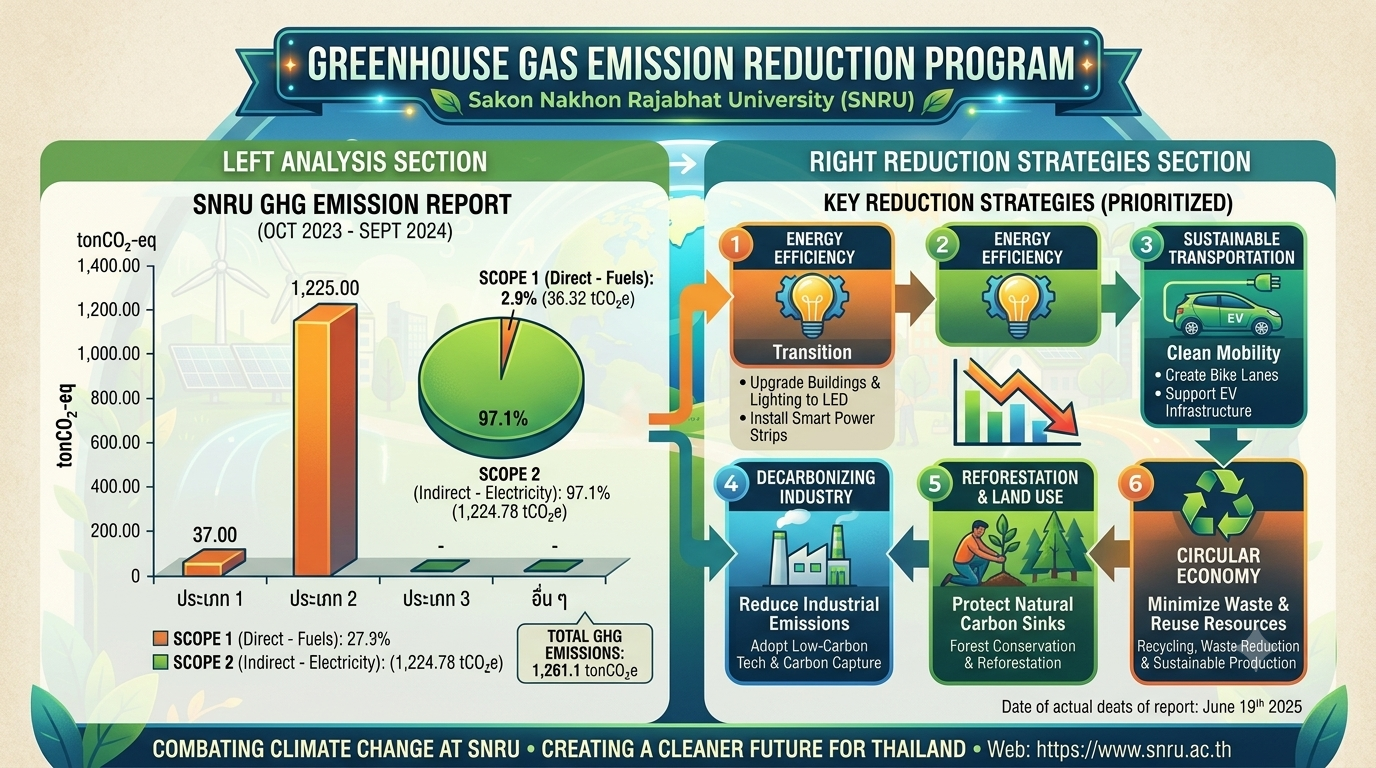
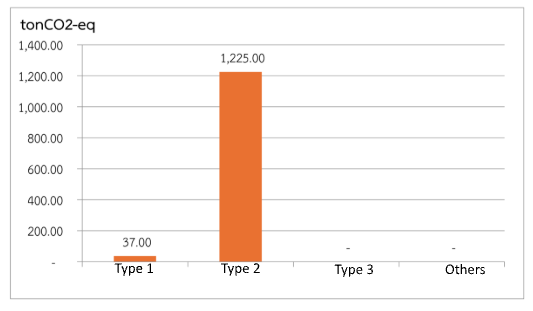
The results indicate that Category 2 emissions were the predominant source of greenhouse gas emissions, amounting to 1,225.00 tonCO₂-eq and accounting for approximately 97.1% of the total reported emissions. In contrast, Category 1 emissions contributed only 37.00 tonCO₂-eq (2.9%). No emissions were reported under Category 3 or other categories. These findings demonstrate that indirect emissions associated with purchased electricity are the principal contributor to the organization’s carbon footprint. Consequently, enhancing energy efficiency and expanding the utilization of renewable energy sources should be prioritized to achieve substantial reductions in greenhouse gas emissions.
Sakon Nakhon Rajabhat University (SNRU) demonstrates a structured, significant impact on the United Nations Sustainable Development Goals (SDGs) through its diverse portfolio of education, research, and community outreach programs. As documented in the university’s institutional reporting and performance showcases, the curriculum and academic initiatives directly support at least 6 to 7 distinct SDGs: This comprehensive […]
Infographic provided figure, here is a comprehensive description of the personnel data on campus as of 23 June 2025: Campus Personnel Overview The institution houses a total workforce of 926 people. This workforce is structurally divided into two primary divisions: Detailed Analysis of the Academic Line Within the Academic Line (435 people), personnel are further […]
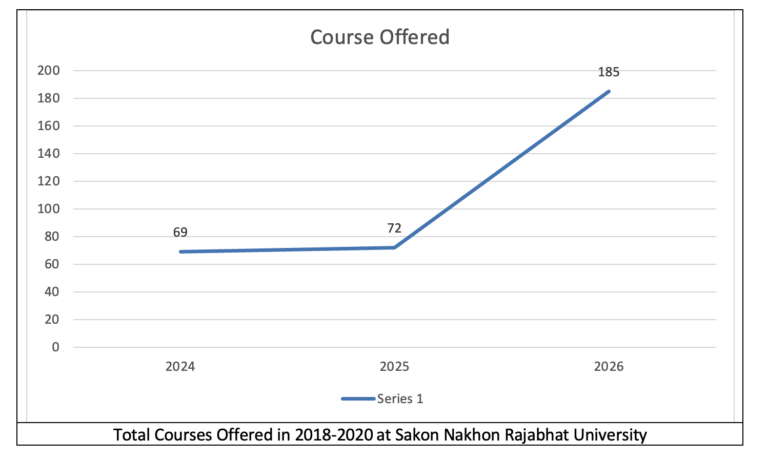
Description: ## 1. Objective This executive summary outlines the scale, proportion, and strategic alignment of sustainability-related education at Sakon Nakhon Rajabhat University for the current academic year. These metrics serve as the official data baseline for the UI GreenMetric World University Rankings (Criterion 6: Education and Research). ## 2. Key Performance Indicators (KPIs) ## 3. […]