Integrated Impact of Waste Management Programs on the Sustainable Development Goals (SDGs)
While the university’s baseline framework originates from SDG 12: Responsible Consumption and Production, the operational practices executed by the Buildings and Vehicles Ground Division demonstrate a powerful, systemic impact that cuts across multiple global goals.
♻️ SDG 12: Responsible Consumption and Production (Core Focus)
The fundamental driver of this initiative is the institutionalization of sustainable consumption behavior across the campus community.
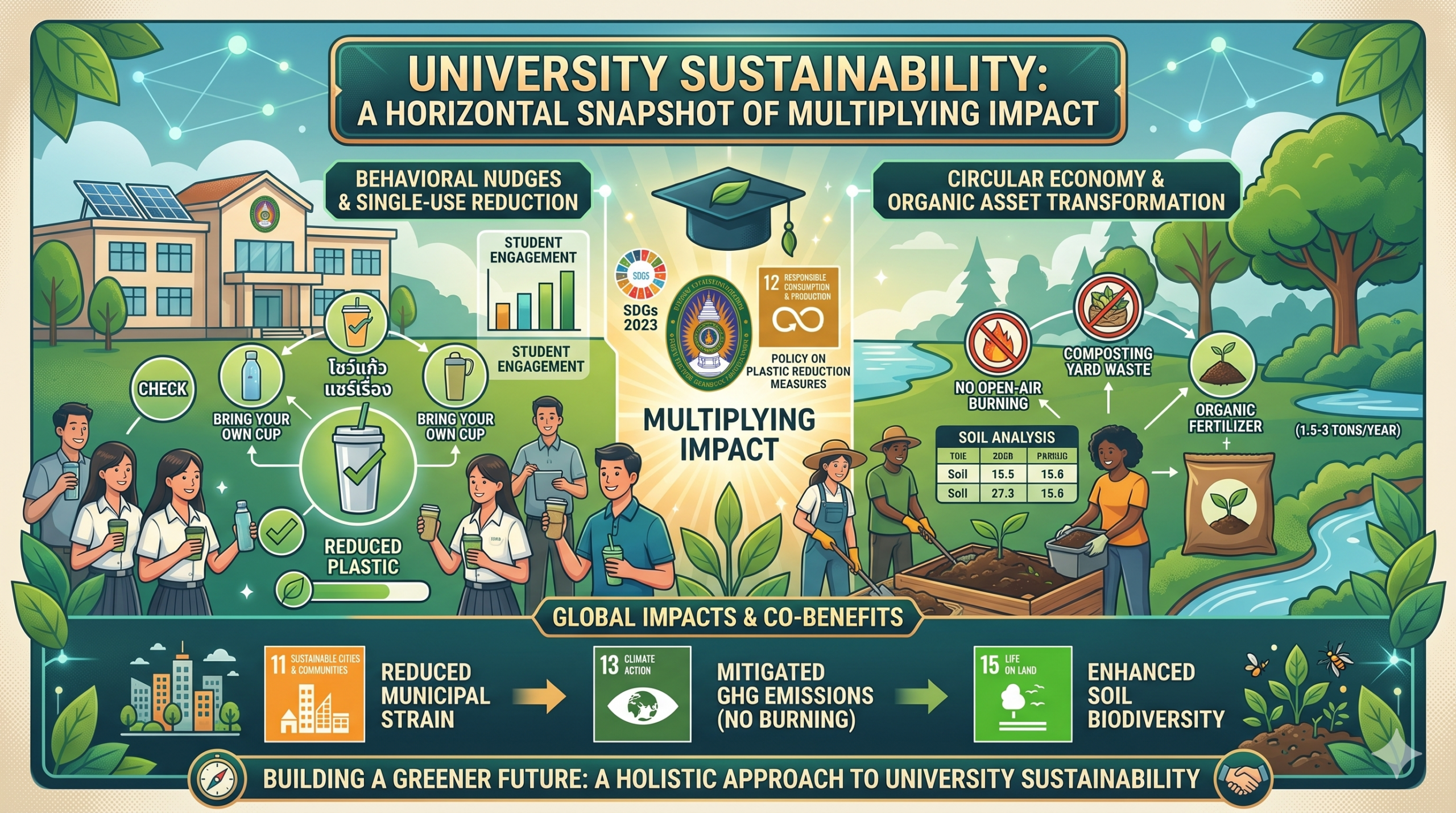
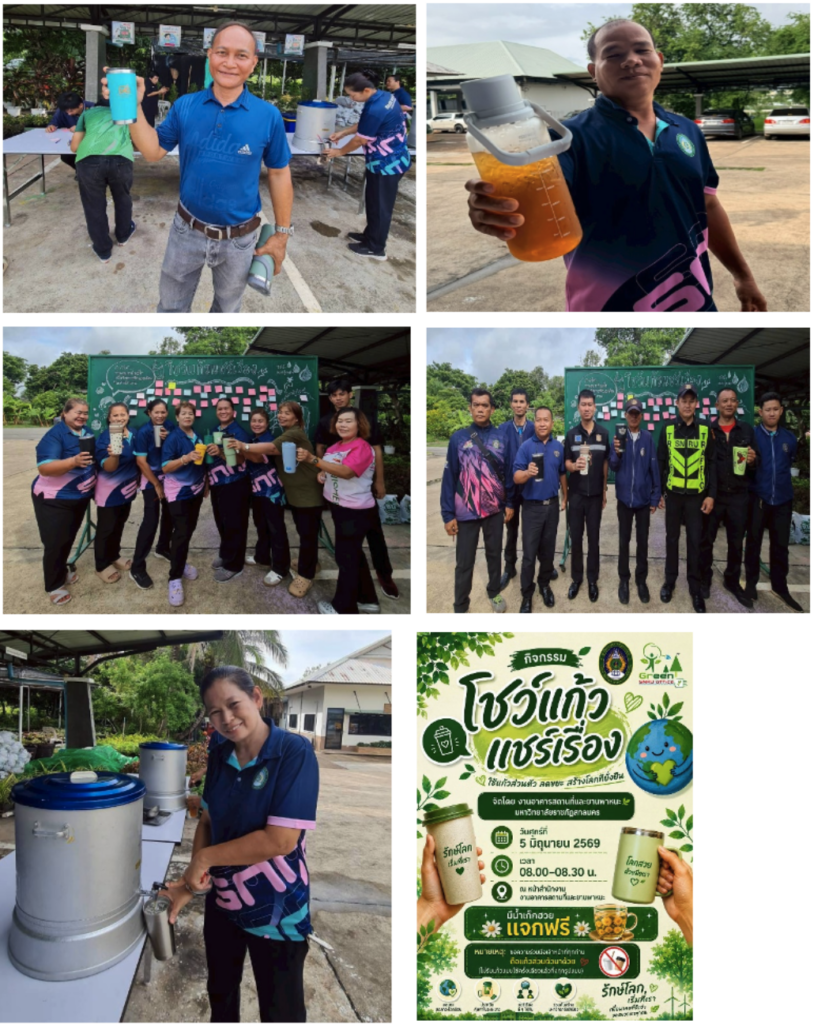
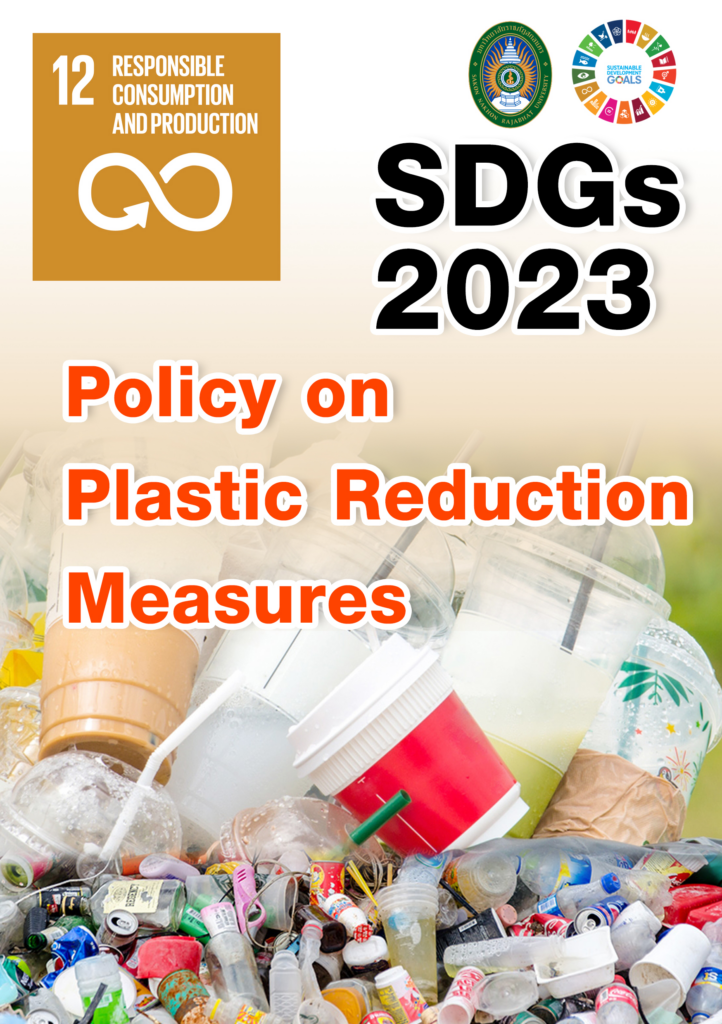
Source Reduction of Single-Use Plastics: Guided by the Policy on Plastic Reduction Measures, the university implements high-engagement behavioral nudges. Programs like the “โชว์แก้ว แชร์เรื่อง” (Show Your Cup, Share Your Story) campaign actively incentivize students and staff to substitute single-use plastic cups and straws with reusable tumblers and flasks.
Resource Optimization and Circular Economy: The institution shifts its administrative model away from a linear “take-make-dispose” mindset, modeling circular economic loops by intercepting waste streams before they exit the campus boundary.
🍃 SDG 13: Climate Action
The waste management strategies directly eliminate significant volumes of greenhouse gas (GHG) emissions through climate-smart alternatives:
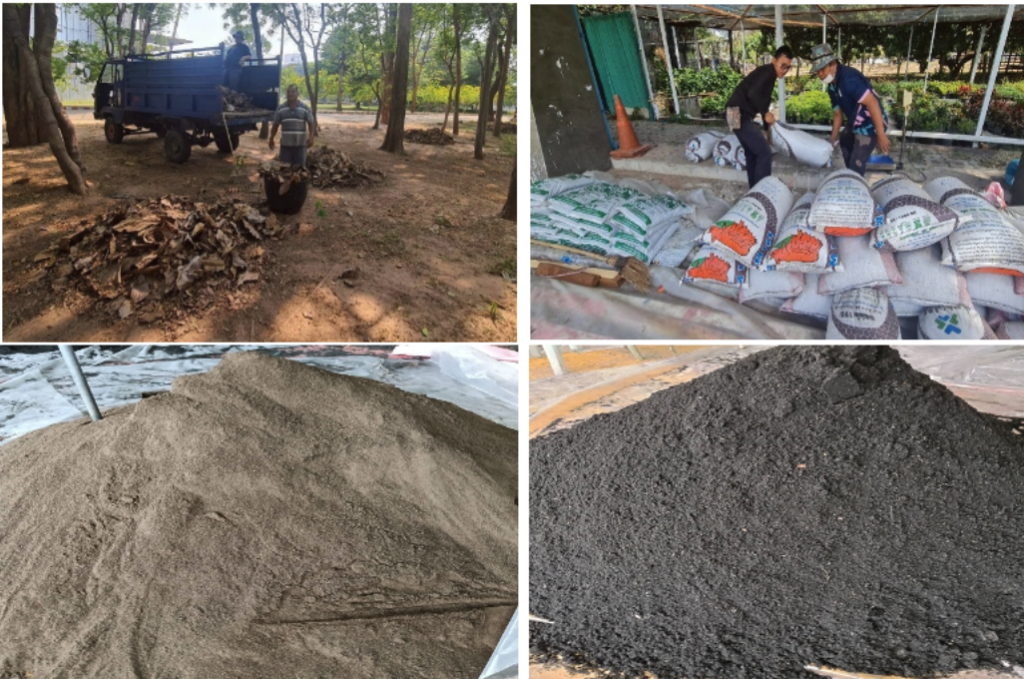
Mitigation of Open-Air Burning: By establishing a dedicated infrastructure to gather yard waste and leaf litter, the university replaces traditional open-air burning—a common source of localized carbon dioxide ($CO_2$), carbon monoxide ($CO$), and hazardous $PM_{2.5}$ particulate matter—with controlled biological decomposition.
Reduction of Lifecycle Carbon Footprint: Minimizing single-use plastic intake lowers the indirect carbon footprint associated with the municipal collection, transportation, hauling, and final incineration or landfilling of plastic polymers.
🏡 SDG 11: Sustainable Cities and Communities
The campus operates as a micro-ecosystem that actively relieves the environmental and infrastructural pressure on the broader municipality:
Alleviating Municipal Strain: The university’s solid waste volume represents a notable demand on municipal services. De-escalating plastic waste at the source and internally recycling 100% of organic landscape biowaste significantly offsets the localized burden on municipal landfills and waste hauling networks.
Healthy Institutional Environment: Systemic waste management guarantees a hygienic, aesthetically welcoming, and ecologically sound campus environment for thousands of internal stakeholders, creating a scalable model for a sustainable local community.
🌳 SDG 15: Life on Land
The transformation of organic waste assets directly feeds back into the enhancement of terrestrial biology on campus:
Production of Organic Soil Amendments: The low-energy composting process converts yard waste into 1.5 to 3 tons of nutrient-rich organic fertilizer annually.
Soil Regeneration & Biodiversity Support: This organic compost is continuously re-applied to the university’s grounds and landscaping. This practice replaces chemical fertilizers, enriches soil microbial life, enhances topsoil structure, preserves moisture, and builds resilient local flora ecosystems.
🤝 SDG 17: Partnerships for the Goals
The overall implementation models an exemplary structure of multi-stakeholder governance and internal partnership:
Cross-Functional Institutional Mobilization: The field execution demonstrates a cohesive alignment where executive policy intersects with ground-level action. It bridges university administrators, academic representatives, support staff (including ground maintenance teams, security services, and janitorial personnel), and the student body. This collaborative network solidifies institutional solidarity behind shared environmental objectives (Green Office framework).
Sakon Nakhon Rajabhat University (SNRU) demonstrates a structured, significant impact on the United Nations Sustainable Development Goals (SDGs) through its diverse portfolio of education, research, and community outreach programs. As documented in the university’s institutional reporting and performance showcases, the curriculum and academic initiatives directly support at least 6 to 7 distinct SDGs: This comprehensive […]
Infographic provided figure, here is a comprehensive description of the personnel data on campus as of 23 June 2025: Campus Personnel Overview The institution houses a total workforce of 926 people. This workforce is structurally divided into two primary divisions: Detailed Analysis of the Academic Line Within the Academic Line (435 people), personnel are further […]
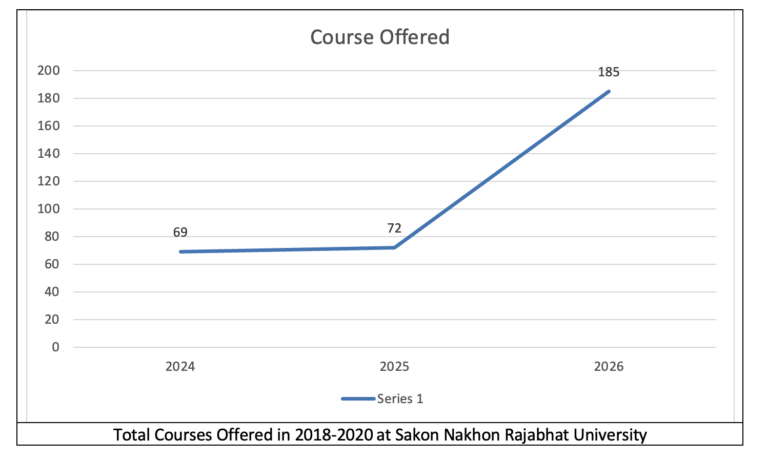
Description: ## 1. Objective This executive summary outlines the scale, proportion, and strategic alignment of sustainability-related education at Sakon Nakhon Rajabhat University for the current academic year. These metrics serve as the official data baseline for the UI GreenMetric World University Rankings (Criterion 6: Education and Research). ## 2. Key Performance Indicators (KPIs) ## 3. […]