Integrated Impact of Water Management Programs on the SDGs
The university’s water management initiatives are driven by a holistic framework. While centered around clean water infrastructure, the program generates cross-cutting impacts that simultaneously support four distinct Sustainable Development Goals (SDGs):
[ SDG 11: Cities ] [ SDG 12: Consumption ] [ SDG 15: Life on Land ]
1. SDG 6: Clean Water and Sanitation (Core Focus)
The visible evidence directly supports institutional compliance with freshwater preservation and sanitation standards:
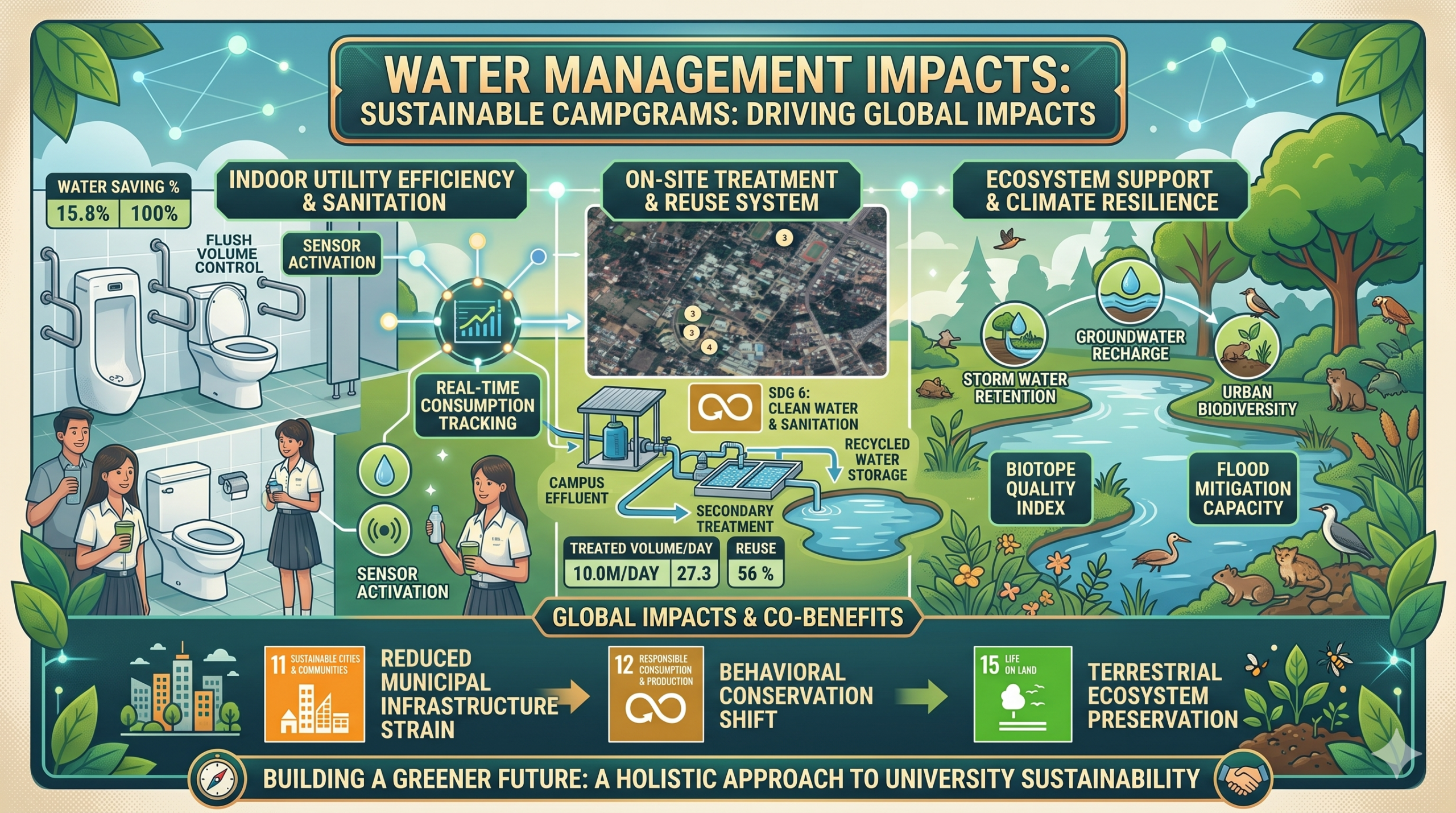
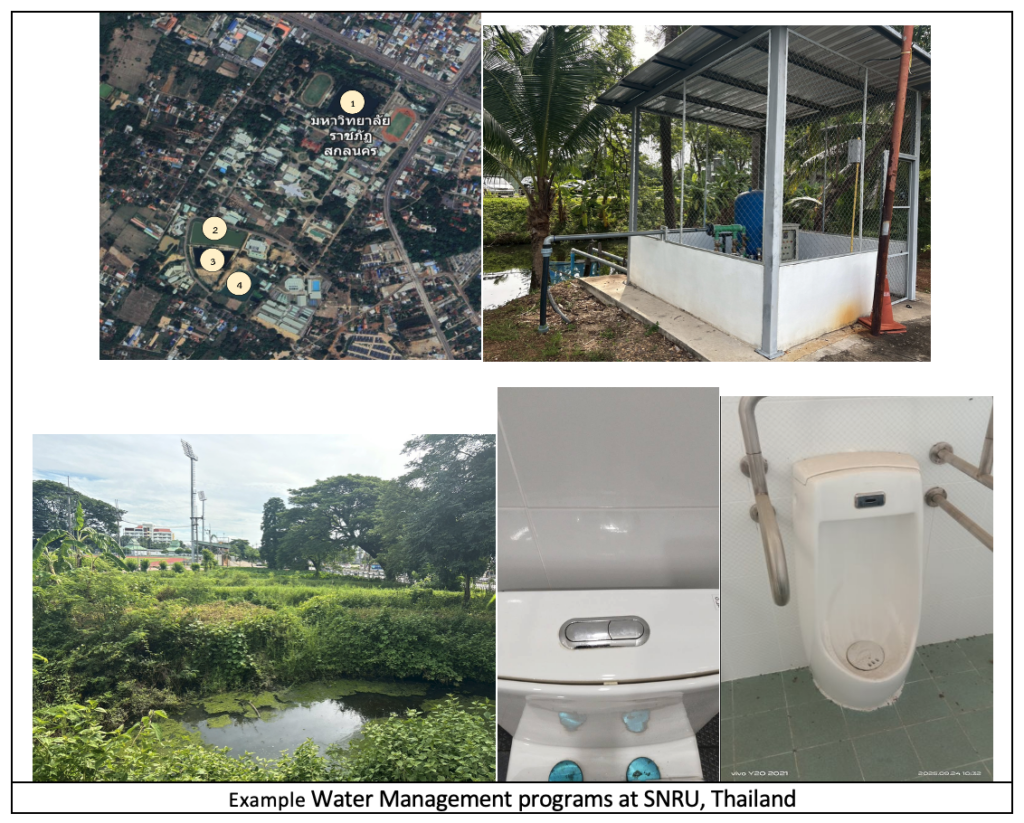
Water-Use Efficiency (Target 6.4): The integration of indoor water-saving technologies, such as dual-flush toilet systems and automated sensor-driven urinals, drastically reduces daily freshwater consumption across academic and administrative buildings by preventing manual valve negligence.
Wastewater Treatment and Recycling (Target 6.3): The dedicated station housing a pumping and aeration system signifies systematic processing (Secondary Treatment) of campus wastewater. This ensures that discharged water meets environmental safety standards and can be safely channeled into campus retention ponds for landscaping reuse.
2. SDG 11: Sustainable Cities and Communities
The operational footprint establishes the campus as a sustainable micro-city that actively limits its external environmental impact:
Reducing Municipal Infrastructure Strain (Target 11.6): The localized mapping of water management zones (Sites 1–4), which occupies $0.372\%$ of the total university area, allows the institution to manage stormwater and treat wastewater internally. This directly relieves the hydraulic and treatment burdens placed on the municipal grid of Sakon Nakhon.
Natural Flood Mitigation: The campus retention ponds and wetlands shown in the photographs function as natural basins (retention zones), minimizing urban runoff and mitigating flash flood risks for both the campus and surrounding local communities.
3. SDG 12: Responsible Consumption and Production
The integration of automated and manual conservation mechanisms reshapes resource reliance:
Sustainable Resource Management (Target 12.2): By replacing high-volume, traditional plumbing fixtures with regulated, sensor-activated, and dual-flush hardware, the university actively governs stakeholder consumption behavior. This framework transforms everyday facility usage into a practical model of conscious resource conservation, eliminating unnecessary water waste.
4. SDG 15: Life on Land
The responsible return of treated water to open campus grounds supports local terrestrial biology:
Freshwater Ecosystem Preservation (Target 15.1): The preservation of open wetlands and natural ponds within campus parameters—maintained by properly treated effluent—sustains soil moisture levels, prevents topsoil degradation, and serves as a vital biotope that supports local flora and small wildlife, maintaining urban biodiversity.
Strategic Summary for Reviewers
Primary SDG Driver: SDG 6 (Clean Water and Sanitation)
Co-Benefit/Secondary SDGs: SDG 11 (Sustainable Communities), SDG 12 (Responsible Consumption), and SDG 15 (Life on Land)
Core Narrative: This program showcases how upgrading on-site sanitary hardware and mapping water-treatment zones can simultaneously achieve indoor utility efficiency, regional municipal relief, and terrestrial ecosystem preservation.
Sakon Nakhon Rajabhat University (SNRU) demonstrates a structured, significant impact on the United Nations Sustainable Development Goals (SDGs) through its diverse portfolio of education, research, and community outreach programs. As documented in the university’s institutional reporting and performance showcases, the curriculum and academic initiatives directly support at least 6 to 7 distinct SDGs: This comprehensive […]
Integrated Impact of Waste Management Programs on the Sustainable Development Goals (SDGs) While the university’s baseline framework originates from SDG 12: Responsible Consumption and Production, the operational practices executed by the Buildings and Vehicles Ground Division demonstrate a powerful, systemic impact that cuts across multiple global goals. ♻️ SDG 12: Responsible Consumption and Production (Core […]