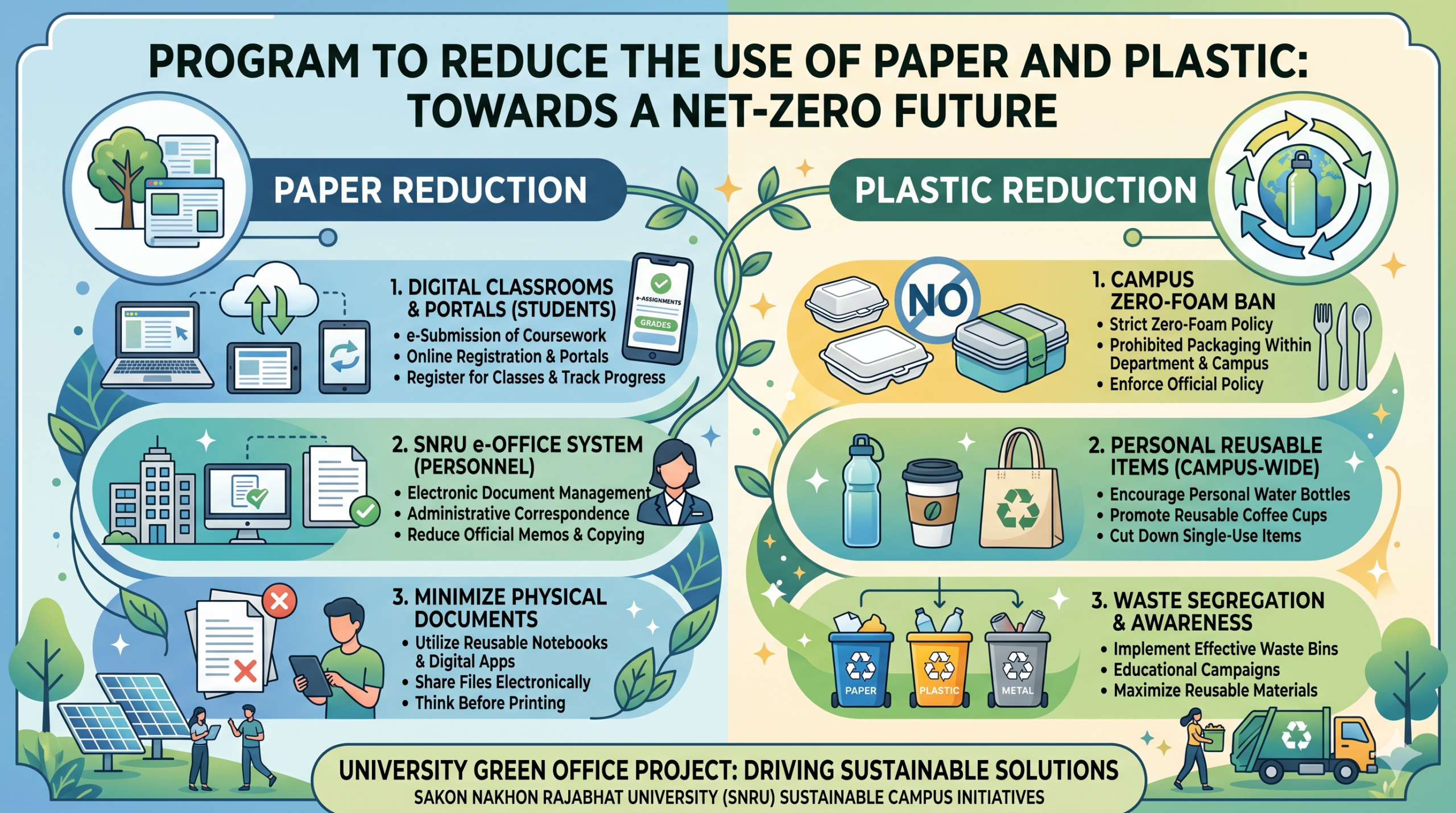
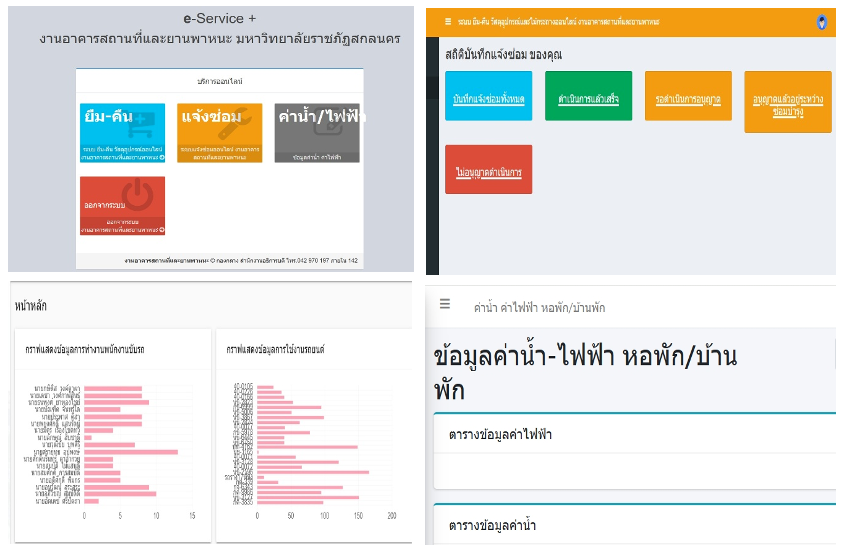
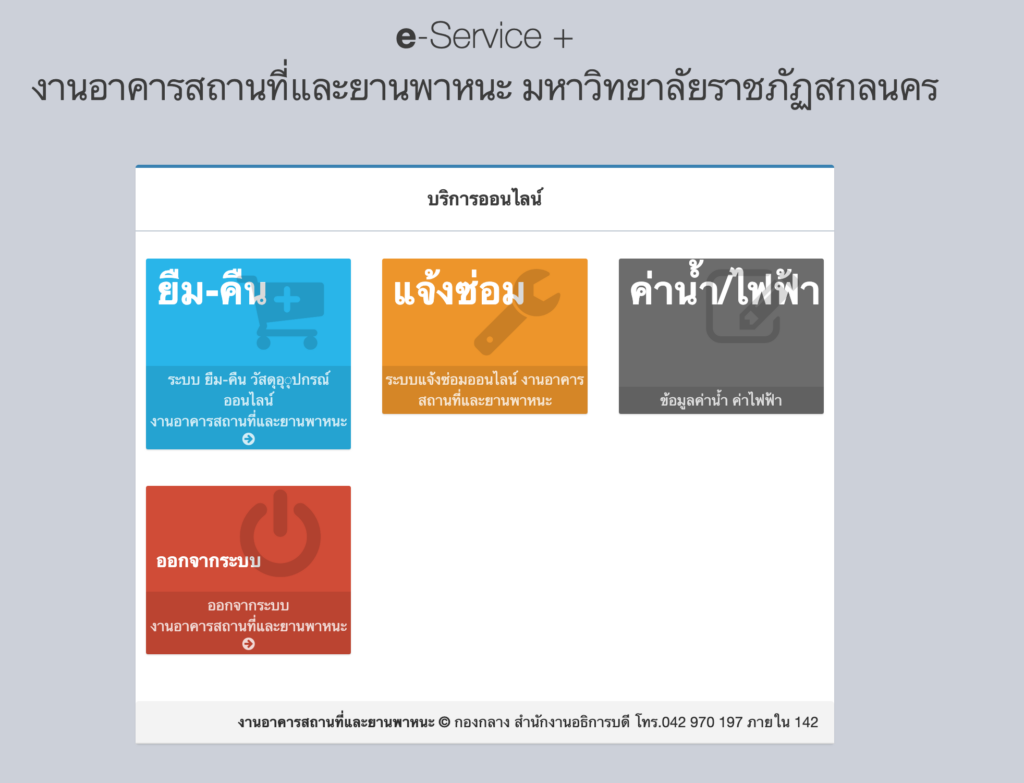
The Building, Grounds, and Vehicles Division has implemented the Green Office Project for the fiscal year 2026. This initiative aims to promote and encourage personnel within the division to manage office waste and refuse in the most environmentally friendly manner possible. As part of these efforts, the division has carried out operations to utilize or recycle waste, which include:
Sakon Nakhon Rajabhat University (SNRU) Sustainable Campus and Green Office Initiatives
Overview
The Buildings, Grounds, and Vehicles Division at Sakon Nakhon Rajabhat University (SNRU) is spearheading the Green Office Project. This strategic initiative actively promotes and campaigns for all staff to manage office waste and refuse in the most environmentally responsible manner. In alignment with the university’s overarching paperless policy and sustainability guidelines, SNRU has successfully adopted a variety of digital ecosystems to minimize carbon footprints and maximize operational efficiency.
The 3R Program Framework
1) Reduce (Think Before You Use & Digital Transformation)
SNRU campaigns heavily for personnel and students to cut down consumption and prevent waste generation at the source. The cornerstone of this pillar is the transition toward a Paperless Campus through specialized online management systems:
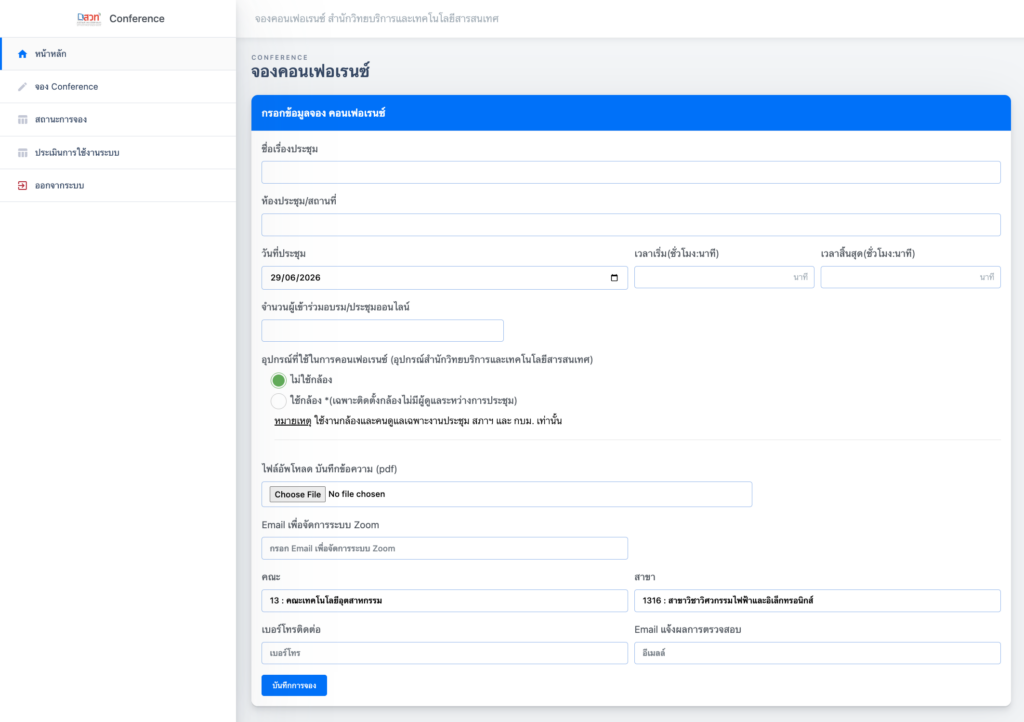
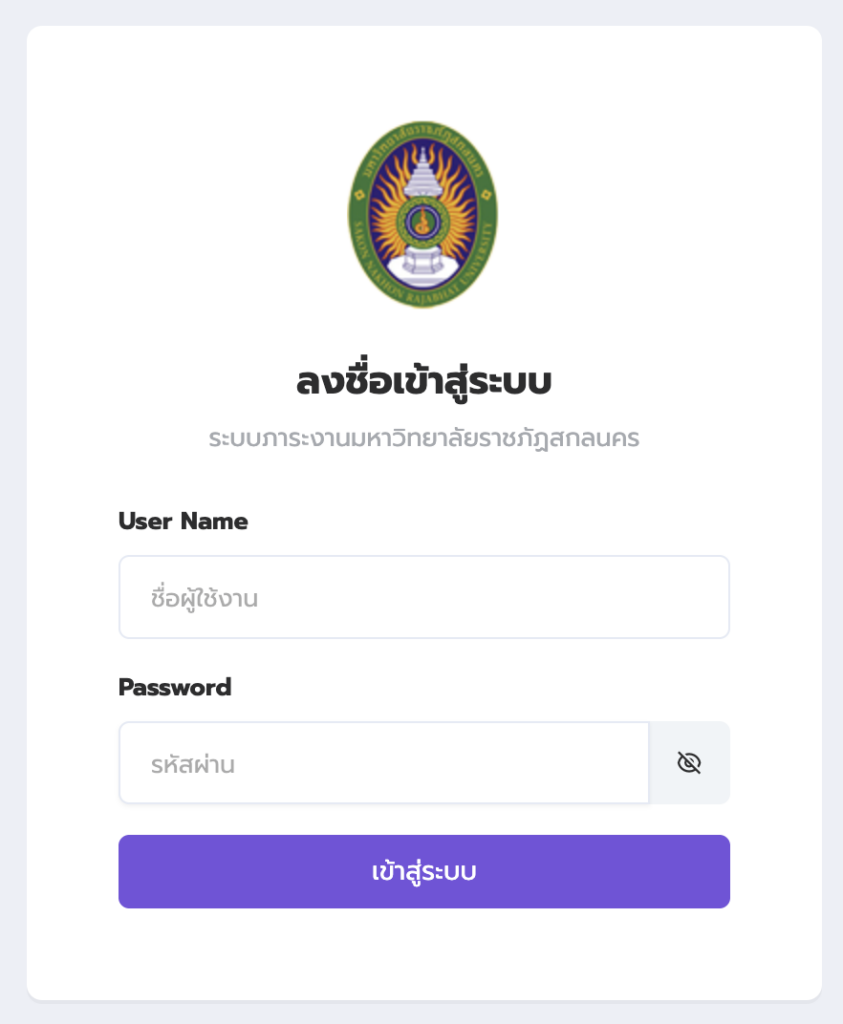
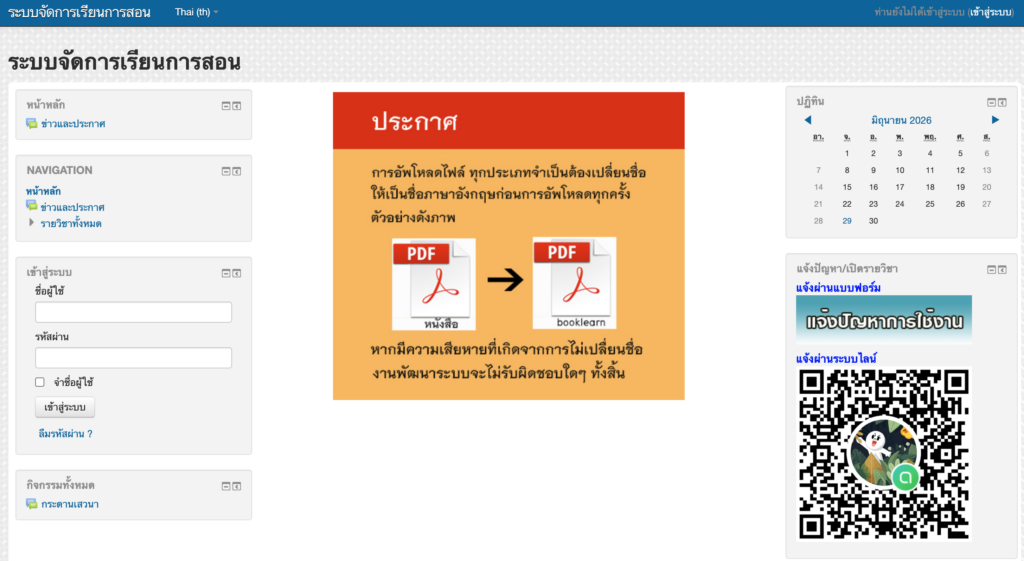
For Faculty and Staff (Electronic Office System): Official documentation, internal memos, announcements, and administrative correspondence are now processed exclusively via the SNRU e-Office (Electronic Document Management System). This completely replaces physical memos and reduces paper and copier machine usage university-wide.
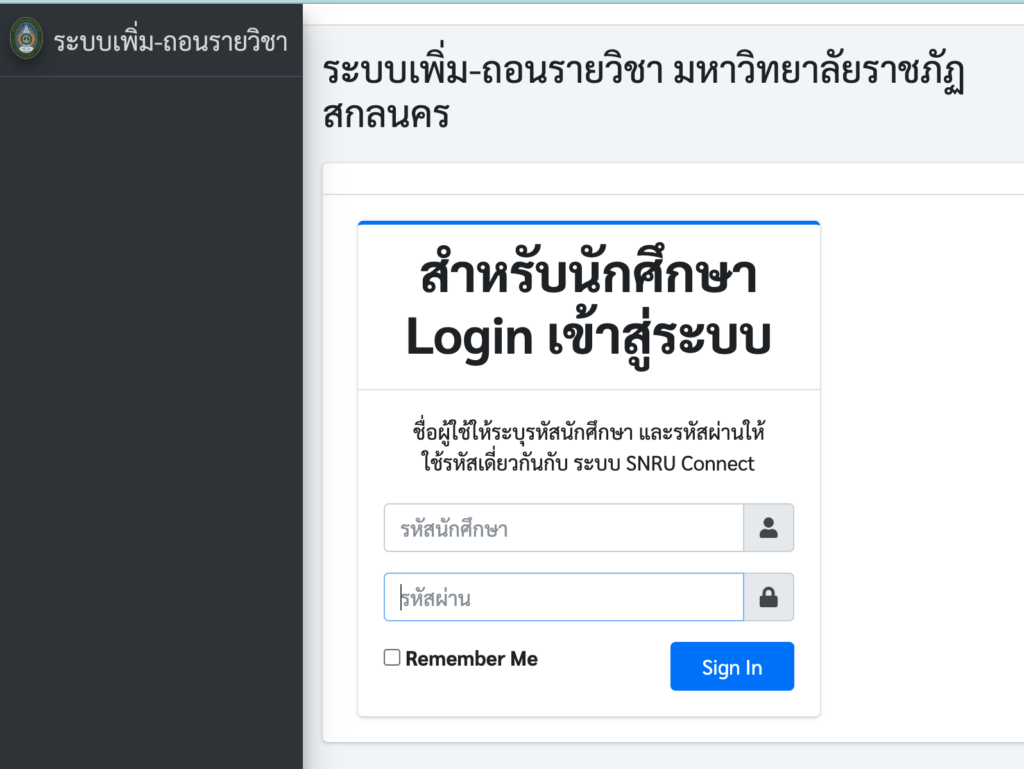
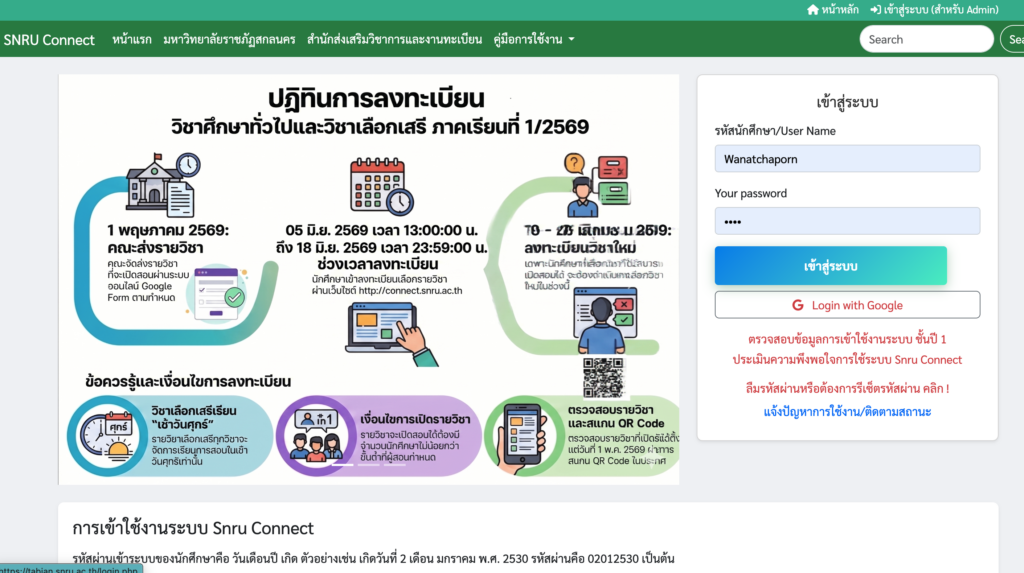
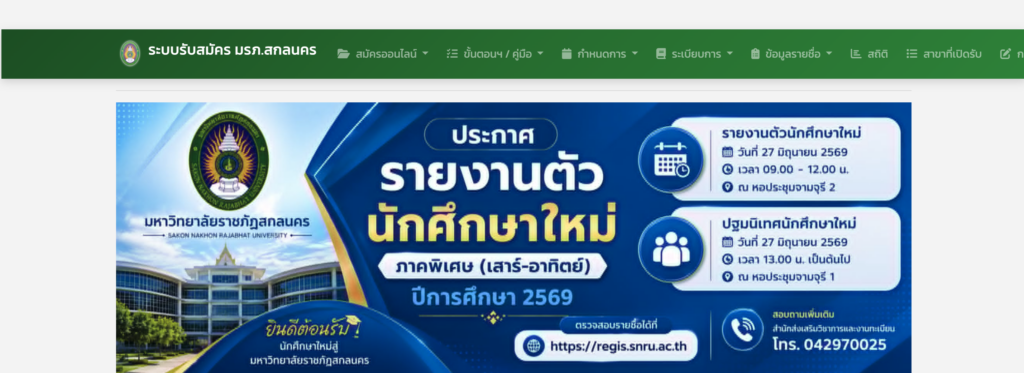
For Students and Instructors (Digital Classrooms & Portals): The university utilizes online educational tools and learning management platforms (such as paperless assignment portals). Students can register for classes, view grades, track academic progress, and submit digital coursework or e-assignments seamlessly without the need to print out documents.
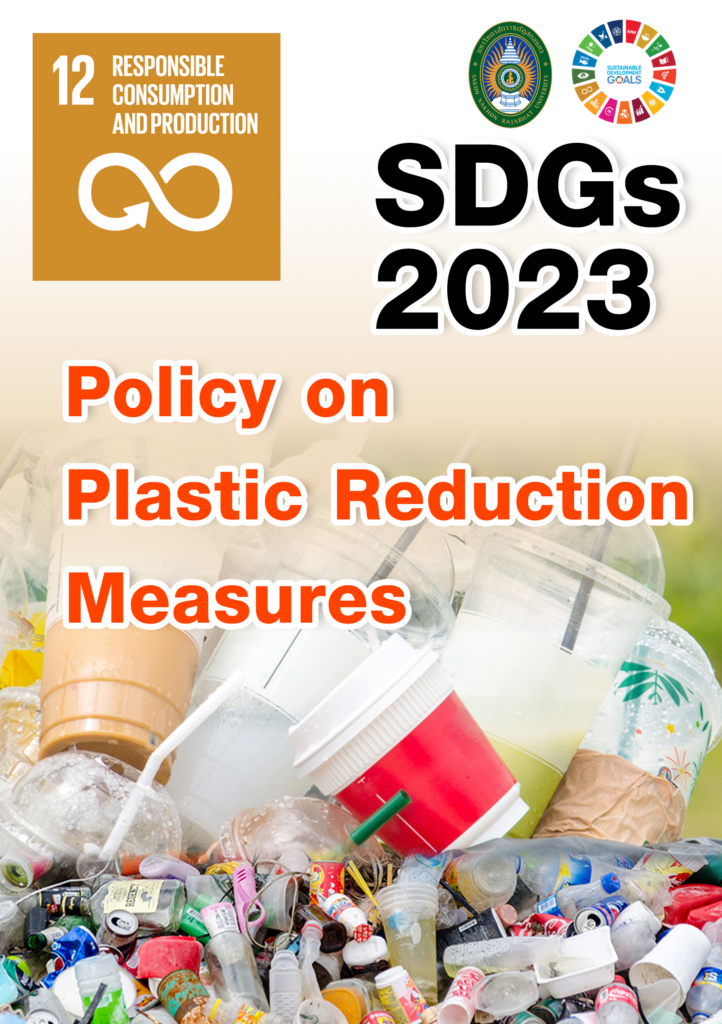
Daily Office Waste Reduction: Single-use plastic and paper cups are actively discouraged. Personnel and students are heavily incentivized to use personal reusable cups and water bottles instead. Additionally, the university enforces a strict zero-foam ban, prohibiting any foam food packaging within the department and campus operations.
For staffs
For student
2) Reuse (Maximizing Material Lifecycles)
When physical resources must be used, SNRU ensures they are reused to their fullest potential:
Double-Sided Paper Utilization: Maximizing paper usage by enforcing the use of the blank flip-side of single-sided printed paper.
Centralized Reusable Material Hubs: Setting up dedicated collection stations in common areas to gather single-sided paper and other reusable stationary items.
Internal Green Awareness: Continuously publicizing the locations of these collection points to ensure a shared community effort among administrative staff.
3) Recycle (Value-Added Upcycling)
SNRU facilitates waste segregation and transforms leftover materials into eco-friendly products:
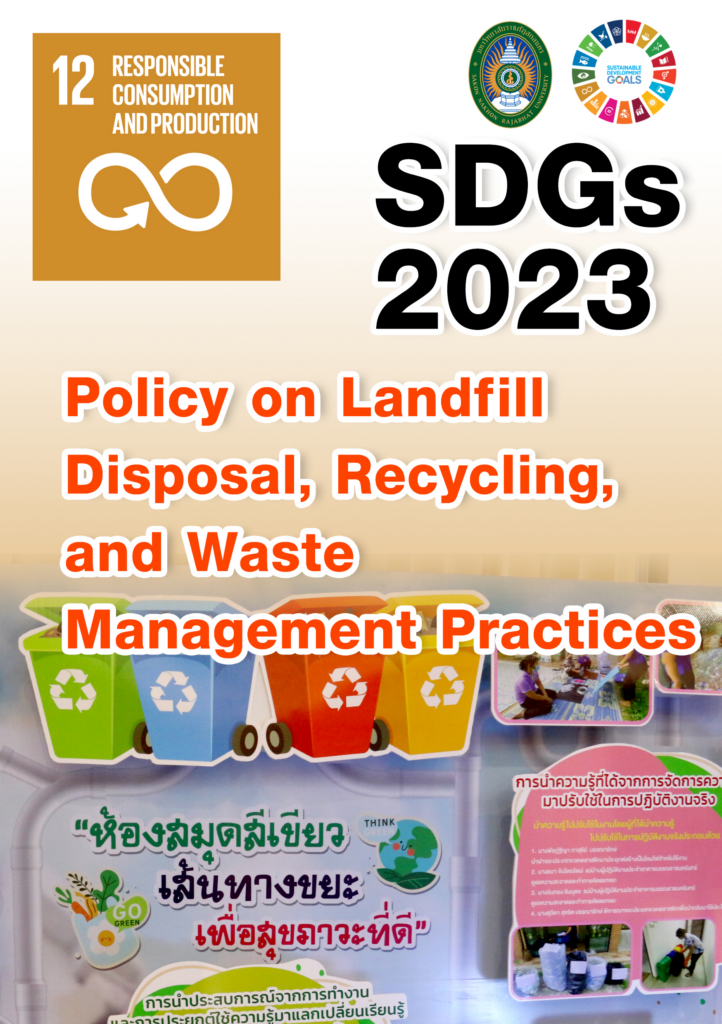
Organic Waste Management: Collecting leaf litter and landscape debris across the campus grounds to produce high-quality organic compost. This eliminates open burning, reduces landfill waste, and returns nutrients right back to the university’s green landscapes.
Beyond the Office: Broad Academic and Environmental Impacts
SNRU Carbon Neutrality Center: Expanding efforts beyond the campus perimeter, SNRU works closely with local government bodies (such as the Provincial Office of Natural Resources and Environment) to cultivate a regional climate adaptation framework, pushing for a low-carbon society and eco-tourism.
UI GreenMetric Alignment: These initiatives directly support SNRU’s roadmap to elevate its standings in the UI GreenMetric World University Rankings, pushing forward on waste management and paperless expansion metrics.
Sakon Nakhon Rajabhat University (SNRU) demonstrates a structured, significant impact on the United Nations Sustainable Development Goals (SDGs) through its diverse portfolio of education, research, and community outreach programs. As documented in the university’s institutional reporting and performance showcases, the curriculum and academic initiatives directly support at least 6 to 7 distinct SDGs: This comprehensive […]
Infographic provided figure, here is a comprehensive description of the personnel data on campus as of 23 June 2025: Campus Personnel Overview The institution houses a total workforce of 926 people. This workforce is structurally divided into two primary divisions: Detailed Analysis of the Academic Line Within the Academic Line (435 people), personnel are further […]
Description: ## 1. Objective This executive summary outlines the scale, proportion, and strategic alignment of sustainability-related education at Sakon Nakhon Rajabhat University for the current academic year. These metrics serve as the official data baseline for the UI GreenMetric World University Rankings (Criterion 6: Education and Research). ## 2. Key Performance Indicators (KPIs) ## 3. […]