Thetoxic waste treatment is an essential component of environmental management in universities, particularly in institutions that conduct laboratory, research, and healthcare activities. Therefore, effective toxic waste management practices, including proper segregation, storage, collection, and disposal, are necessary to minimize risks to human health and the environment. By implementing appropriate treatment and disposal procedures, universities can ensure regulatory compliance, prevent environmental contamination, and support sustainable campus development.
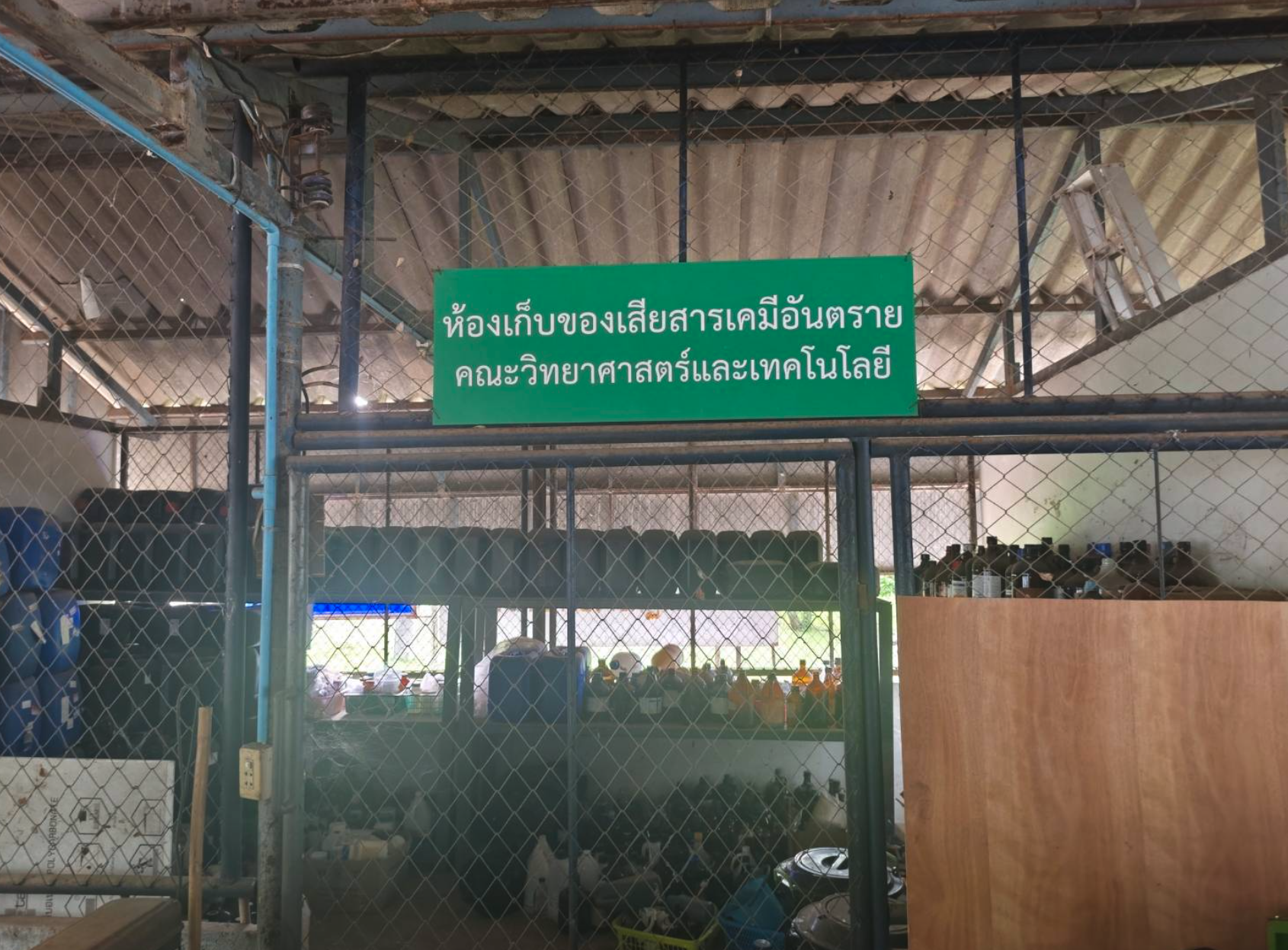
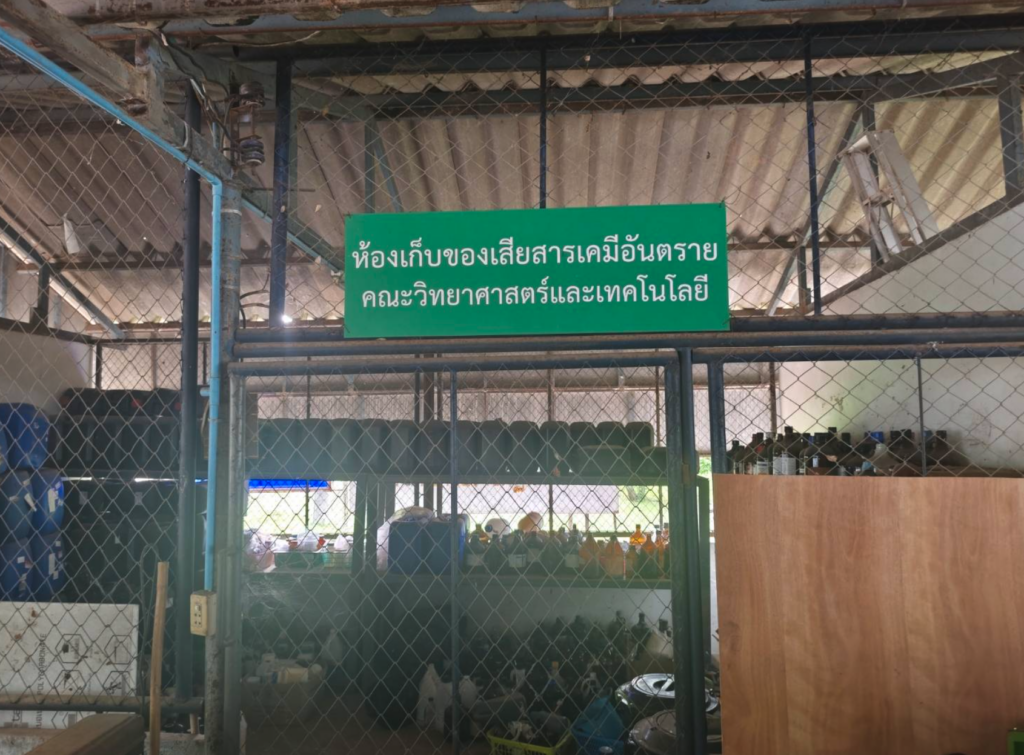
Toxic waste and hazardous materials storage room at Faculty of Science and Technology (SNRU, Thailand)
In our university at faculty of science and technology has toxic waste and hazardous materials storage room. Obviously, the university has established a dedicated hazardous waste and toxic materials storage room to ensure the safe management of chemical waste generated from laboratory teaching, research, and scientific activities. The storage facility is designed as a secure and controlled area for the temporary collection and segregation of hazardous substances prior to treatment or disposal by authorized waste management agencies. Additionally, a proper storage practices, including waste segregation, labeling, containment, and restricted access, are implemented to minimize the risks of chemical spills, environmental contamination, and human exposure. The provision of a hazardous waste storage facility demonstrates the university’s commitment to environmental protection, occupational health and safety.
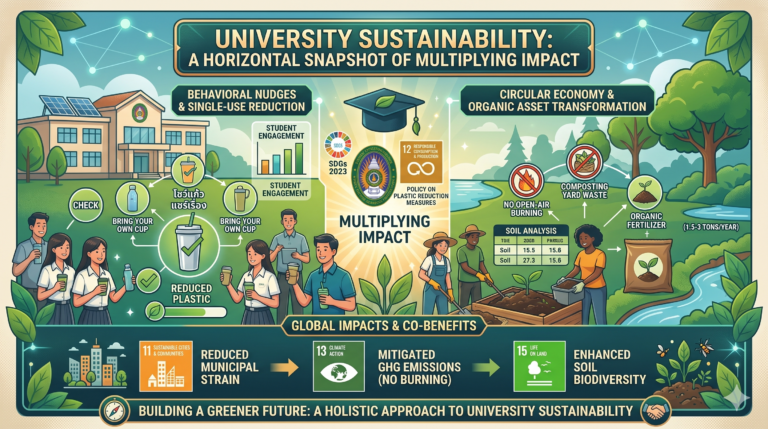
Sakon Nakhon Rajabhat University (SNRU) demonstrates a structured, significant impact on the United Nations Sustainable Development Goals (SDGs) through its diverse portfolio of education, research, and community outreach programs. As documented in the university’s institutional reporting and performance showcases, the curriculum and academic initiatives directly support at least 6 to 7 distinct SDGs: This comprehensive […]
Integrated Impact of Waste Management Programs on the Sustainable Development Goals (SDGs) While the university’s baseline framework originates from SDG 12: Responsible Consumption and Production, the operational practices executed by the Buildings and Vehicles Ground Division demonstrate a powerful, systemic impact that cuts across multiple global goals. ♻️ SDG 12: Responsible Consumption and Production (Core […]