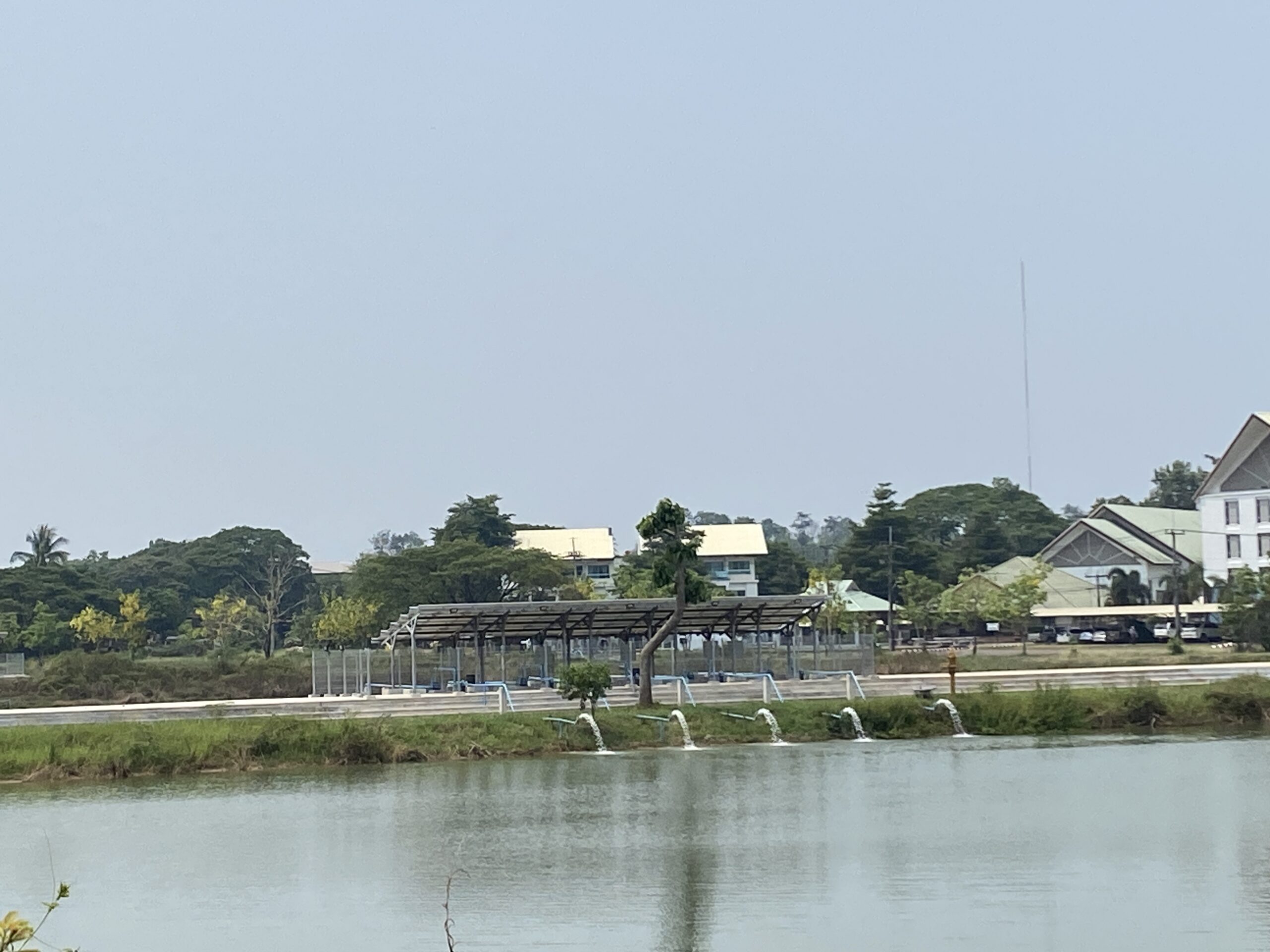
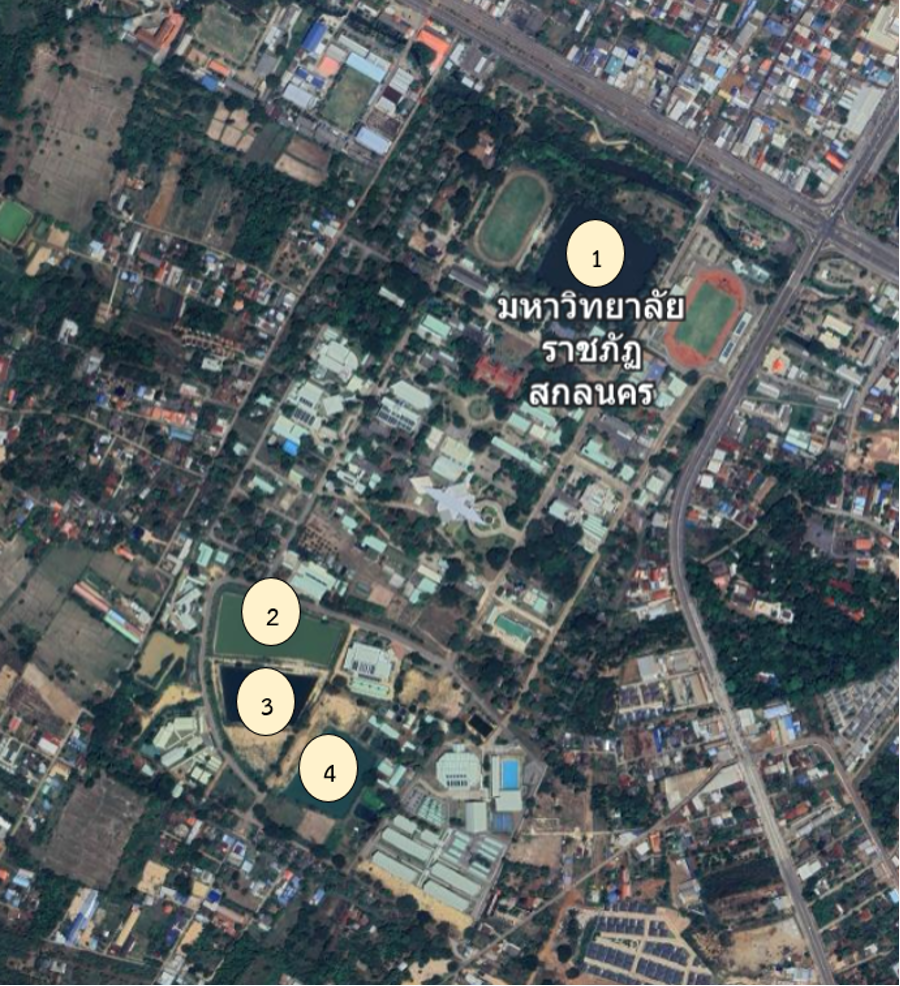
The university has implemented a water conservation program by developing and maintaining four on-campus reservoirs for rainwater harvesting and storage. These reservoirs collect and store rainwater runoff during the rainy season, providing an alternative water source for landscape irrigation, campus greenery maintenance, and other non-potable water uses. The total water storage capacity of the reservoirs is approximately 233,220 cubic meters, contributing significantly to reducing groundwater extraction and municipal water consumption. This initiative enhances water resource management, increases campus resilience during dry seasons, and supports sustainable water conservation practices. Furthermore, the reservoirs serve multiple environmental functions, including stormwater management, flood mitigation, groundwater recharge support, biodiversity enhancement, and the creation of green recreational spaces for students and staff. The university continuously maintains these water conservation facilities as part of its commitment to sustainable campus development and integrated water resource management.
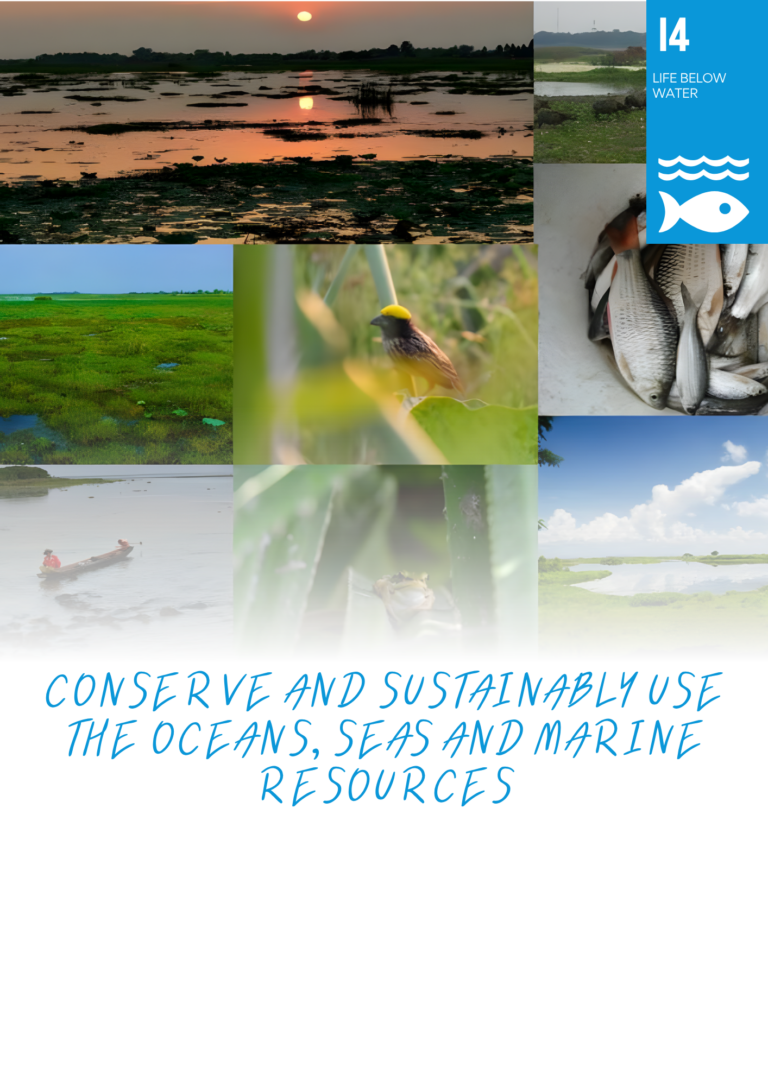
Sakon Nakhon Rajabhat University (SNRU) lies in the Sakon Nakhon Basin, beside Nong Han, one of the largest natural freshwater lakes in Northeast Thailand, and close to key tributaries such as the Nam Un River. Local communities have relied on these waters for food, income and culture for generations, so SNRU treats the conservation of […]
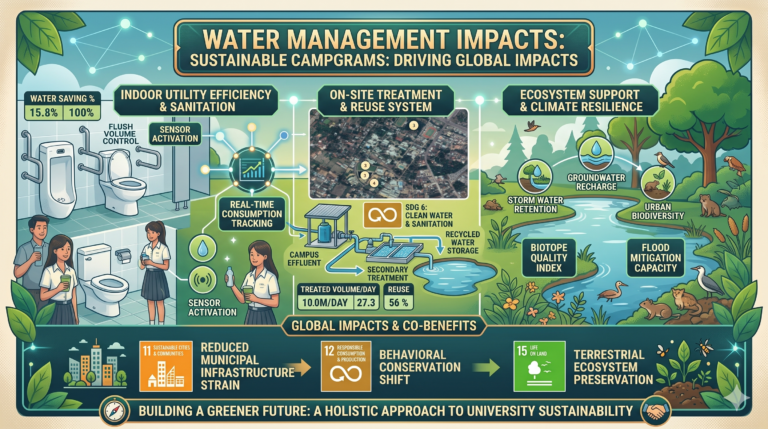
Integrated Impact of Water Management Programs on the SDGs The university’s water management initiatives are driven by a holistic framework. While centered around clean water infrastructure, the program generates cross-cutting impacts that simultaneously support four distinct Sustainable Development Goals (SDGs): [ SDG 6: Clean Water ] │ ┌────────────────────────┼────────────────────────┐ ▼ ▼ ▼ […]