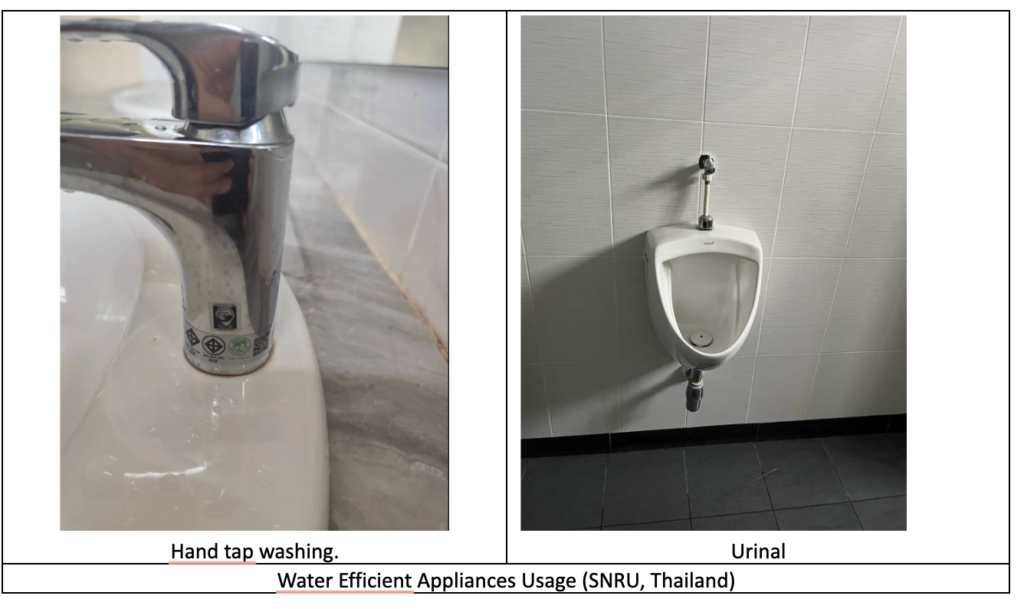
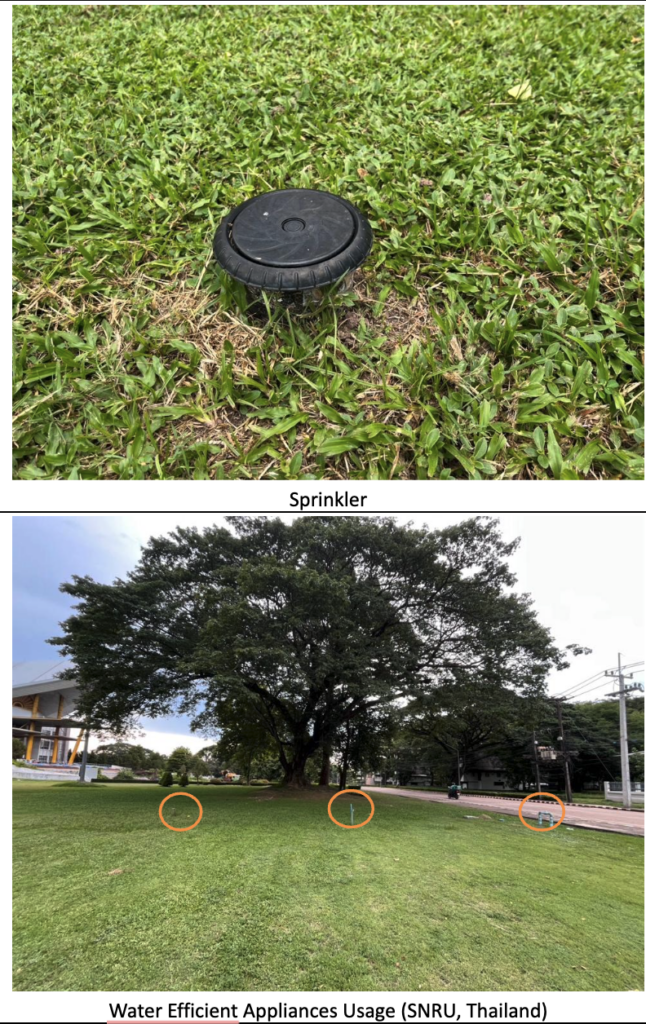
The use of water-efficient appliances such as hand-washing taps, urinals, and sprinkler systems provides significant environmental and operational benefits in the context of UI GreenMetric sustainability assessment. These technologies are designed to minimize water consumption while maintaining functional performance in daily campus activities. Accordingly, water-efficient hand taps, often equipped with sensor or low-flow mechanisms, reduce unnecessary water discharge during handwashing, thereby significantly decreasing overall water demand in buildings. Similarly, water-saving urinals, such as waterless or low-flush systems, contribute to substantial reductions in freshwater use in restroom facilities while maintaining hygiene standards. In addition, efficient sprinkler systems optimize water distribution for landscape irrigation by controlling flow rate and timing, which prevents overwatering and reduces water loss through evaporation or runoff. Therefore, these appliances enhance the university’s water conservation efforts and support sustainable campus management. In terms of the UI GreenMetric World University Rankings, their implementation directly contributes to improved performance under the Water (WR) category by reducing potable water consumption, promoting efficient resource use, and strengthening the institution’s commitment to environmental sustainability. Respectively.
Appliance
Total Number
Total number water Efficient appliances
Percentage
Toilet
1,683
43
6.71%
Urinals
324
262
80.96%
Faucets
719
44
6.11%
Average Percentage
20.73%
Sakon Nakhon Rajabhat University has implemented the use of water-efficient appliances across campus buildings to reduce water consumption and improve water-use efficiency. The university continuously upgrades sanitary fixtures and plumbing equipment with water-saving technologies as part of its sustainable water management program.
The water-efficient appliances currently installed on campus include dual-flush toilets, low-flow urinals, and water-saving faucets. These devices are designed to reduce water usage while maintaining user comfort and operational effectiveness.
Based on the campus inventory survey, the university has a total of 1,683 toilets, 324 urinals, and 719 faucets. Among these, 43 toilets, 262 urinals, and 44 faucets have been identified as water-efficient appliances. The overall proportion of water-efficient appliances on campus is 20.73%.
The implementation of water-efficient fixtures contributes to reducing potable water consumption, lowering operational costs, and supporting the university’s commitment to sustainable water resource management. The university continues to replace conventional fixtures with more efficient alternatives during renovation and maintenance activities to further improve water conservation performance.
Sakon Nakhon Rajabhat University (SNRU) demonstrates a structured, significant impact on the United Nations Sustainable Development Goals (SDGs) through its diverse portfolio of education, research, and community outreach programs. As documented in the university’s institutional reporting and performance showcases, the curriculum and academic initiatives directly support at least 6 to 7 distinct SDGs: This comprehensive […]
Infographic provided figure, here is a comprehensive description of the personnel data on campus as of 23 June 2025: Campus Personnel Overview The institution houses a total workforce of 926 people. This workforce is structurally divided into two primary divisions: Detailed Analysis of the Academic Line Within the Academic Line (435 people), personnel are further […]
Description: ## 1. Objective This executive summary outlines the scale, proportion, and strategic alignment of sustainability-related education at Sakon Nakhon Rajabhat University for the current academic year. These metrics serve as the official data baseline for the UI GreenMetric World University Rankings (Criterion 6: Education and Research). ## 2. Key Performance Indicators (KPIs) ## 3. […]