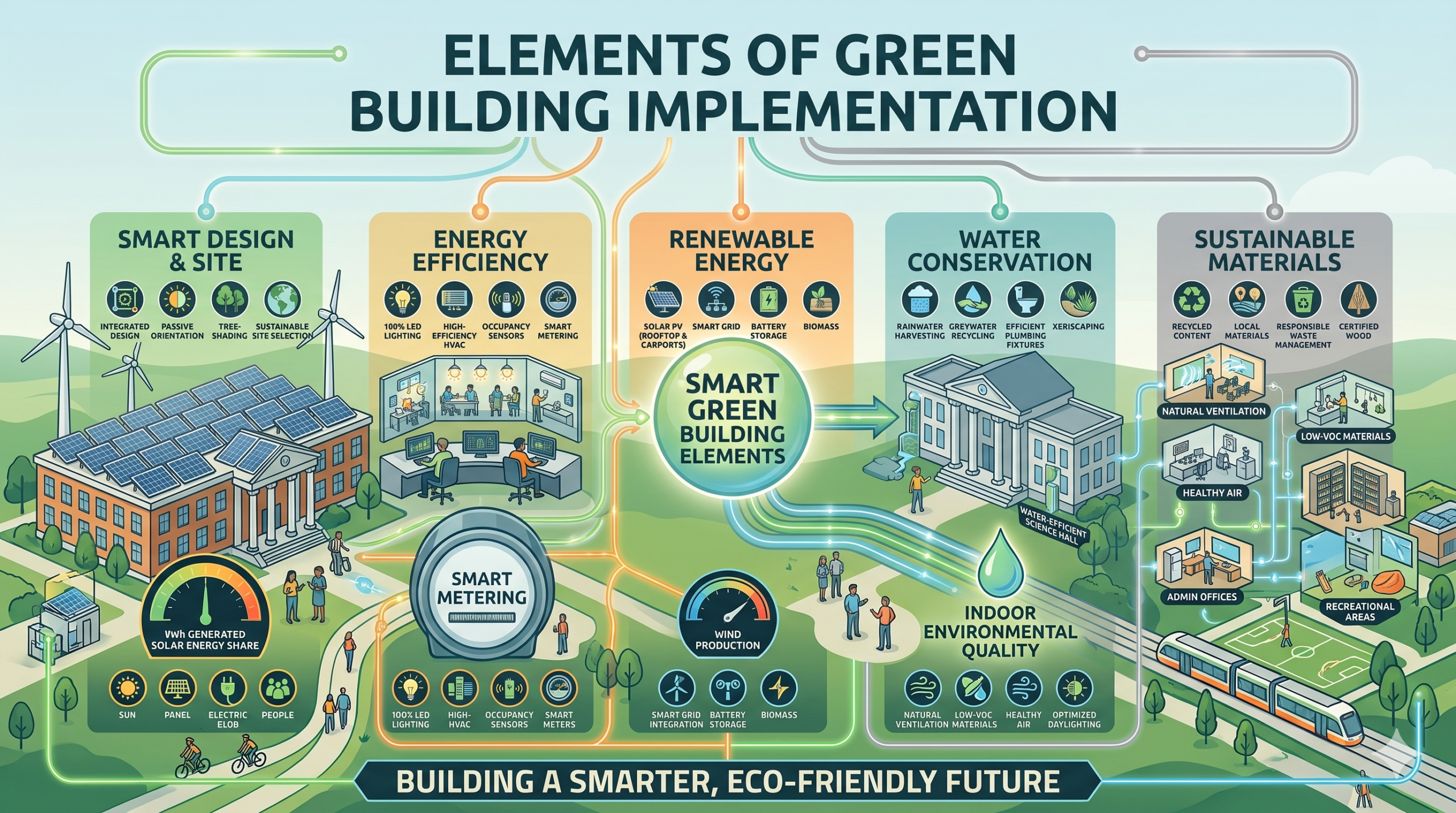
Sakon Nakhon Rajabhat University (SNRU) has systematically executed comprehensive green building and energy efficiency strategies across its entire building inventory. As detailed across Screenshot 2569-06-28 at 20.33.15_2.png and Screenshot 2569-06-28 at 20.33.27_2.png, the university evaluates and monitors 25 core facilities and academic buildings (spanning a combined internal operational area) to embed smart, eco-friendly infrastructural elements. The campus infrastructure demonstrates sustainable architecture through three primary green components:
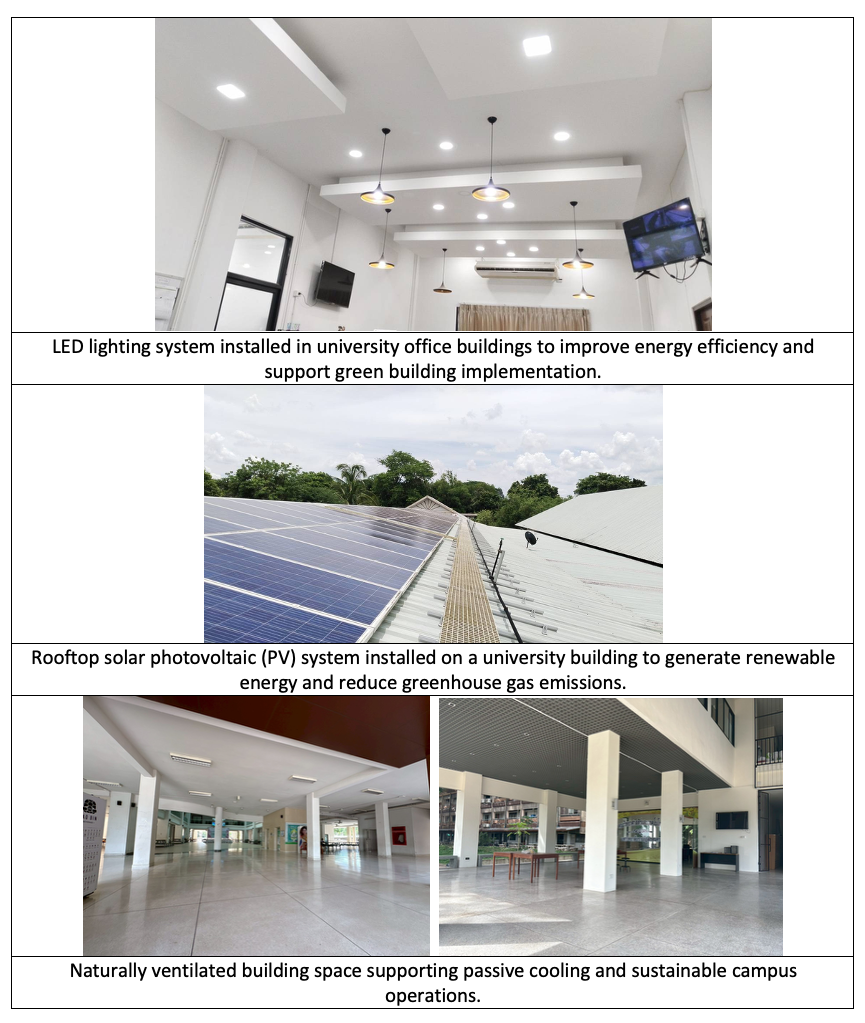
1. Full LED Lighting Integration (100% Adaptation):To minimize energy footprints and optimize power management, all 25 identified facilities—ranging from smaller specialized hubs like Building 22 ($720.00\text{ m}^2$) to the massive multi-use spaces like Building 19 ($19,350.00\text{ m}^2$)—have successfully transitioned to 100% energy-efficient LED lighting systems. This integration significantly lowers ambient building heat and slashes baseline electricity demand campus-wide.
2. Smart Design and Natural Ventilation (Passive Cooling):Passive sustainable cooling architectures are actively integrated into major facilities to diminish mechanical cooling loads. Natural ventilation mechanisms are engineered into high-capacity centers and faculty compounds, including the Faculty of Education complexes (Building 2 and Building 16), the Multi-Purpose Laboratory Building (Building 13, $9,700.00\text{ m}^2$), and the Faculty of Industrial Technology (Building 14, $12,750.00\text{ m}^2$). This ensures high indoor air quality, maximizes airflow, and reduces dependence on intensive HVAC systems.
3. Renewable Energy & Decentralized Solar PV Networks:To transition toward an autonomous smart grid, the university has integrated solar photovoltaic (PV) generation facilities on critical high-consumption structure rooftops. Major hubs equipped with Solar PV generation include the Faculty of Industrial Technology (Building 14), the Indoor Gymnasium (Building 17, $6,000.00\text{ m}^2$), Ratchaphruek Stadium (Building 18), the core Lecture Hall Complex (Building 19), and the large-scale Multi-Purpose Building (Building 20, $16,936.00\text{ m}^2$).
By multi-layering LED installations, passive air-circulation designs, and clean energy harvesting technologies across its facilities, SNRU consistently optimizes its resource utilization, decreases operational greenhouse gas outputs, and sets a regional benchmark for smart green campus operations.
Sakon Nakhon Rajabhat University (SNRU) demonstrates a structured, significant impact on the United Nations Sustainable Development Goals (SDGs) through its diverse portfolio of education, research, and community outreach programs. As documented in the university’s institutional reporting and performance showcases, the curriculum and academic initiatives directly support at least 6 to 7 distinct SDGs: This comprehensive […]
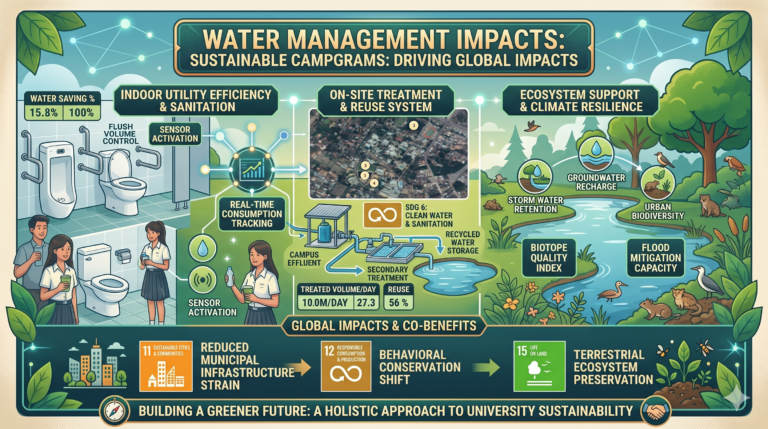
Integrated Impact of Water Management Programs on the SDGs The university’s water management initiatives are driven by a holistic framework. While centered around clean water infrastructure, the program generates cross-cutting impacts that simultaneously support four distinct Sustainable Development Goals (SDGs): [ SDG 6: Clean Water ] │ ┌────────────────────────┼────────────────────────┐ ▼ ▼ ▼ […]
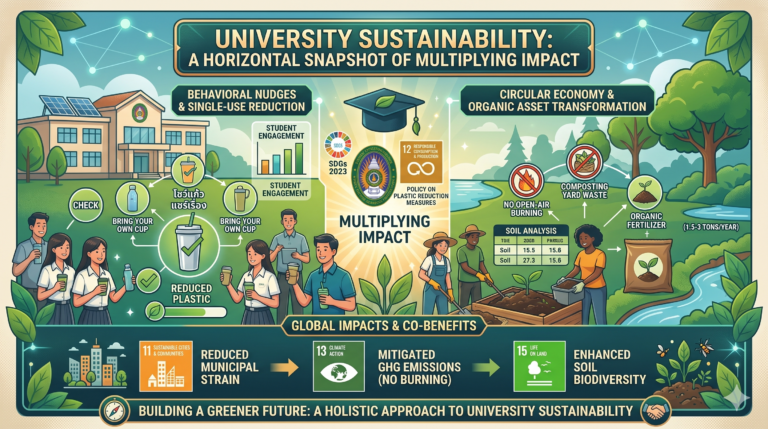
Integrated Impact of Waste Management Programs on the Sustainable Development Goals (SDGs) While the university’s baseline framework originates from SDG 12: Responsible Consumption and Production, the operational practices executed by the Buildings and Vehicles Ground Division demonstrate a powerful, systemic impact that cuts across multiple global goals. ♻️ SDG 12: Responsible Consumption and Production (Core […]