The Faculty of Humanities and Social Sciences, Sakonnakhon Rajabhat University (SNRU), initiated a key project titled “Low-Carbon FOR THE COMMUNITY AND ENVIRONMENT” on Saturday, March 9, 2024. The event was held in Ban Dong Sadao, Phon Na Kaeo District, Sakon Nakhon Province.
Asst. Prof. Dr. Chanasorn Chayaboripha, Dean of the Faculty, presided over the opening ceremony. Dr. Nantana Rachanarak, a lecturer in the Political Science Department, delivered the project report. The ceremony was attended by university administrators, lecturers, and local community representatives. The project is an integral part of the Faculty’s operational plan for the academic year 2024, specifically within the Humanities and Social Sciences Volunteer Camp for Students. Its primary goal is to develop Social engineering skills in students, focusing on the process of enhancing Soft Skills and fostering good citizenship, coordination, and community innovation. The core learning process integrates diverse disciplines to solve real-world community problems through a Field-Based and Social lab-based approach. A major emphasis of the project is to promote sustainable development by not transferring environmental burdens to vulnerable communities. It also seeks to encourage tree planting, maintenance, and the conservation of natural resources and environmental culture within the community.
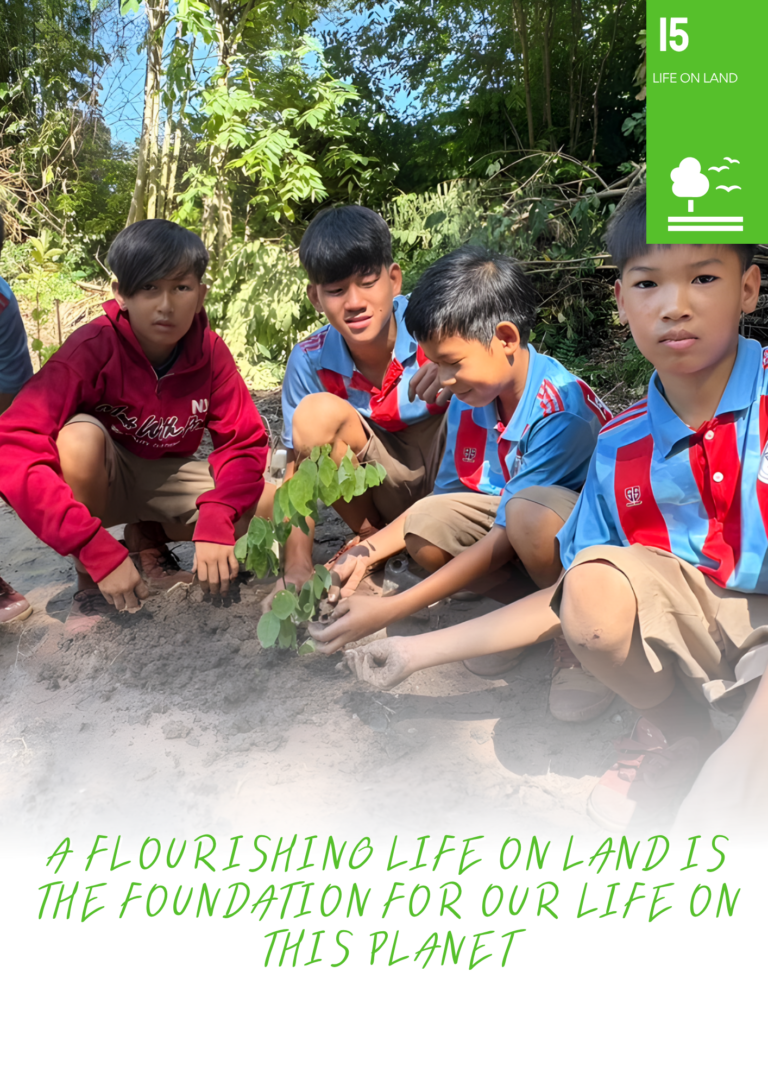
Sakon Nakhon Rajabhat University (SNRU) lies between the Phu Phan mountain range and the Nong Han wetland, an area rich in dry dipterocarp forest, dry evergreen forest, and native plants. The university treats the conservation of land ecosystems as a mission that ties together research, teaching, and community service. Two university policies guide this work: […]
Sakon Nakhon Rajabhat University (SNRU) demonstrates a structured, significant impact on the United Nations Sustainable Development Goals (SDGs) through its diverse portfolio of education, research, and community outreach programs. As documented in the university’s institutional reporting and performance showcases, the curriculum and academic initiatives directly support at least 6 to 7 distinct SDGs: This comprehensive […]
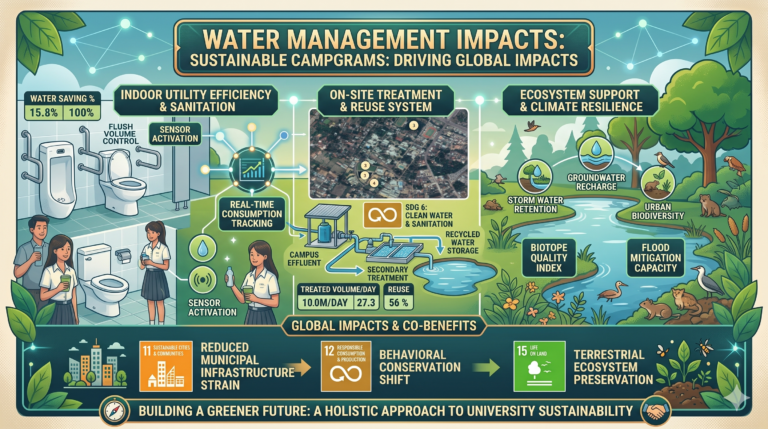
Integrated Impact of Water Management Programs on the SDGs The university’s water management initiatives are driven by a holistic framework. While centered around clean water infrastructure, the program generates cross-cutting impacts that simultaneously support four distinct Sustainable Development Goals (SDGs): [ SDG 6: Clean Water ] │ ┌────────────────────────┼────────────────────────┐ ▼ ▼ ▼ […]