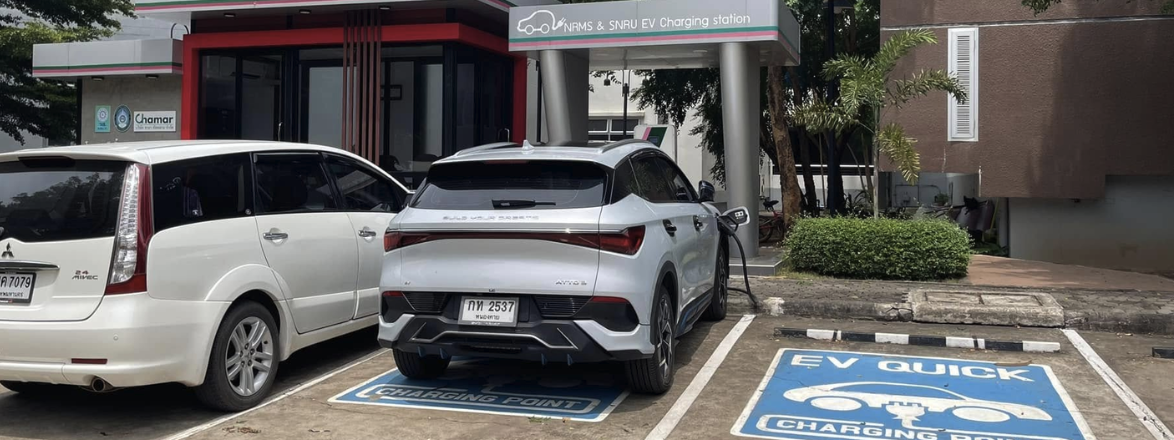
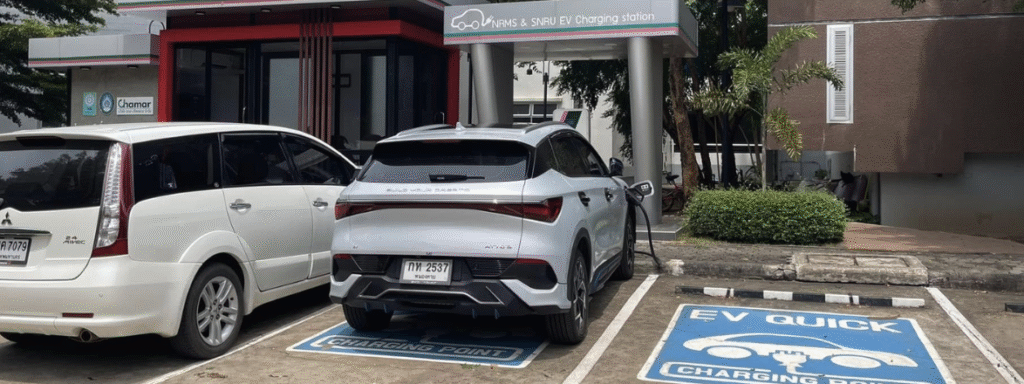
Sakon Nakhon Rajabhat University (SNRU) is enhancing its sustainable infrastructure with the imminent launch of its new electric vehicle (EV) charging station .
The station, branded as NEWS & SNRU EV Charging Station, is nearly operational, with only the finalization of the charging rate calculation system pending. This new facility supports sustainable transportation by offering a CCS2 charging standard with a maximum charging power of 25 kW. The installation underscores SNRU’s commitment to supporting the transition to electric mobility and achieving its sustainable development goals.
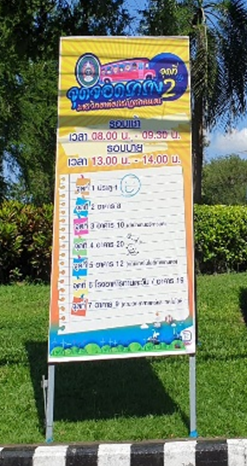
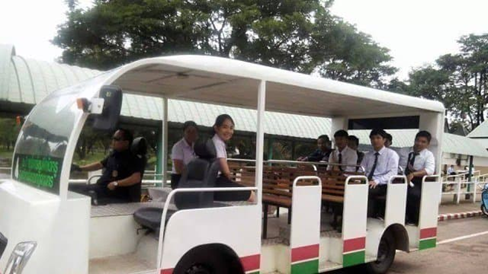
This image illustrates section Shuttle Services (TR.2) at Sakon Nakhon Rajabhat University, providing a visual example of the campus transportation available. On the left, it displays two photographs of the open-air electric shuttle buses used for the service; one is a pink and white bus with the “SNRU” logo, and the other is a white and green bus carrying passengers. On the right, the image shows the official “SNRU BUS 2” timetable, which details the service’s operating hours for weekdays (08:00 – 19:30) and Saturdays (13:00 – 14:00), along with a complete list of the 17 stops along its designated route.
Description:
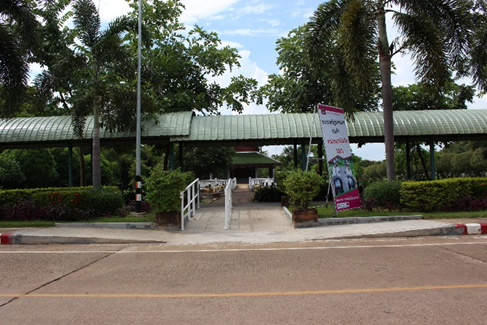
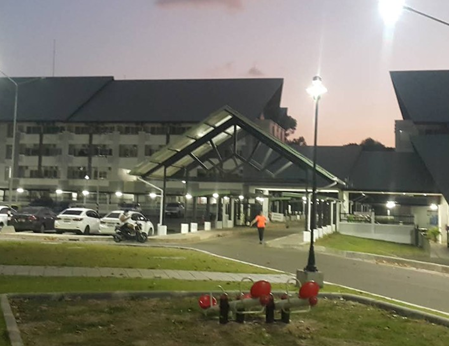
Street lamp for pedestrians at night. The area has solar street lamps, which automatically control the lights based on the intensity of sunlight.
2. Separator between the road for vehicles and the pedestrian path.
3. Ramps and guiding blocks that have a suitable design for pedestrians having physical disabilities.
Sakon Nakhon Rajabhat University (SNRU) demonstrates a structured, significant impact on the United Nations Sustainable Development Goals (SDGs) through its diverse portfolio of education, research, and community outreach programs. As documented in the university’s institutional reporting and performance showcases, the curriculum and academic initiatives directly support at least 6 to 7 distinct SDGs: This comprehensive […]
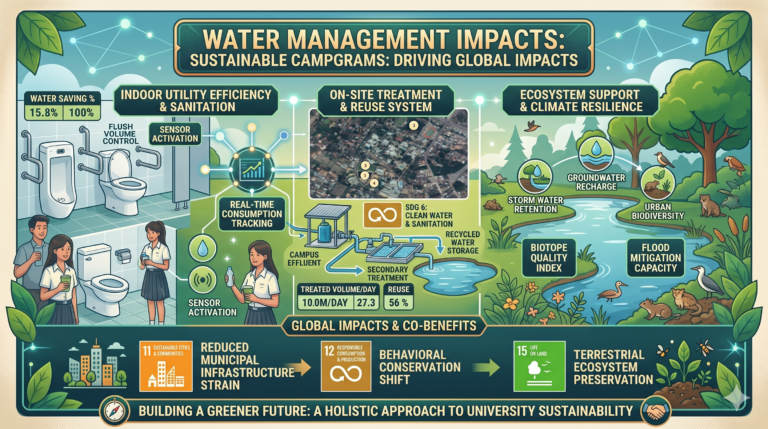
Integrated Impact of Water Management Programs on the SDGs The university’s water management initiatives are driven by a holistic framework. While centered around clean water infrastructure, the program generates cross-cutting impacts that simultaneously support four distinct Sustainable Development Goals (SDGs): [ SDG 6: Clean Water ] │ ┌────────────────────────┼────────────────────────┐ ▼ ▼ ▼ […]
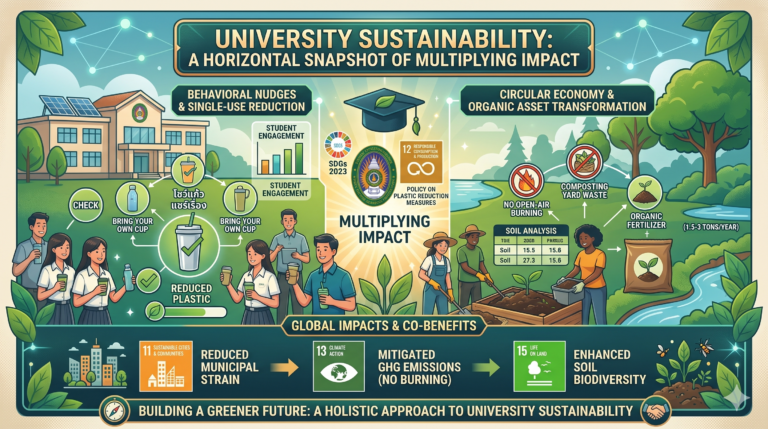
Integrated Impact of Waste Management Programs on the Sustainable Development Goals (SDGs) While the university’s baseline framework originates from SDG 12: Responsible Consumption and Production, the operational practices executed by the Buildings and Vehicles Ground Division demonstrate a powerful, systemic impact that cuts across multiple global goals. ♻️ SDG 12: Responsible Consumption and Production (Core […]