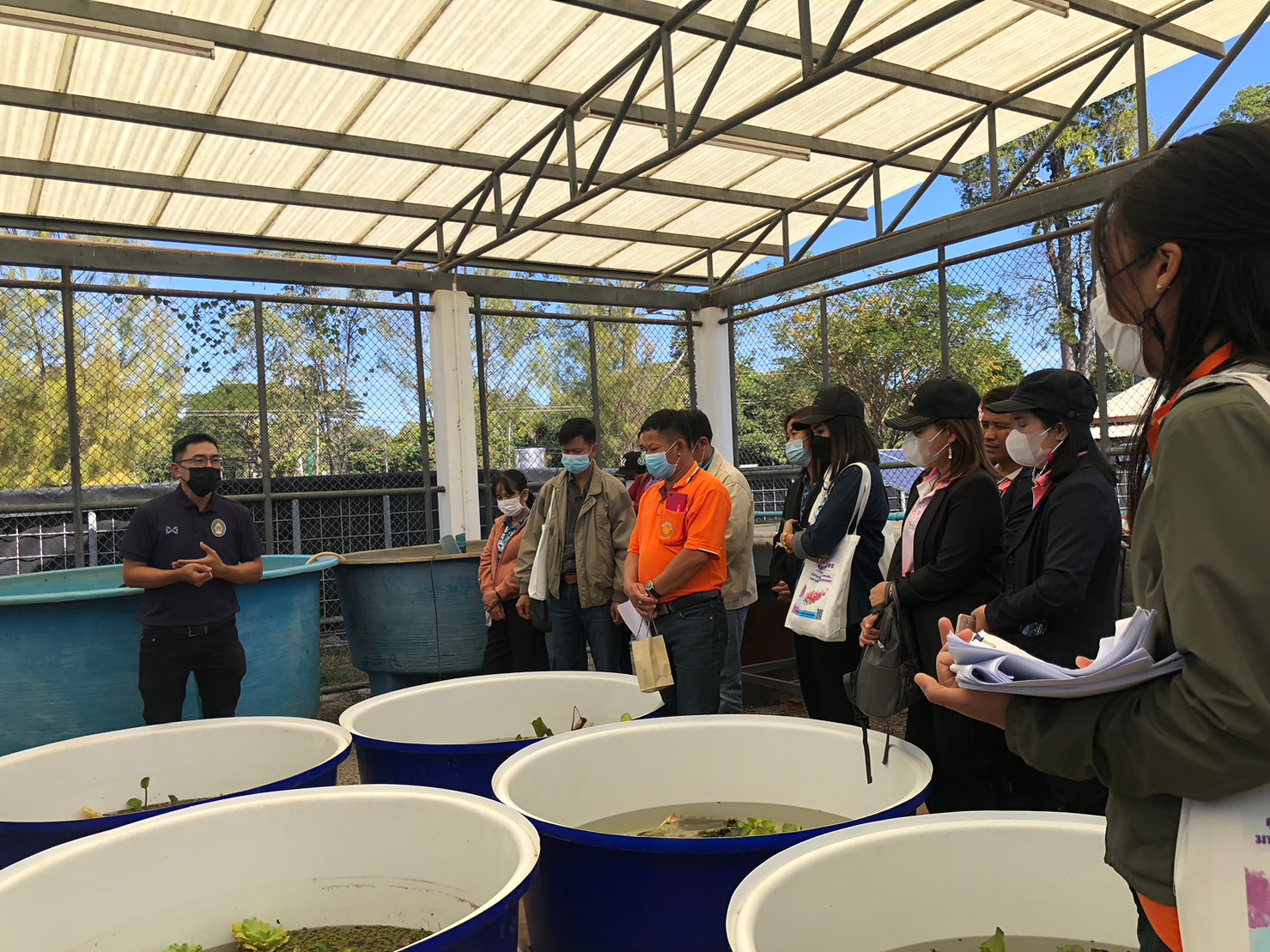
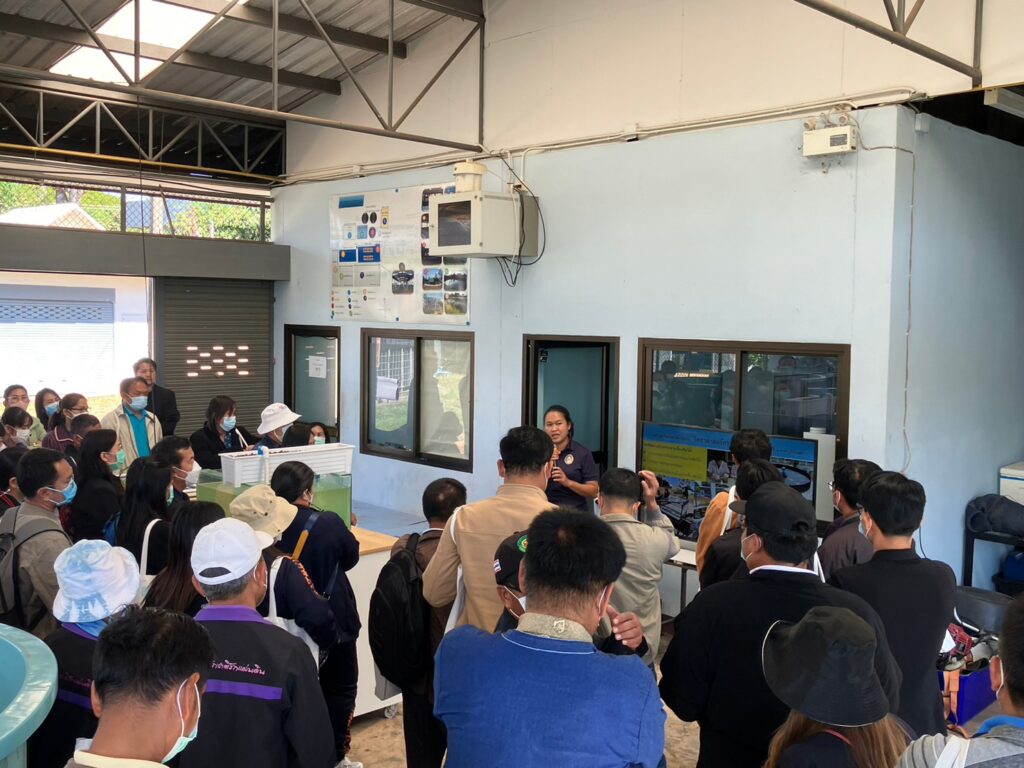
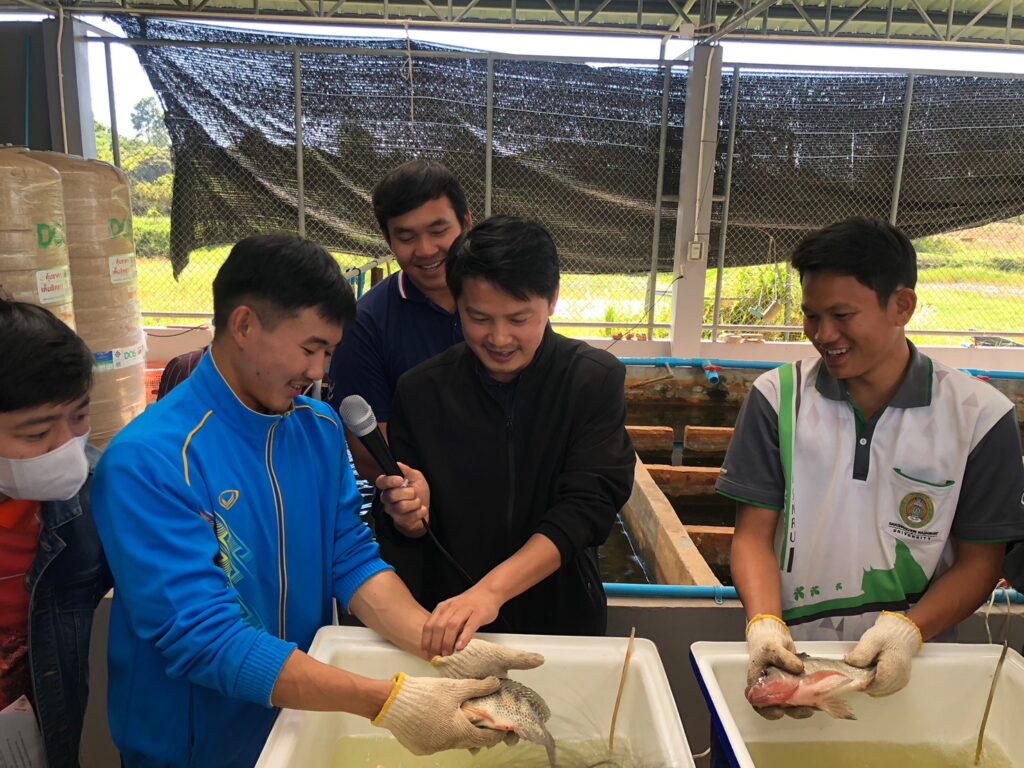
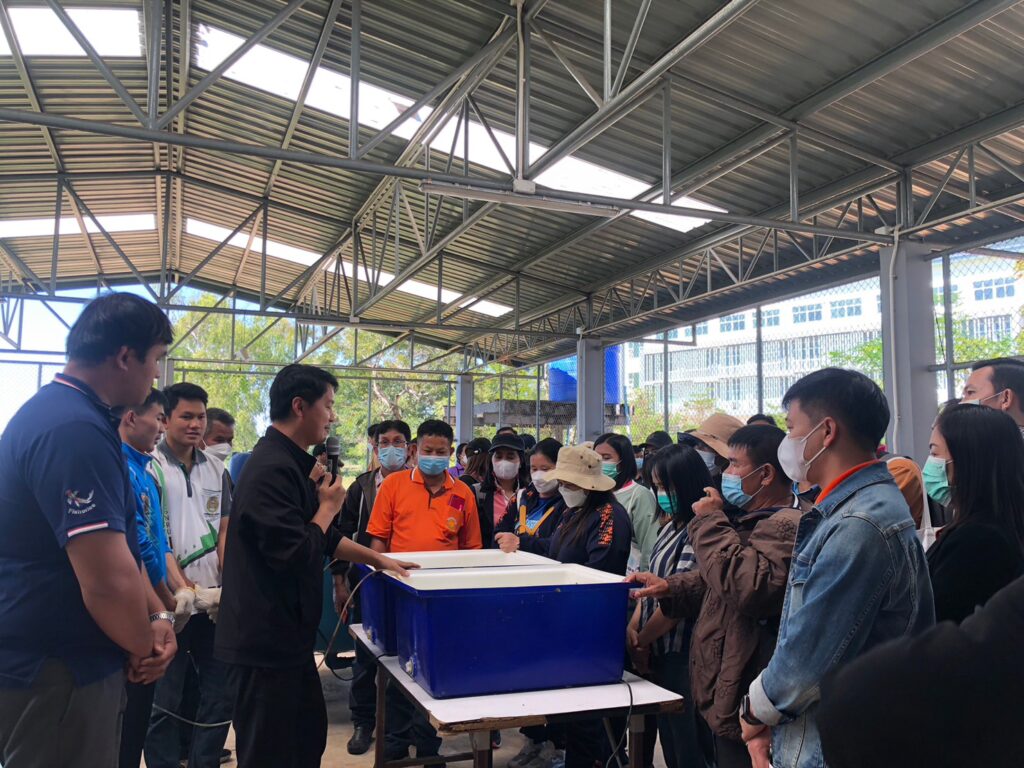
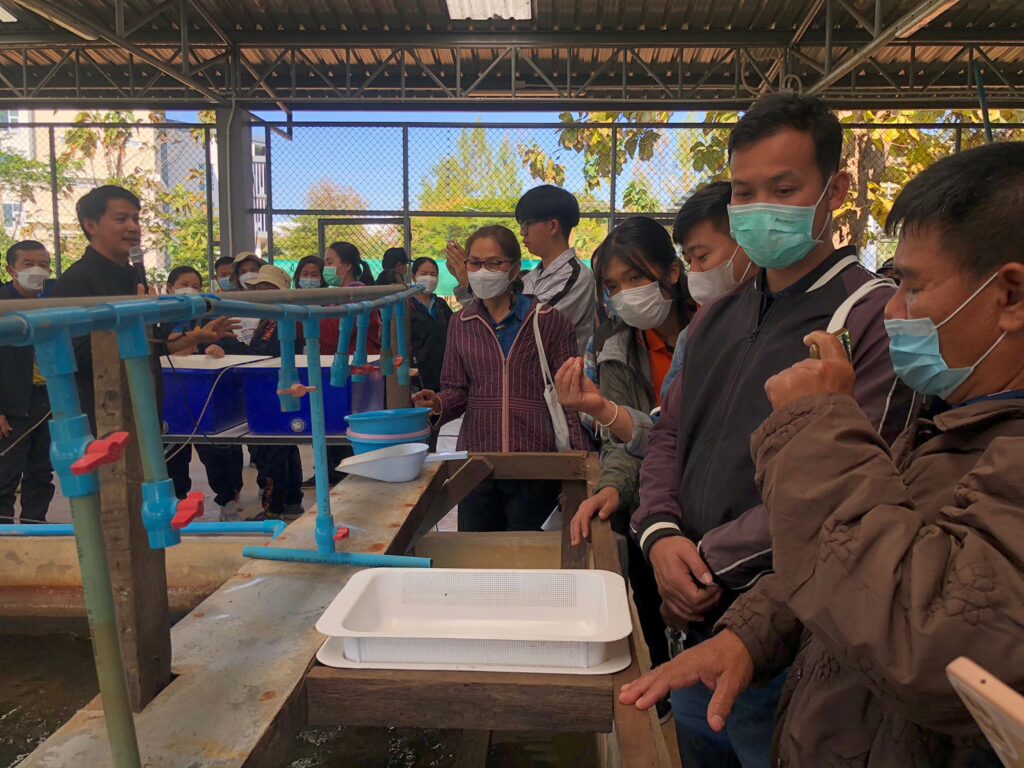
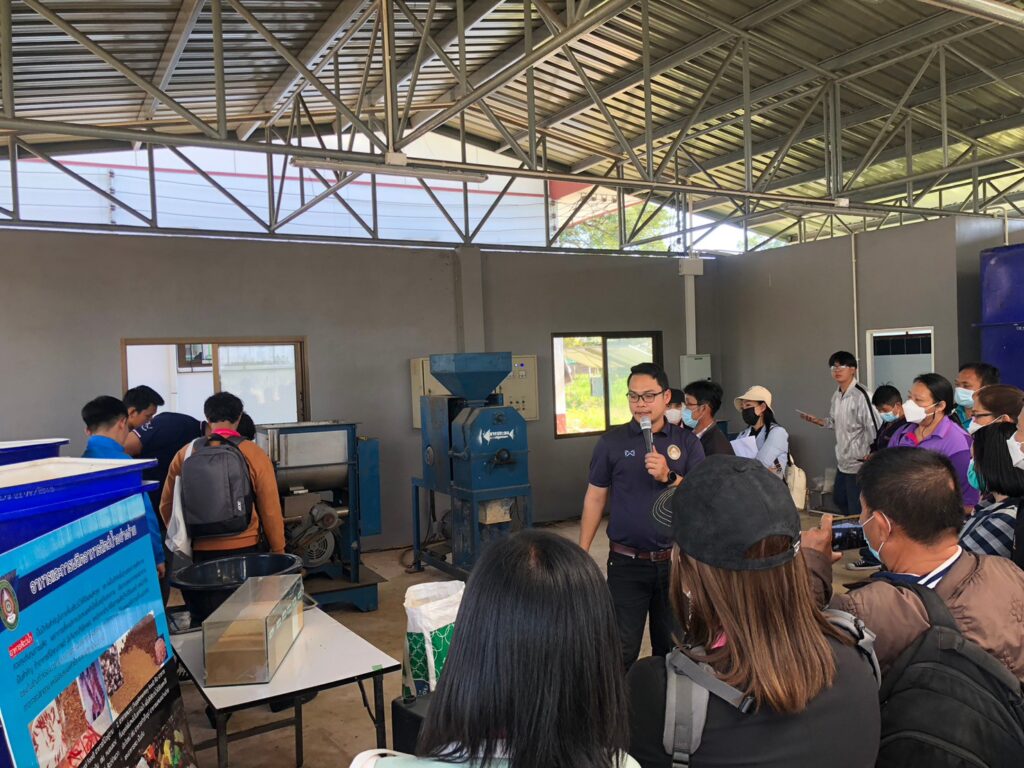
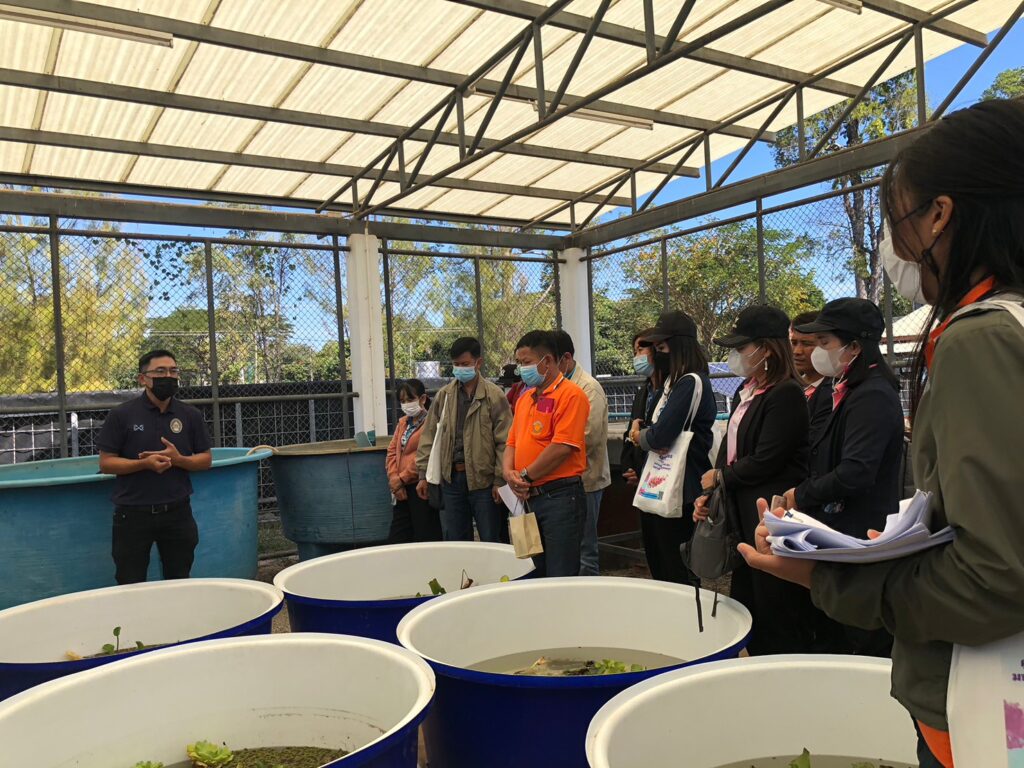
The Coordinating Center for the Plant Genetic Conservation Project under the Royal Initiative of Her Royal Highness Princess Maha Chakri Sirindhorn organized a hands-on training program titled “Local Resource-Based Training on Aquaculture” for batch 1/2023. The course, held from January 17-20, 2023, at the Sroi Suwanna Hall, Building 10, Sakon Nakhon Rajabhat University,
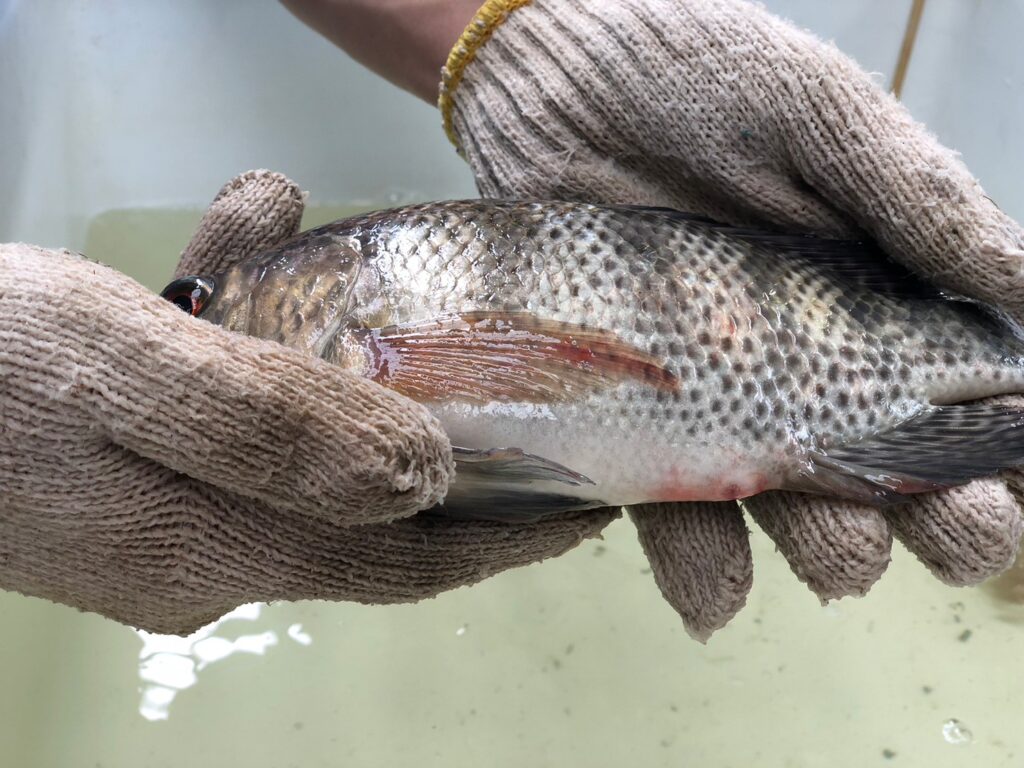
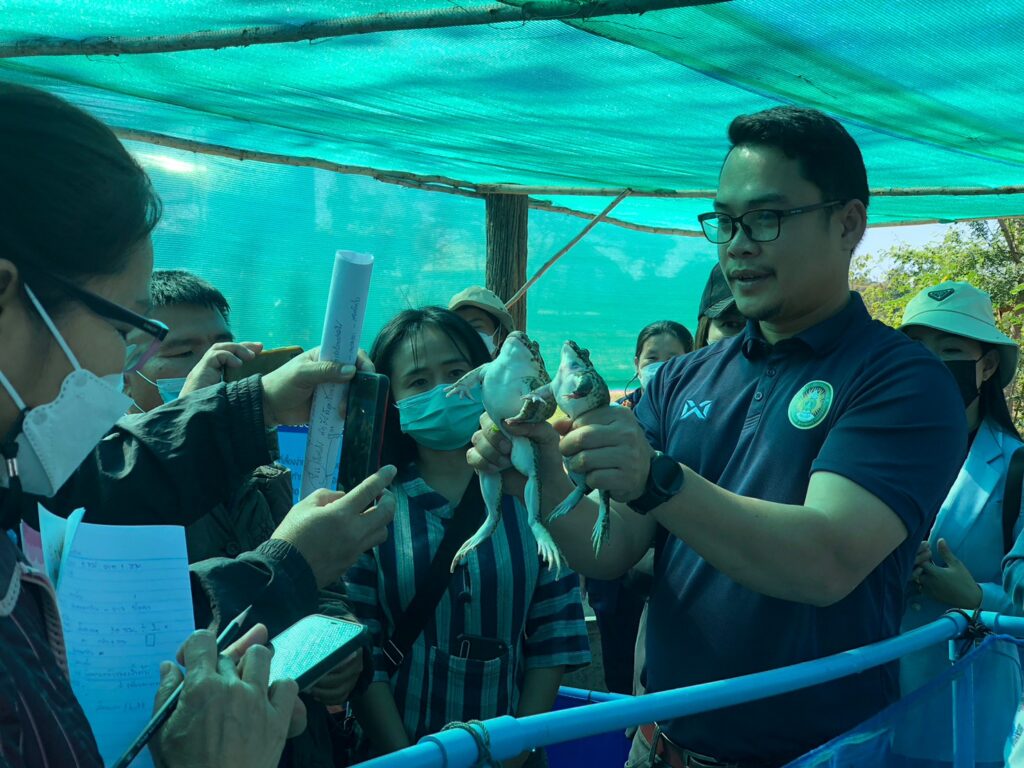
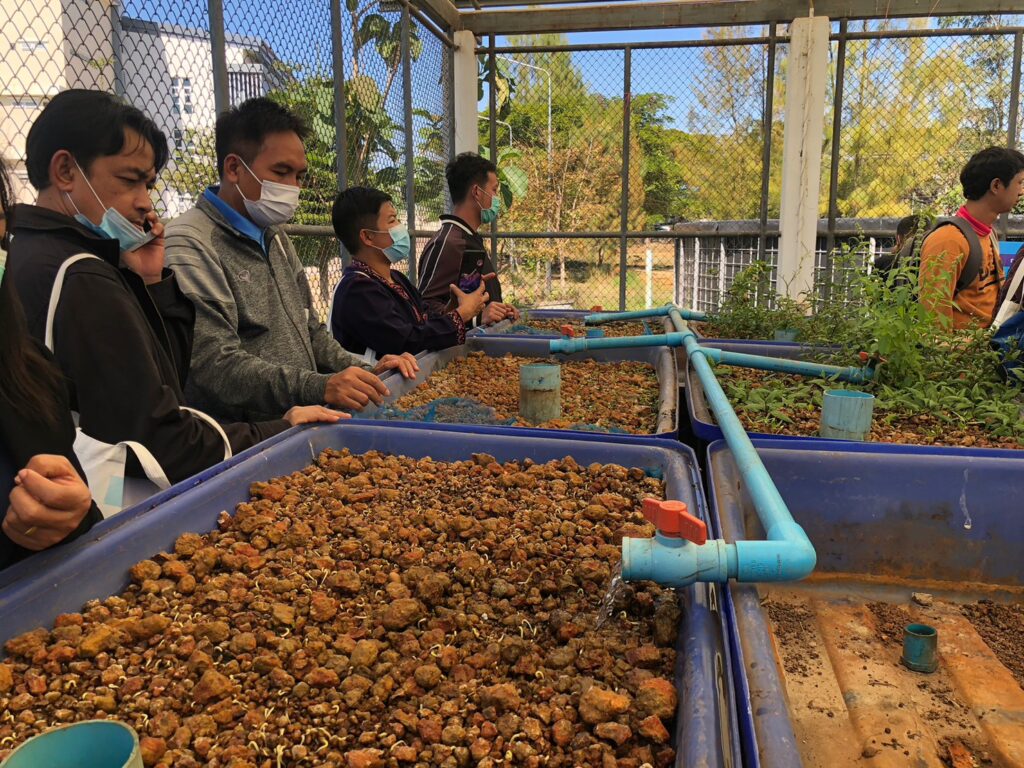
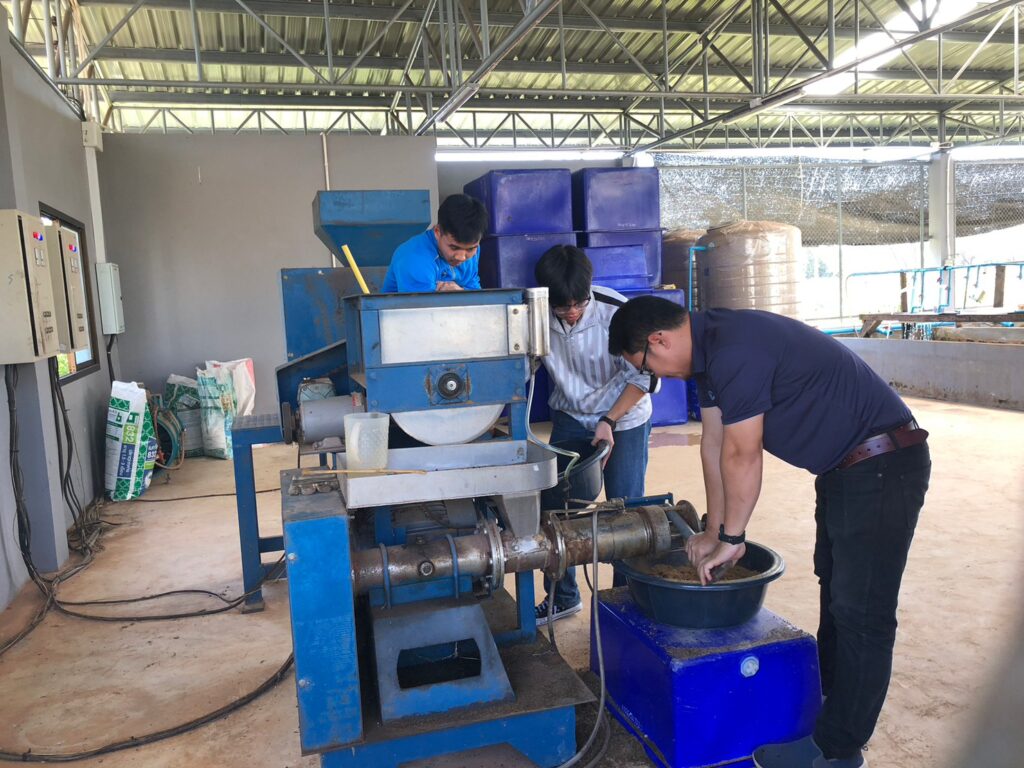
aimed to impart knowledge and understanding on local resource conservation. It provided policy direction and goals to 80 participants from local administrative organizations in Sakon Nakhon, Nakhon Phanom, and Mukdahan provinces. The aquaculture training session included hands-on activities in frog farming in net pens, gender-changing techniques in Nile tilapia, floating pellet feed production, and integrated aquaponics systems. Participants were also introduced to collaboration strategies for building and sharing local knowledge. Leading the session were aquaculture science instructors from the university, including Ms. Oranong Khandech, Asst. Prof. Songsap
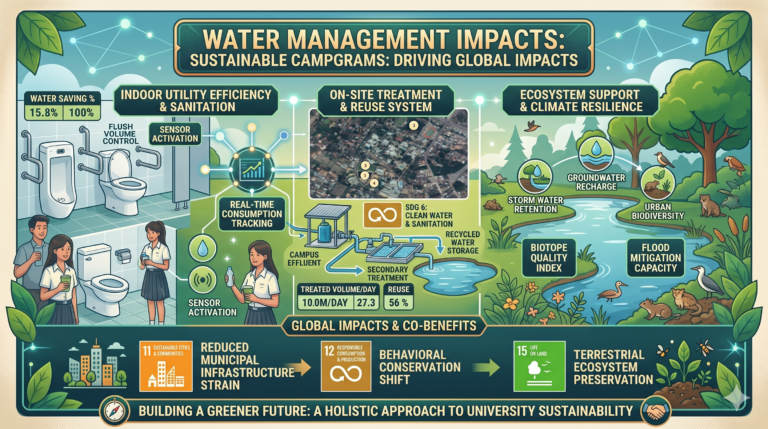
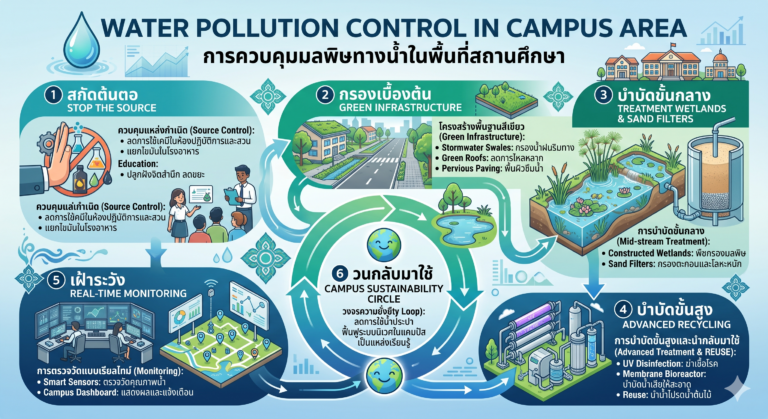
Integrated Impact of Water Management Programs on the SDGs The university’s water management initiatives are driven by a holistic framework. While centered around clean water infrastructure, the program generates cross-cutting impacts that simultaneously support four distinct Sustainable Development Goals (SDGs): [ SDG 6: Clean Water ] │ ┌────────────────────────┼────────────────────────┐ ▼ ▼ ▼ […]
The report form is a monthly report on the operation of the wastewater treatment system and effluent quality. Picture 1. The university’s wastewater treatment facilities employ three types of aeration equipment, namely, roots blowers, diaphragm air pumps, and submersible aerator pumps. A total of 62 units are currently in operation, consisting of both single-phase and […]
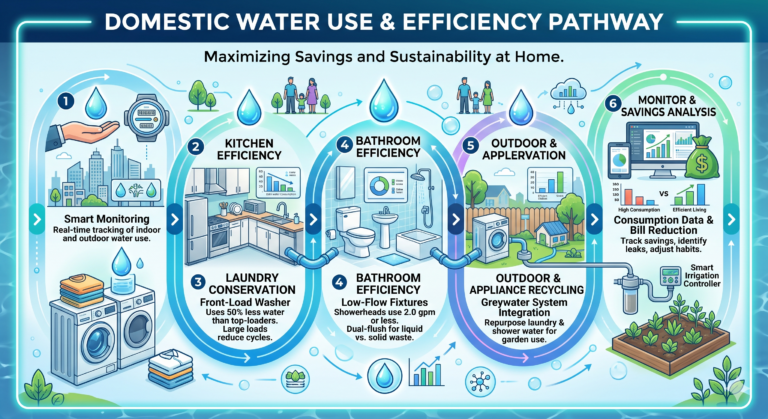
The use of water-efficient appliances such as hand-washing taps, urinals, and sprinkler systems provides significant environmental and operational benefits in the context of UI GreenMetric sustainability assessment. These technologies are designed to minimize water consumption while maintaining functional performance in daily campus activities. Accordingly, water-efficient hand taps, often equipped with sensor or low-flow mechanisms, reduce […]