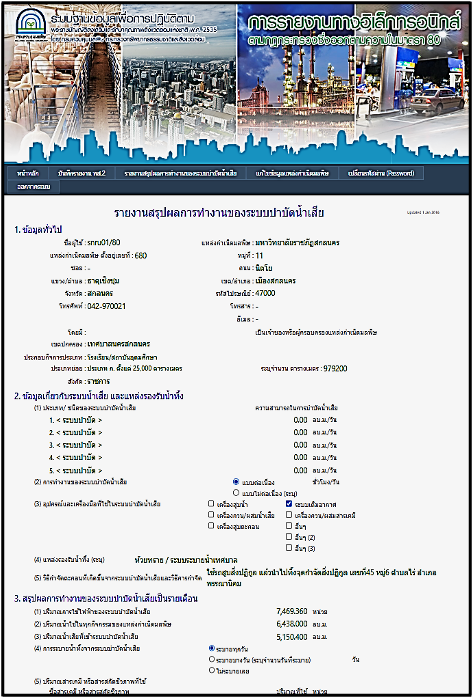
The report form is a monthly report on the operation of the wastewater treatment system and effluent quality.
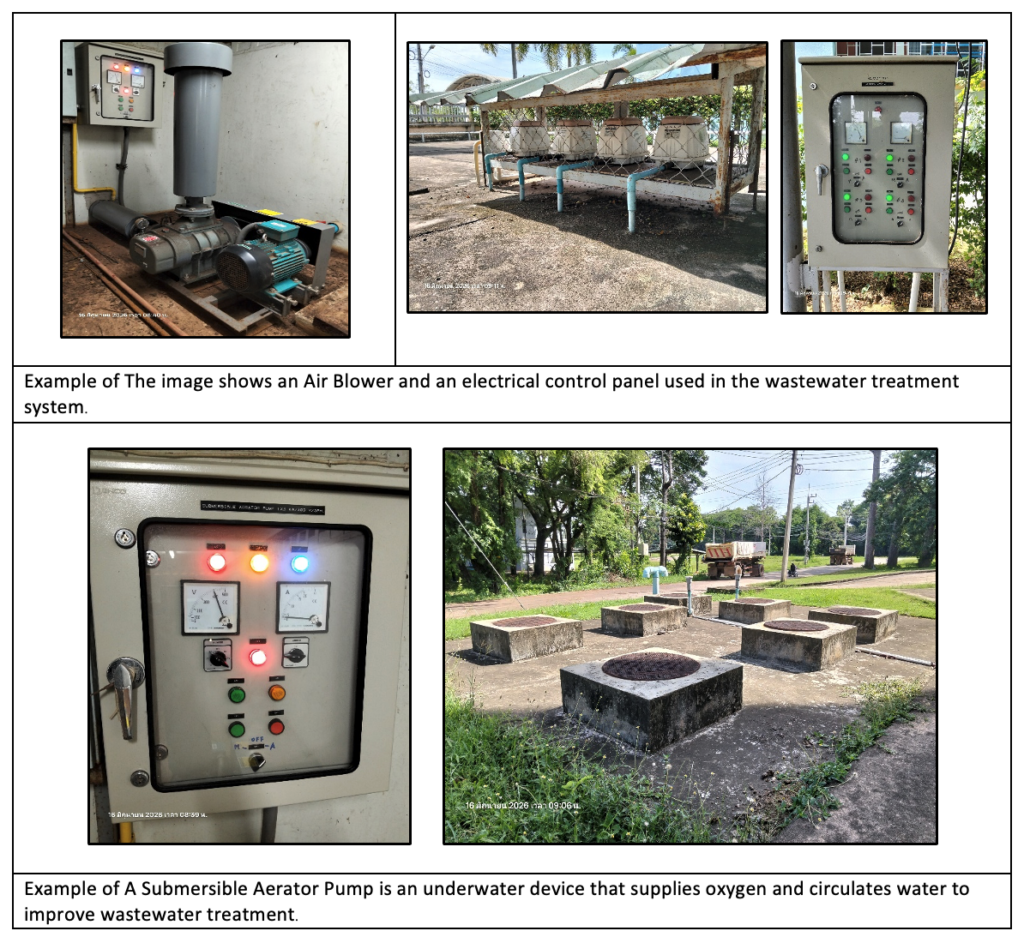
Picture 1. The university’s wastewater treatment facilities employ three types of aeration equipment, namely, roots blowers, diaphragm air pumps, and submersible aerator pumps. A total of 62 units are currently in operation, consisting of both single-phase and three-phase electrical systems. These aeration units play a vital role in supplying oxygen to wastewater treatment processes and supporting biological treatment efficiency. The maximum electricity consumption of the aeration systems is approximately 430 kWh per day.
Picture 2. The university conducts monthly inspections of aeration equipment to ensure the continuous and reliable operation of its wastewater treatment facilities. Furthermore, a monthly Wastewater Treatment System Operation and Effluent Quality Report (TS.2) is submitted to the Pollution Control Department (PCD) to verify system performance and compliance with national environmental regulations. These practices support effective wastewater management, regulatory compliance, and the university’s commitment to environmental sustainability.
Sakon Nakhon Rajabhat University (SNRU) demonstrates a structured, significant impact on the United Nations Sustainable Development Goals (SDGs) through its diverse portfolio of education, research, and community outreach programs. As documented in the university’s institutional reporting and performance showcases, the curriculum and academic initiatives directly support at least 6 to 7 distinct SDGs: This comprehensive […]
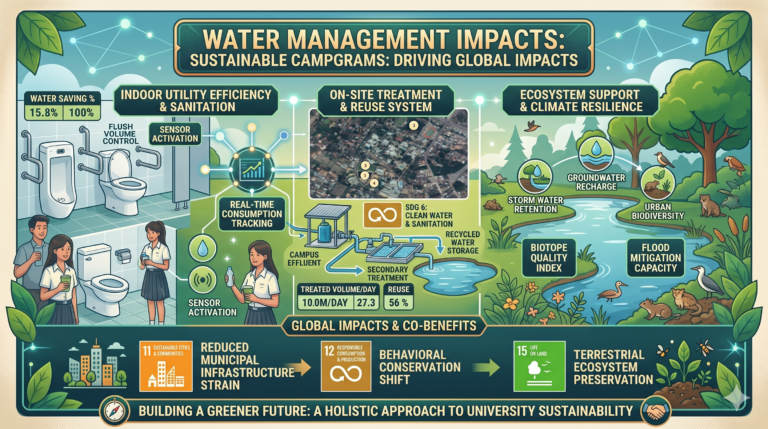
Integrated Impact of Water Management Programs on the SDGs The university’s water management initiatives are driven by a holistic framework. While centered around clean water infrastructure, the program generates cross-cutting impacts that simultaneously support four distinct Sustainable Development Goals (SDGs): [ SDG 6: Clean Water ] │ ┌────────────────────────┼────────────────────────┐ ▼ ▼ ▼ […]
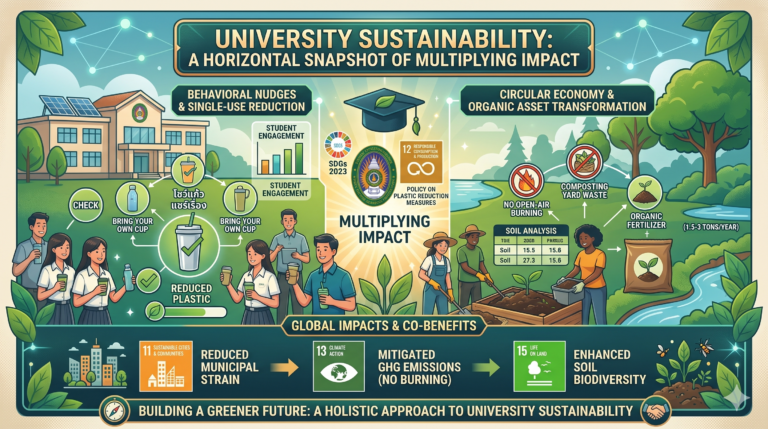
Integrated Impact of Waste Management Programs on the Sustainable Development Goals (SDGs) While the university’s baseline framework originates from SDG 12: Responsible Consumption and Production, the operational practices executed by the Buildings and Vehicles Ground Division demonstrate a powerful, systemic impact that cuts across multiple global goals. ♻️ SDG 12: Responsible Consumption and Production (Core […]