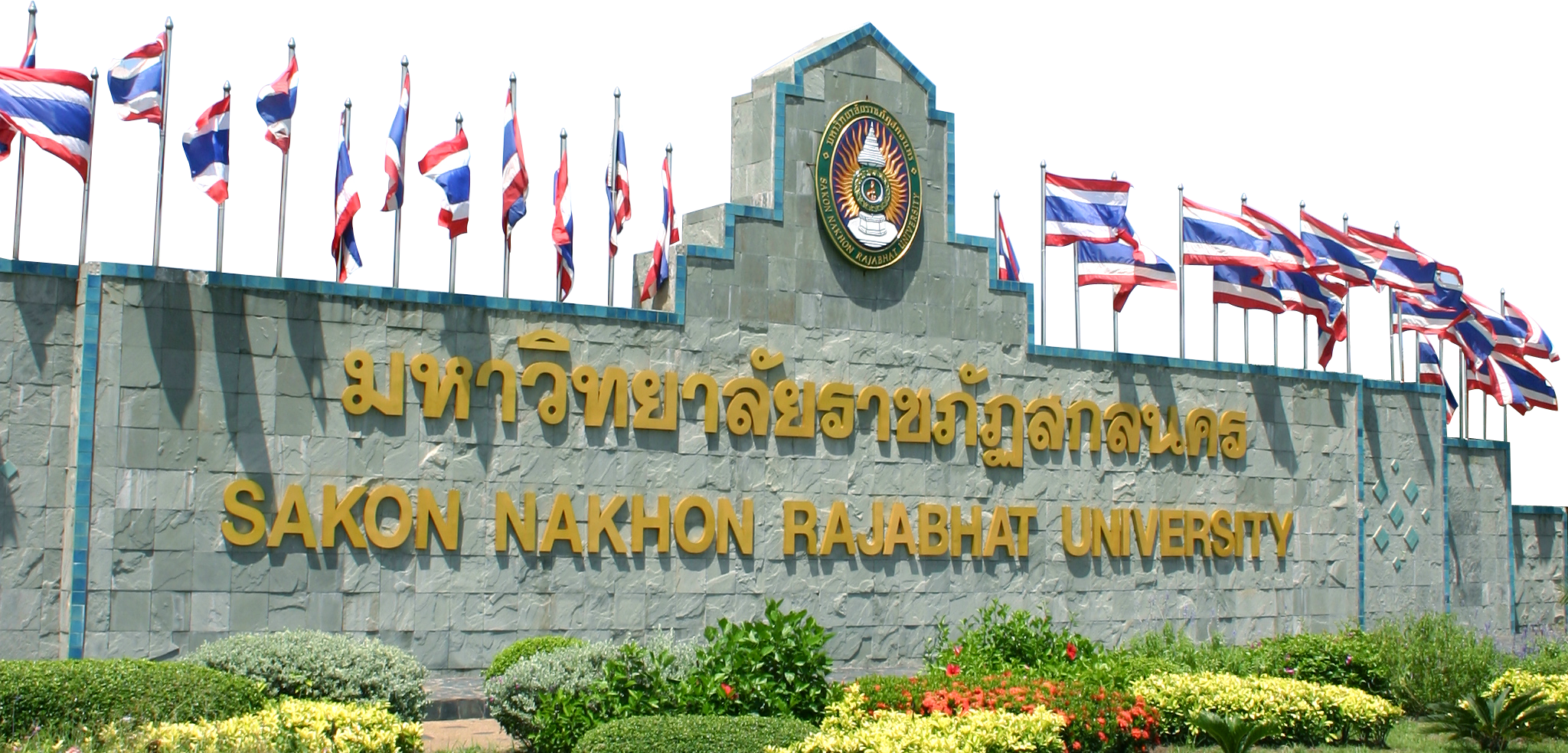
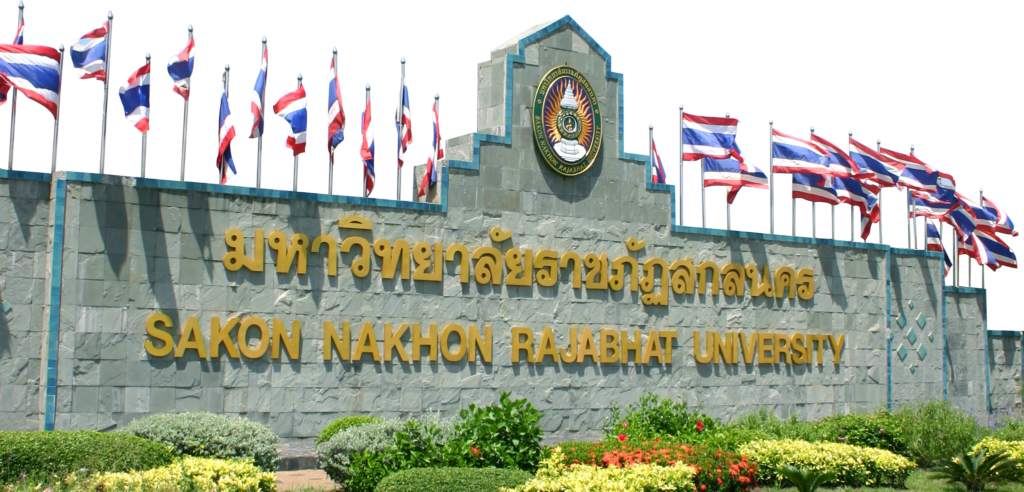
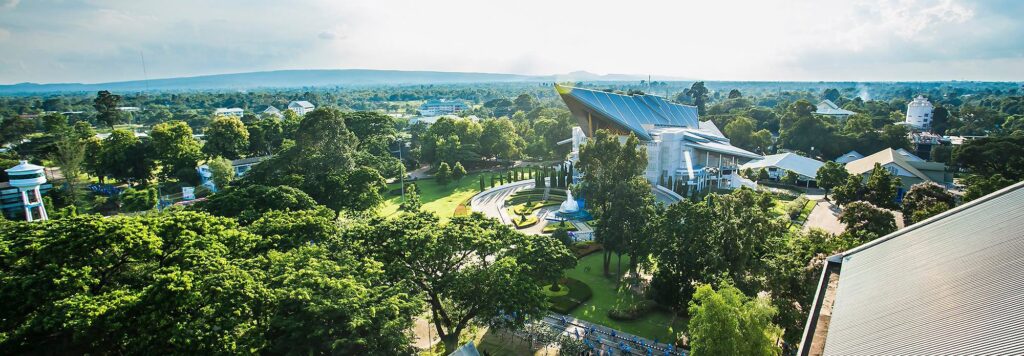
The campus of Sakon Nakhon Rajabhat University provides a dynamic and welcoming environment that blends modern academic facilities with extensive natural green spaces. Situated approximately 6 kilometers from Sakon Nakhon city center along the Sakon Nakhon–Udon Thani highway, the campus features well-maintained buildings, open lawns, natural water bodies, tree-lined pathways, and biodiversity conservation areas, creating an ideal atmosphere for learning, research, and community engagement.
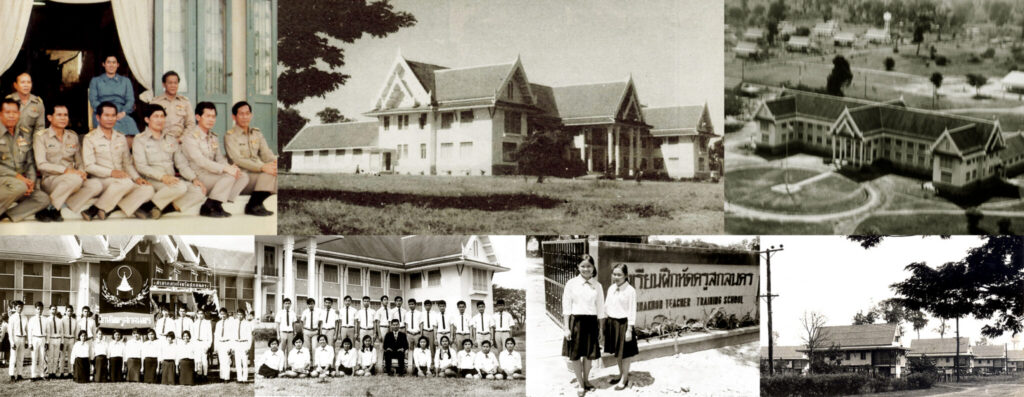
The history of Sakon Nakhon Rajabhat University reflects the enduring commitment of the local community to quality education. The institution was formally established on 17 July 1964 as the Sakon Nakhon Teacher Training School (Rong Rian Fuekhat Khru Sakon Nakhon), receiving its first cohort of 70 students. The land on which it stands was formerly owned by the Ministry of Defense and the Royal Thai Police and was later transferred to the Ministry of Education to serve as a teacher-training school, a decision made under Prime Minister Field Marshal Sarit Thanarat.
Over the following decades, the institution grew steadily. In 1970, it was elevated to Sakon Nakhon Teachers College (Witthayalai Khru Sakon Nakhon), and from 1975 onwards, it expanded its programs to include bachelor’s degrees. On 14 February 1992, His Majesty King Bhumibol Adulyadej graciously bestowed the name “Rajabhat” upon all teacher colleges nationwide, and the institution became Sakon Nakhon Rajabhat Institute.
The most significant milestone came on 9 June 2004, when His Majesty the King signed the Rajabhat University Act B.E. 2547 into law. From 15 June 2004, the institution was elevated to full university status as Sakon Nakhon Rajabhat University, joining the national network of 38 Rajabhat Universities under the Ministry of Higher Education, Science, Research, and Innovation.
Sakon Nakhon Rajabhat University is 6 kilometers from Muang City on the highway leading to Udon Thani province. It was originally established under the jurisdiction of the Ministry of Education as Sakon Nakhon Teachers’ Training School on July 17, 1964. The campus spans an area of 1,019,200 sq m. In 1966, the school introduced a higher education program, granting students a Certificate of Advanced Education equivalent to an Associate Degree. The institution became Sakon Nakhon Teachers’ College in 1970 and started offering a Bachelor’s Degree in Education in 1975. In 1995, His Majesty King Bhumibol Adulyadej graciously bestowed the name “Rajabhat Institute” upon all Teachers’ Colleges. Subsequently, Sakon Nakhon Teachers’ College transitioned into Rajabhat University when His Majesty the King endorsed the bill to elevate all Rajabhat Institutes to universities nationwide.
Today, Sakon Nakhon Rajabhat University serves as a comprehensive regional university with a mission to develop graduates who are academically capable, locally rooted, and globally aware. With its single main campus in Sakon Nakhon, the university offers a fully integrated residential and commuter campus with modern lecture halls, research laboratories, sports facilities, health services, a library and information technology center, and extensive green and forested areas, all contributing to a sustainable and livable campus community.
Sakon Nakhon Rajabhat University (SNRU) demonstrates a structured, significant impact on the United Nations Sustainable Development Goals (SDGs) through its diverse portfolio of education, research, and community outreach programs. As documented in the university’s institutional reporting and performance showcases, the curriculum and academic initiatives directly support at least 6 to 7 distinct SDGs: This comprehensive […]
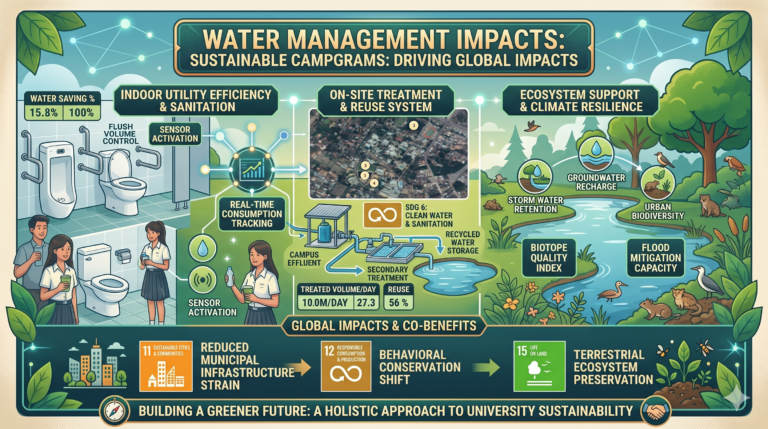
Integrated Impact of Water Management Programs on the SDGs The university’s water management initiatives are driven by a holistic framework. While centered around clean water infrastructure, the program generates cross-cutting impacts that simultaneously support four distinct Sustainable Development Goals (SDGs): [ SDG 6: Clean Water ] │ ┌────────────────────────┼────────────────────────┐ ▼ ▼ ▼ […]
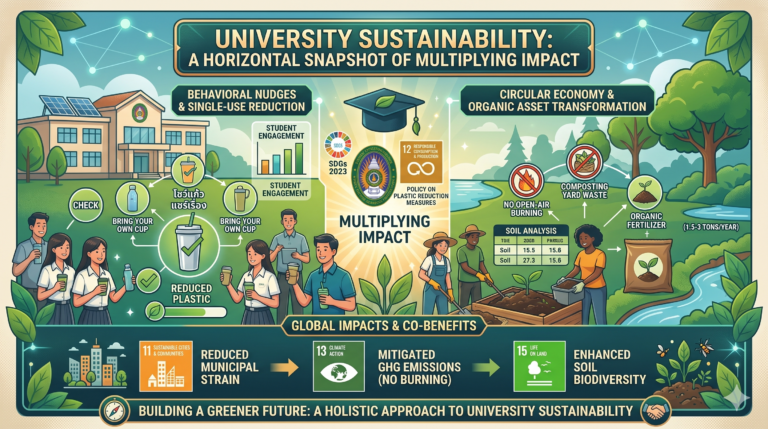
Integrated Impact of Waste Management Programs on the Sustainable Development Goals (SDGs) While the university’s baseline framework originates from SDG 12: Responsible Consumption and Production, the operational practices executed by the Buildings and Vehicles Ground Division demonstrate a powerful, systemic impact that cuts across multiple global goals. ♻️ SDG 12: Responsible Consumption and Production (Core […]