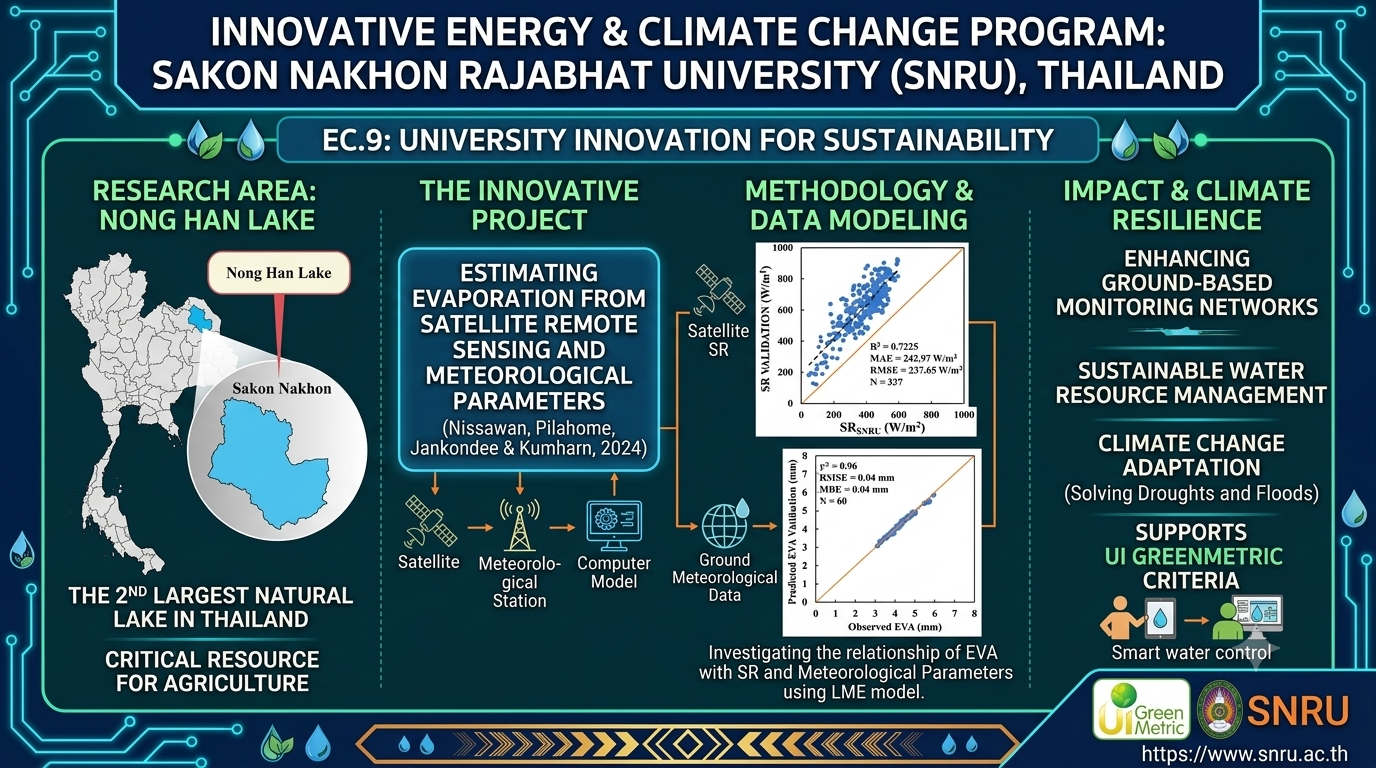
Innovative programs in energy and climate change are essential indicators of a university’s commitment to sustainability. These initiatives support energy conservation, greenhouse gas mitigation, and climate resilience while promoting environmental awareness within the campus community. Then, the university has implemented several innovative research projects that support the objectives of the UI GreenMetric World University Rankings. One such project, entitled “Estimating Evaporation from Satellite Remote Sensing and Meteorological Parameters”, employs advanced geospatial technologies to monitor environmental conditions and enhance sustainable water resource management. This project contributes to climate change adaptation and environmental sustainability, thereby reinforcing the university’s commitment to sustainable development and supporting the Energy and Climate Change criteria of the UI GreenMetric framework.
No.
Research topic
Author
1
ESTIMATING EVAPORATION FROM SATELLITE REMOTE SENSING AND METEOROLOGICAL PARAMETERS
(Nissawan, Pilahome, Jankondee & Kumharn, 2024)
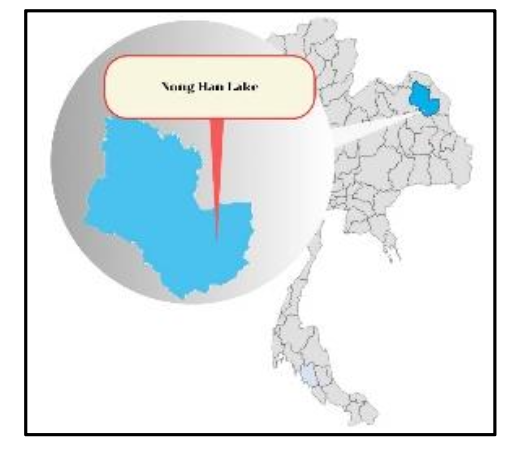
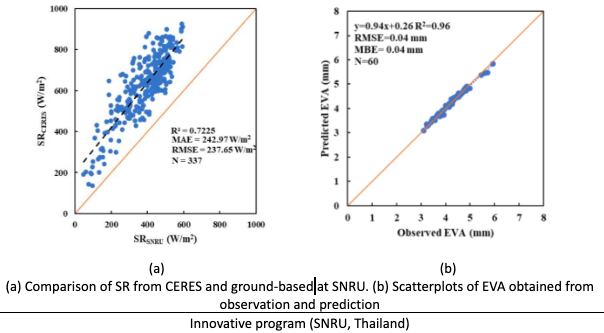
Northeastern Thailand is central to agriculture, growing rice and crops. Recently, this region has faced extreme climate conditions, more water in the rainy season, and drought in the dry months, which is a big concern for the Thai government to resolve. Lakes are essential in supporting the local nation in this area to solve the problem. Nong Han Lake is the second biggest nature lake in Thailand. Therefore, information on the hydrologic system is essential for efficient water management. This work focused on estimating the evaporation loss of the water system for Nong Han Lake. The relationship of evaporation with solar radiation (SR) and metrological parameters was investigated using the linear mixed effect (LME). Evaporation (EVA) data were retrieved from the Thai Meteorological Department (TMD), and metrological parameters were obtained from the National Centres for Environmental Prediction (NCEP)/the National Centre for Atmospheric Research (NCAR) global reanalysis. SR was downloaded from the Clouds and the Earth’s Radiant Energy System (CERES). EVA changes throughout the year, reaching a peak in April compared with December. The model confirms that predicted EVA obtained from meteorological parameters has a high performance for increasing existing ground-based EVA monitoring networks.
Sakon Nakhon Rajabhat University (SNRU) demonstrates a structured, significant impact on the United Nations Sustainable Development Goals (SDGs) through its diverse portfolio of education, research, and community outreach programs. As documented in the university’s institutional reporting and performance showcases, the curriculum and academic initiatives directly support at least 6 to 7 distinct SDGs: This comprehensive […]
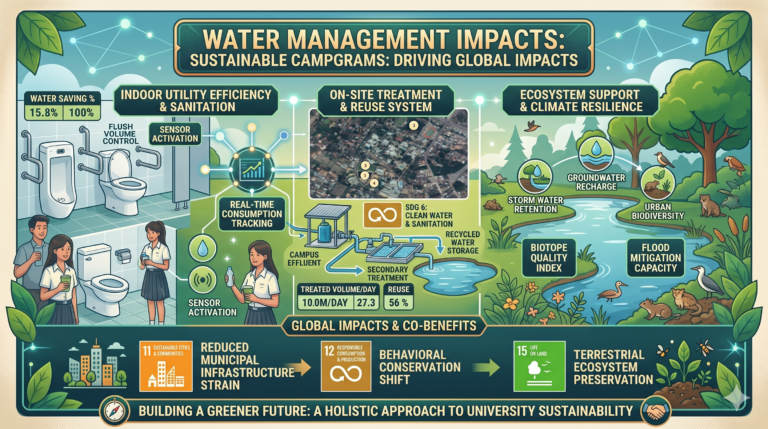
Integrated Impact of Water Management Programs on the SDGs The university’s water management initiatives are driven by a holistic framework. While centered around clean water infrastructure, the program generates cross-cutting impacts that simultaneously support four distinct Sustainable Development Goals (SDGs): [ SDG 6: Clean Water ] │ ┌────────────────────────┼────────────────────────┐ ▼ ▼ ▼ […]
Integrated Impact of Waste Management Programs on the Sustainable Development Goals (SDGs) While the university’s baseline framework originates from SDG 12: Responsible Consumption and Production, the operational practices executed by the Buildings and Vehicles Ground Division demonstrate a powerful, systemic impact that cuts across multiple global goals. ♻️ SDG 12: Responsible Consumption and Production (Core […]