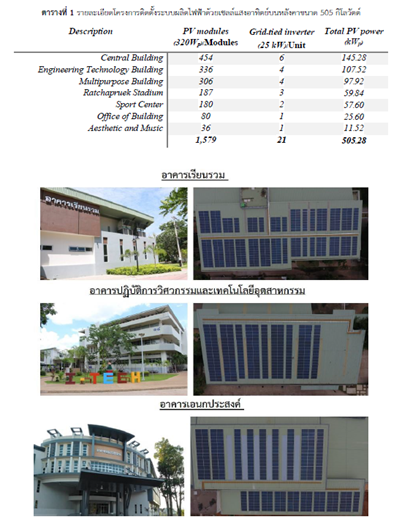
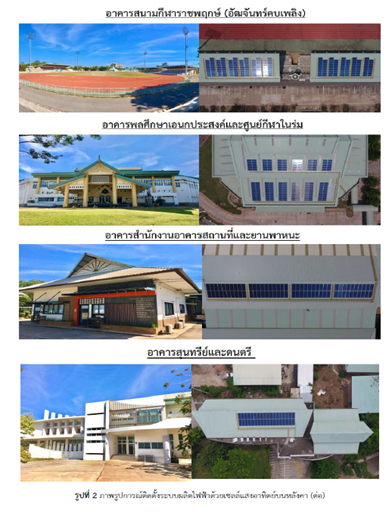
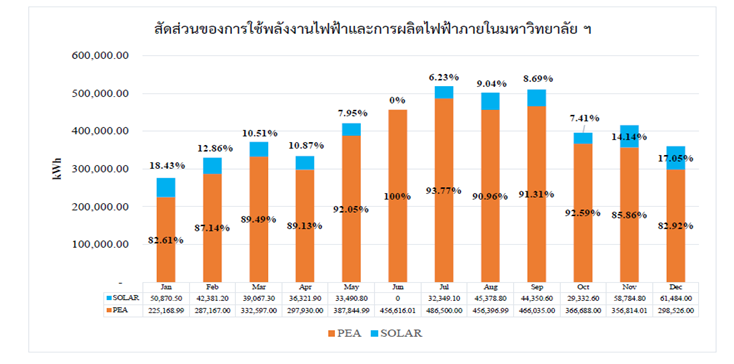
Sakon Nakhon Rajabhat University consumes an average of approximately 403,000 kWh of electricity per month. The university’s solar photovoltaic (PV) system generates a total of 568,690.40 kWh annually, equivalent to an average of 34,477.22 kWh per month. Consequently, renewable energy accounts for an average of 7.85% of the university’s total electricity consumption, while the remaining 92.15% continues to be supplied by the external electricity grid. These figures indicate that, although the university has actively promoted the adoption of renewable energy through solar power generation, the majority of its electricity demand is still dependent on external power distribution systems. These achievements reflect the university’s success in promoting the use of clean energy and reducing dependence on external energy sources. The electricity generated from the solar photovoltaic (PV) systems contributes to an annual reduction in electricity expenditures of approximately THB 2.5 million. In addition, the utilization of renewable energy significantly supports the university’s efforts to mitigate greenhouse gas emissions and advance its sustainability goals.
Nevertheless, the university retains considerable potential to further increase the share of renewable energy by expanding its solar photovoltaic generation capacity and strengthening its energy management system. Such measures will enhance energy efficiency, reduce dependence on external energy sources, and contribute to the sustainable development of the university as a Green University and Smart Campus.
Sakon Nakhon Rajabhat University (SNRU) demonstrates a structured, significant impact on the United Nations Sustainable Development Goals (SDGs) through its diverse portfolio of education, research, and community outreach programs. As documented in the university’s institutional reporting and performance showcases, the curriculum and academic initiatives directly support at least 6 to 7 distinct SDGs: This comprehensive […]
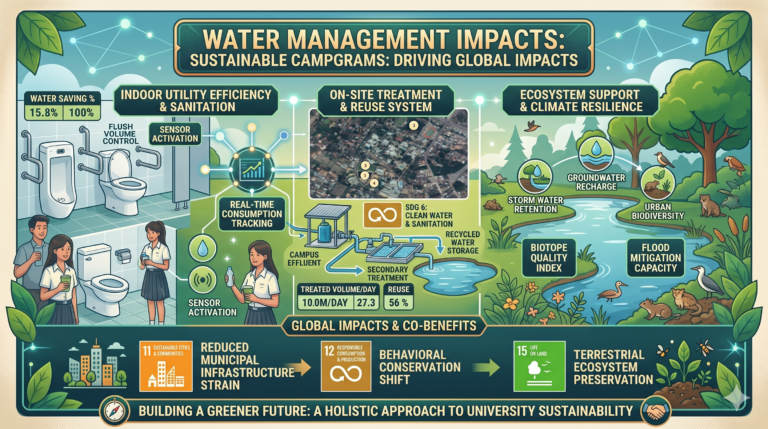
Integrated Impact of Water Management Programs on the SDGs The university’s water management initiatives are driven by a holistic framework. While centered around clean water infrastructure, the program generates cross-cutting impacts that simultaneously support four distinct Sustainable Development Goals (SDGs): [ SDG 6: Clean Water ] │ ┌────────────────────────┼────────────────────────┐ ▼ ▼ ▼ […]
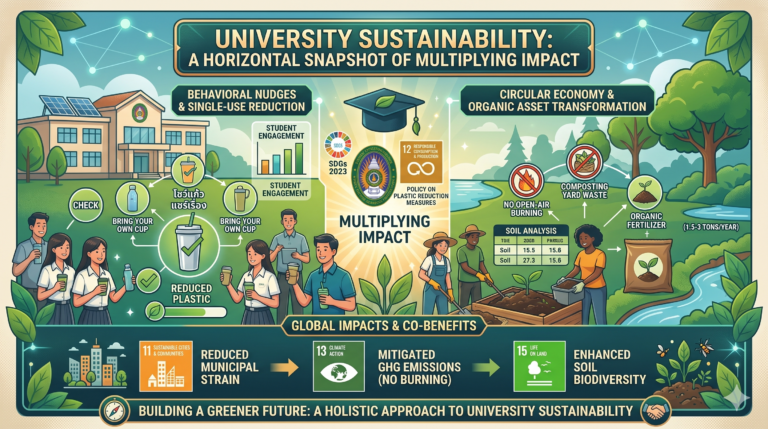
Integrated Impact of Waste Management Programs on the Sustainable Development Goals (SDGs) While the university’s baseline framework originates from SDG 12: Responsible Consumption and Production, the operational practices executed by the Buildings and Vehicles Ground Division demonstrate a powerful, systemic impact that cuts across multiple global goals. ♻️ SDG 12: Responsible Consumption and Production (Core […]