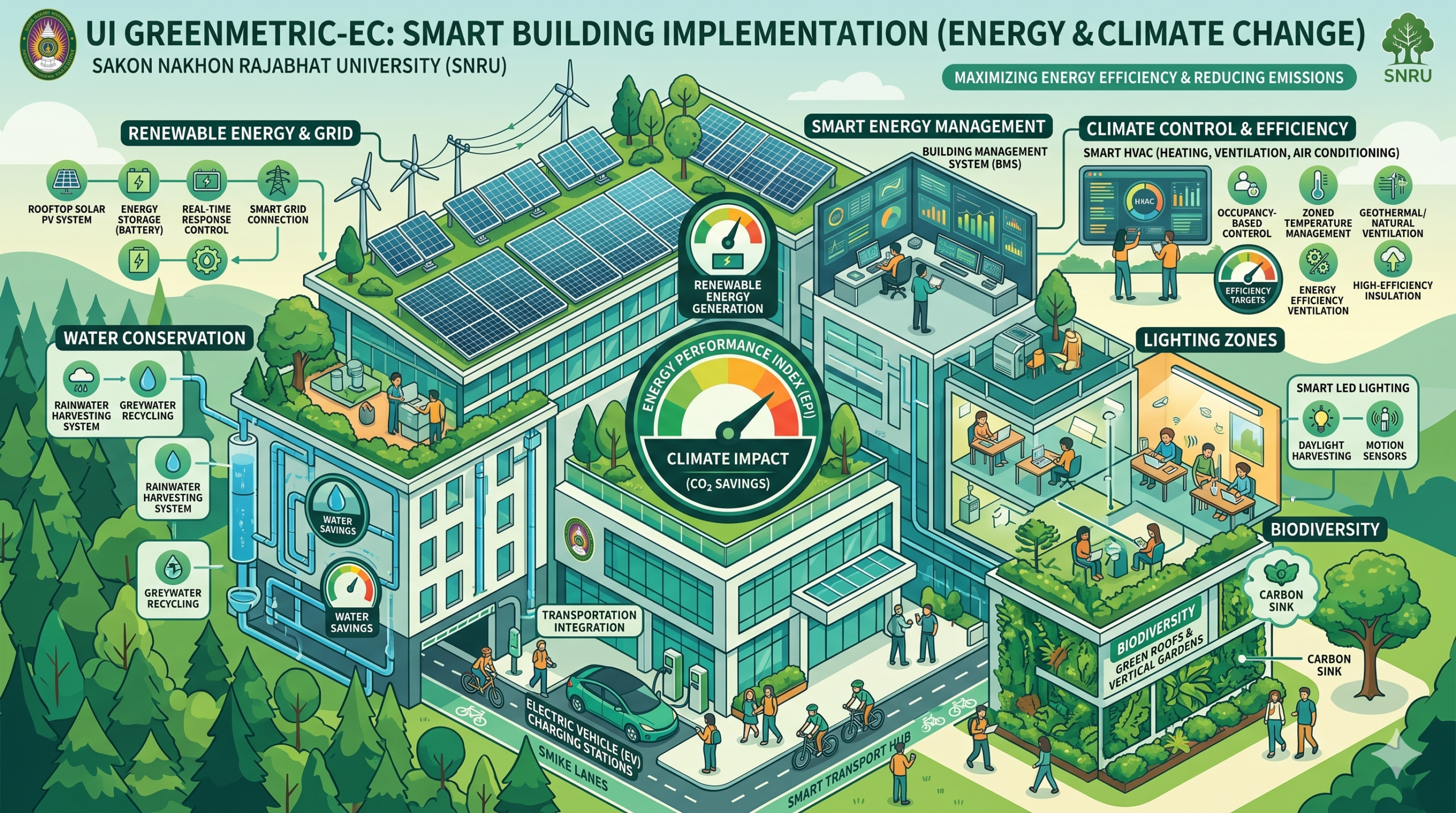
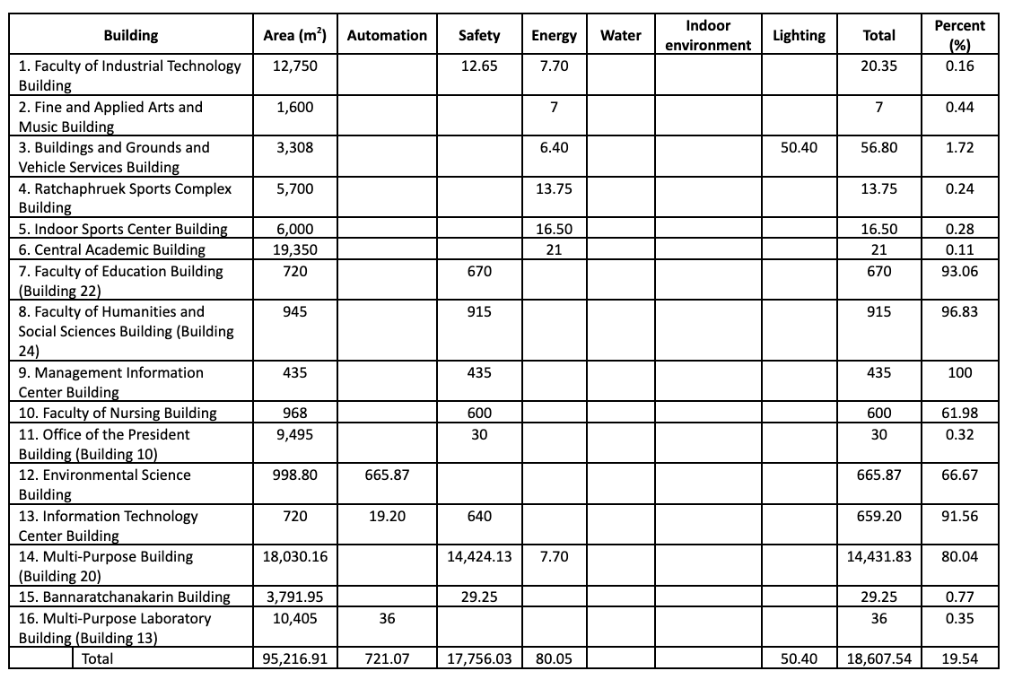
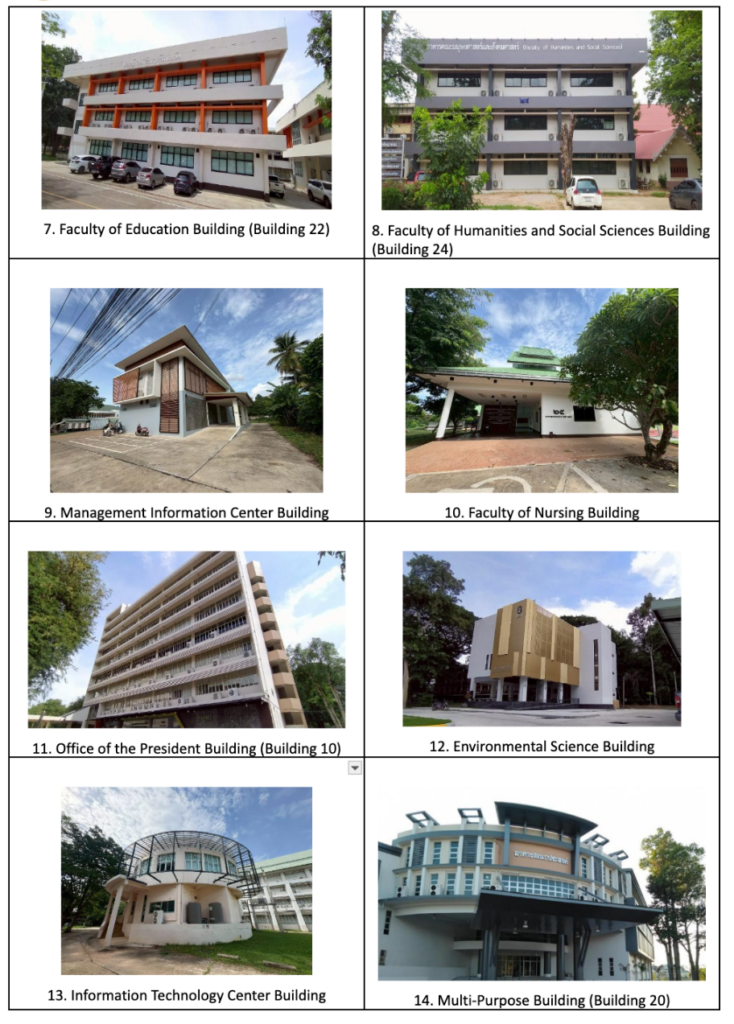
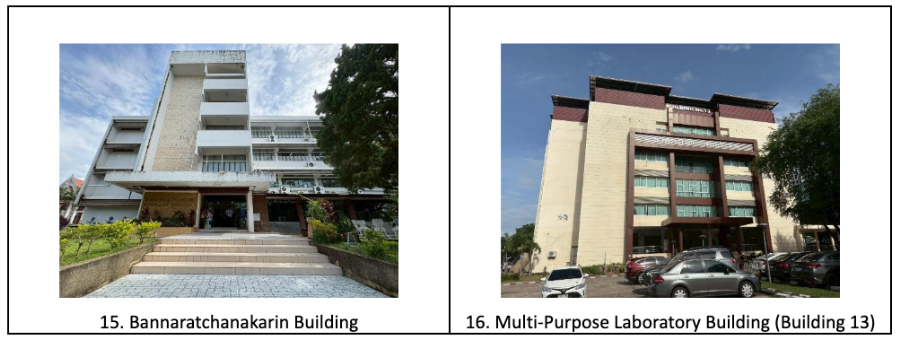
Sakon Nakhon Rajabhat University has progressively implemented Smart Building technologies to enhance campus sustainability, operational efficiency, and occupant safety. Currently, the smart building systems cover 19.63% of the total building area, with safety and security systems representing the most extensively implemented components. These initiatives support the University’s transition toward a Smart Campus and contribute to its long-term sustainable development goals.
Sakon Nakhon Rajabhat University has a total building area of 95,216.91 square meters (m2) of which 18,687.54 square meters (m2) are equipped with Smart Building systems, representing 19.63% of the total building area. The implementation of Smart Building initiatives is particularly prominent in the area of Safety and Security systems, which cover the largest proportion of the smart building area, reflecting the University’s strong commitment to ensuring the safety of building occupants and safeguarding institutional assets. In addition, Automation, Energy Management, and Smart Lighting systems have already been introduced in several buildings. However, there remains considerable potential for further expansion and enhancement to improve energy efficiency and optimize building management practices. Expanding the implementation of Water Management and Indoor Environmental Quality systems would further strengthen the University’s transition toward becoming a Smart Campus and contribute substantially to achieving sustainable development goals in the future.
Sakon Nakhon Rajabhat University (SNRU) demonstrates a structured, significant impact on the United Nations Sustainable Development Goals (SDGs) through its diverse portfolio of education, research, and community outreach programs. As documented in the university’s institutional reporting and performance showcases, the curriculum and academic initiatives directly support at least 6 to 7 distinct SDGs: This comprehensive […]
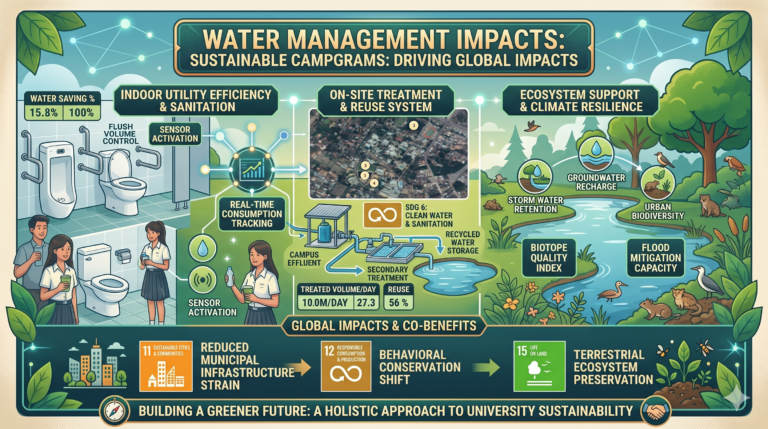
Integrated Impact of Water Management Programs on the SDGs The university’s water management initiatives are driven by a holistic framework. While centered around clean water infrastructure, the program generates cross-cutting impacts that simultaneously support four distinct Sustainable Development Goals (SDGs): [ SDG 6: Clean Water ] │ ┌────────────────────────┼────────────────────────┐ ▼ ▼ ▼ […]
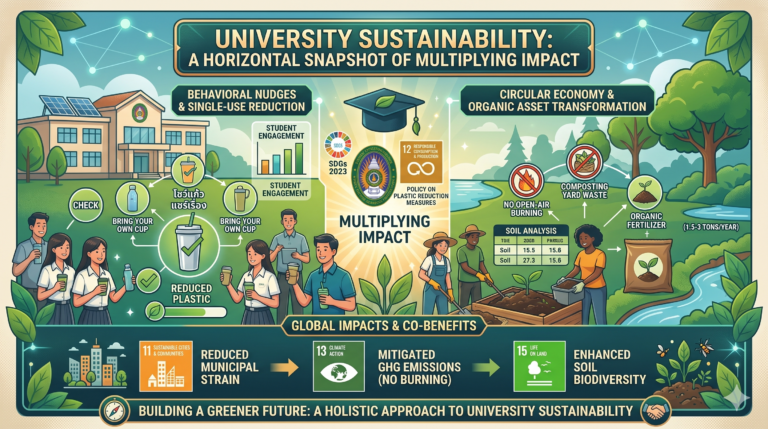
Integrated Impact of Waste Management Programs on the Sustainable Development Goals (SDGs) While the university’s baseline framework originates from SDG 12: Responsible Consumption and Production, the operational practices executed by the Buildings and Vehicles Ground Division demonstrate a powerful, systemic impact that cuts across multiple global goals. ♻️ SDG 12: Responsible Consumption and Production (Core […]