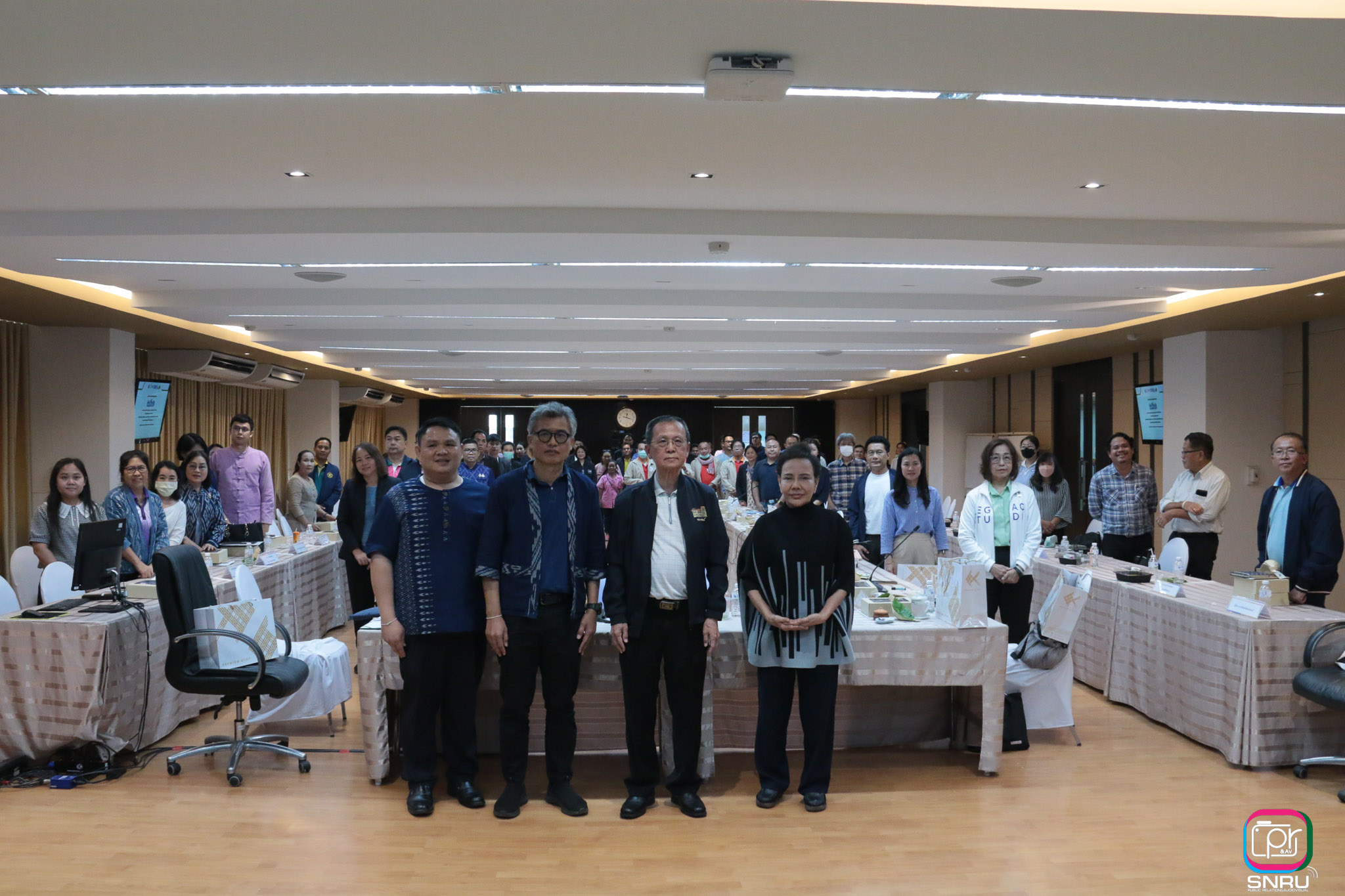
On May 30, 2025, the Research and Development Institute of Sakon Nakhon Rajabhat University organized a monitoring activity on the progress of research and the development of a comprehensive and precise poverty alleviation platform in Sakon Nakhon Province. This event was conducted under the project titled “Development and Upgrading of Sakon Nakhon Province into a Strategic Research Area for Poverty Alleviation and Social Opportunity Creation through Research, Innovation, and Technology.” The activity took place at the Sroysuwanna Meeting Room, Building 10, Sakon Nakhon Rajabhat University. Dr. Asoke Ponbumrung, Director of Research and Innovation for Poverty Alleviation and Inequality Reduction, clarified the objectives and goals of the meeting. Subsequently, Associate Professor Dr. Kongpop Chaamat, Vice President of the university, presented the progress of research activities in Sakon Nakhon Province along with preliminary findings.
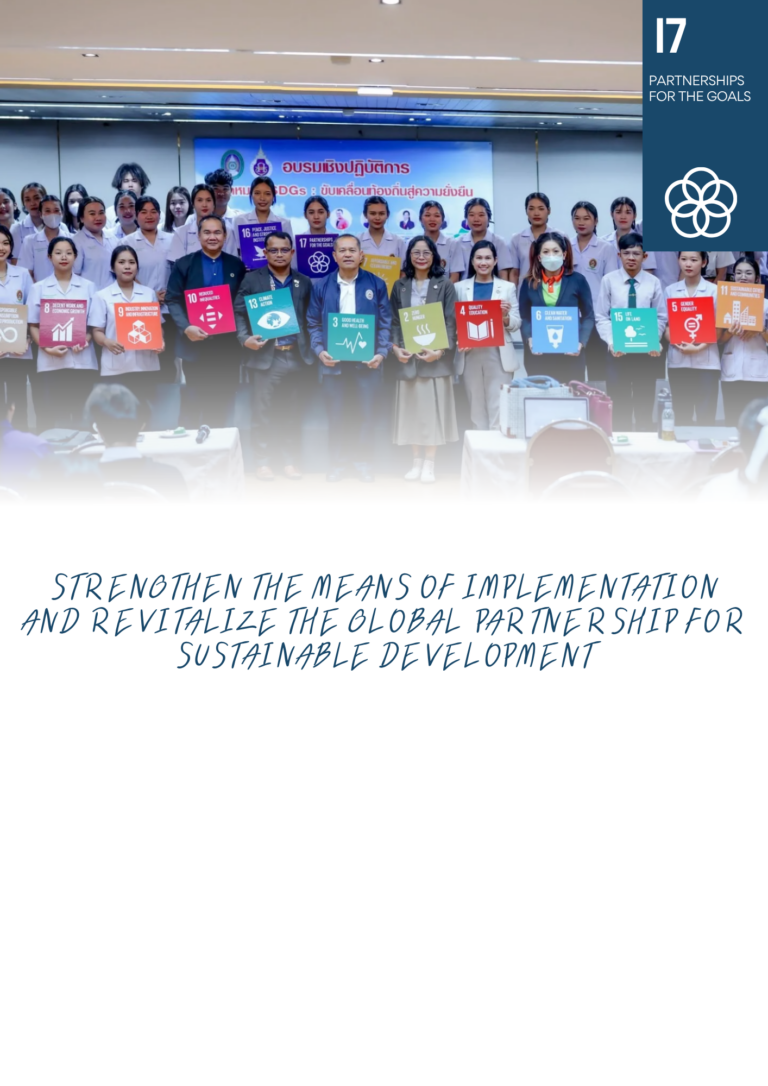
Sakon Nakhon Rajabhat University (SNRU) defines itself as “a higher education institution for local development,” so partnership is central to its mission. The University Council approved the 5-Year Strategic Plan (2026–2030) on 4 July 2025, with the vision “A Leading Higher Education Institution for Local Development with Global Perspectives through Innovation, Wisdom, and Good Governance.” […]
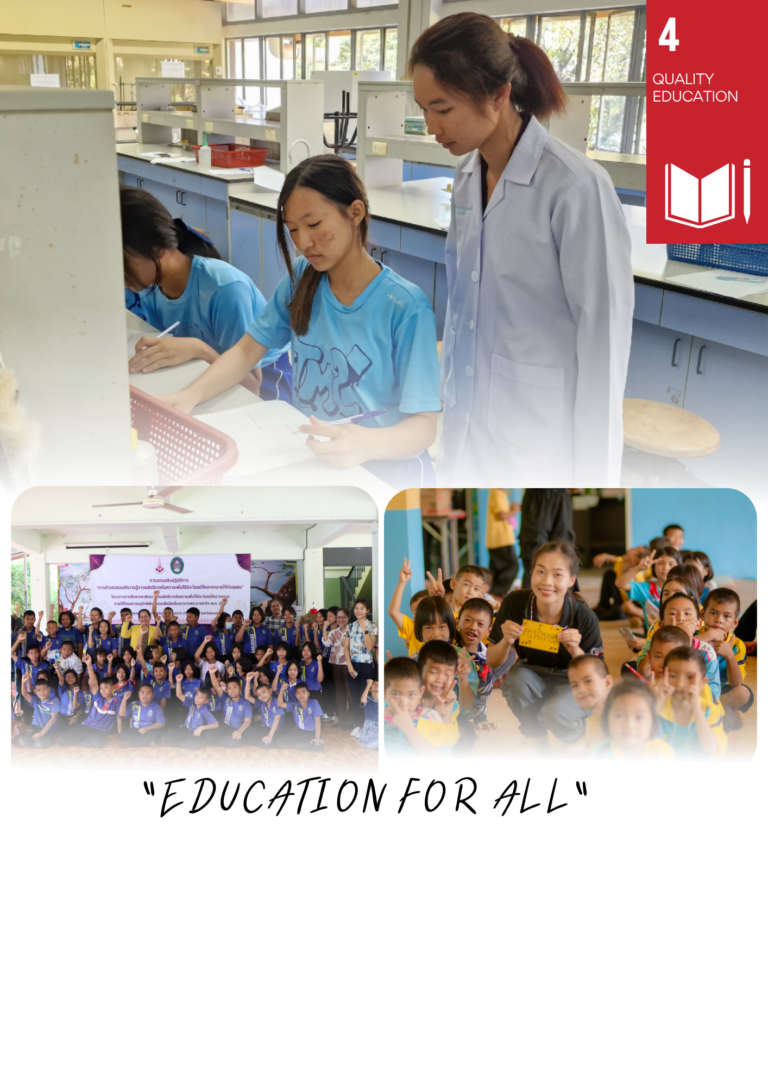
As a higher education institution for local development, Sakon Nakhon Rajabhat University (SNRU) advances SDG 4: Quality Education. In line with its mission under the Rajabhat University Act B.E. 2547 (2004), SNRU produces and develops high-quality teachers for schools in Sakon Nakhon and the upper Northeast through its Faculty of Education. It improves education quality […]
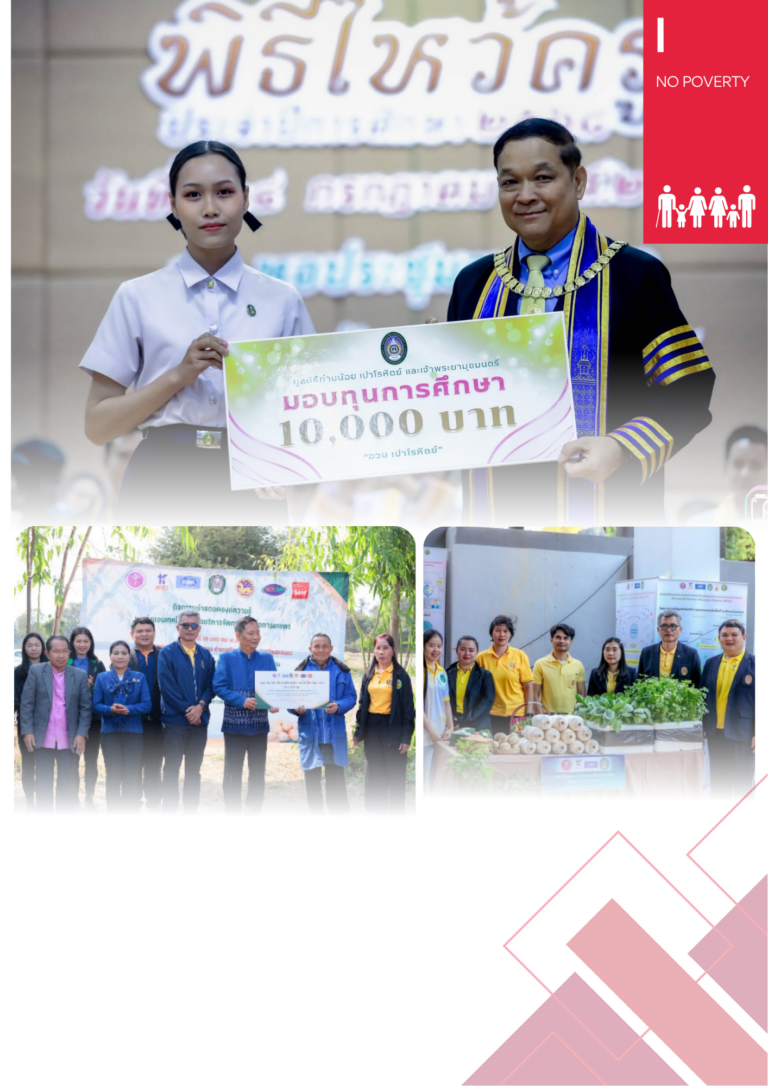
Sakon Nakhon Rajabhat University (SNRU) is a university for local development and treats poverty eradication as central to its mission. Sakon Nakhon is a farming province facing high production costs, low crop prices, drought, and “skipped-generation” households, where children live with grandparents while parents work elsewhere. Almost half of households (49.91%) depend on farming, and […]