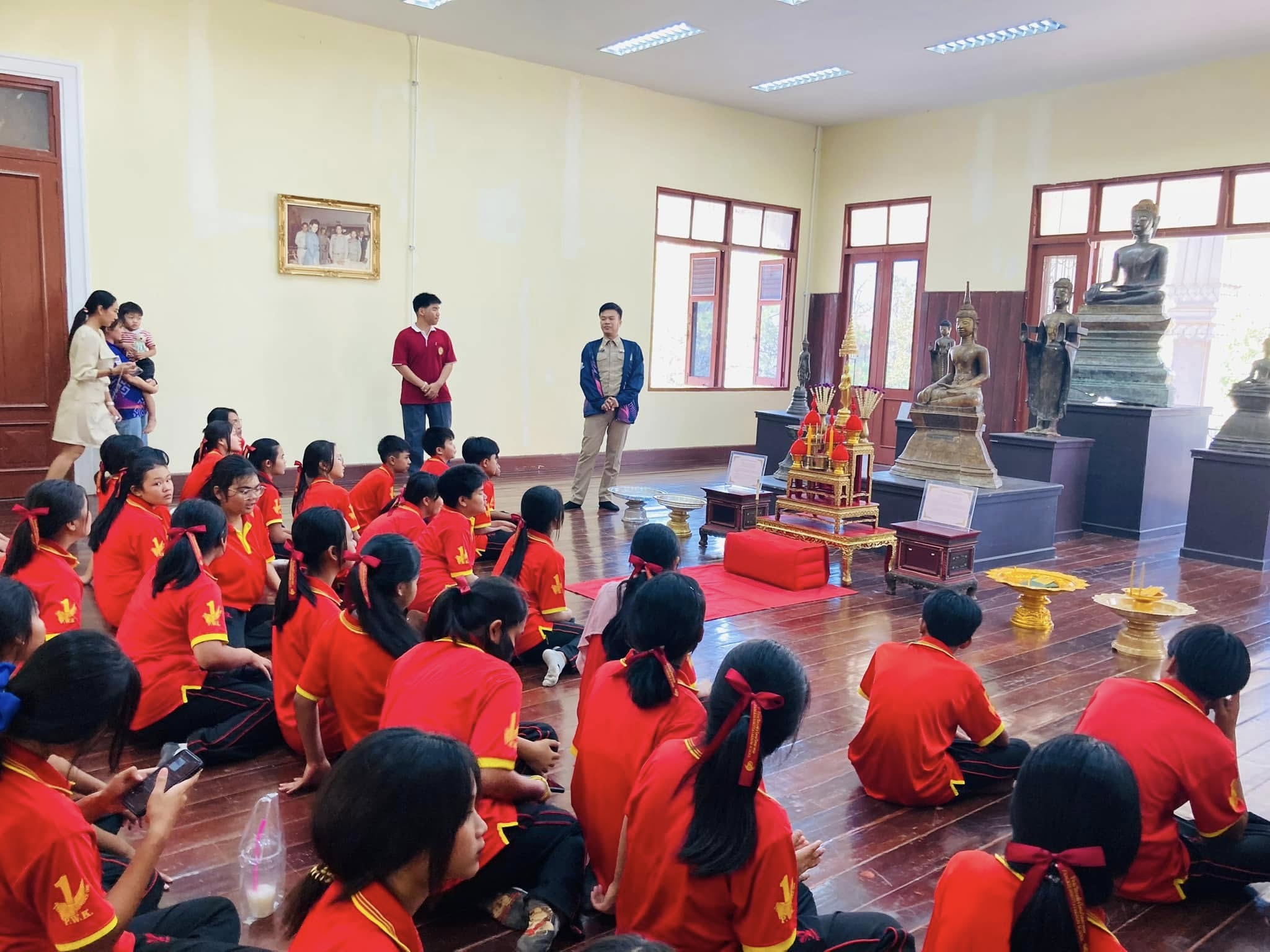
On February 5, 2024, the center welcomed over 350 students from Khok Pho Chai Witthaya School (Secondary Level M. 1) to participate in an engaging Active Learning session. The students joined various activities focused on history, geography, and cultural studies within the university’s museum and cultural spaces. This initiative aims to develop a curriculum that focuses on the learner, encouraging students to gain real-life experience and practical knowledge outside the traditional classroom setting. The university’s historical sites and exhibition halls, seen bustling with visitors-including groups of local students-are now accessible to everyone at no charge. This initiative transforms the university museum from a closed academic resource into a vibrant community learning center. By opening its doors, SNRU ensures that valuable local history, ancient artifacts (such as the showcased Buddha images), and regional heritage are freely available for study and appreciation. This policy directly supports the principles of Sustainable Development Goal 11 (Sustainable Cities and Communities) by safeguarding cultural heritage and providing inclusive, accessible public spaces. SNRU believes that free access to culture and history is essential for lifelong learning and fostering community ties. This ongoing effort positions the university not only as an educational institution but also as a primary custodian and sharer of the region’s rich cultural legacy.
Sakon Nakhon Rajabhat University (SNRU) demonstrates a structured, significant impact on the United Nations Sustainable Development Goals (SDGs) through its diverse portfolio of education, research, and community outreach programs. As documented in the university’s institutional reporting and performance showcases, the curriculum and academic initiatives directly support at least 6 to 7 distinct SDGs: This comprehensive […]
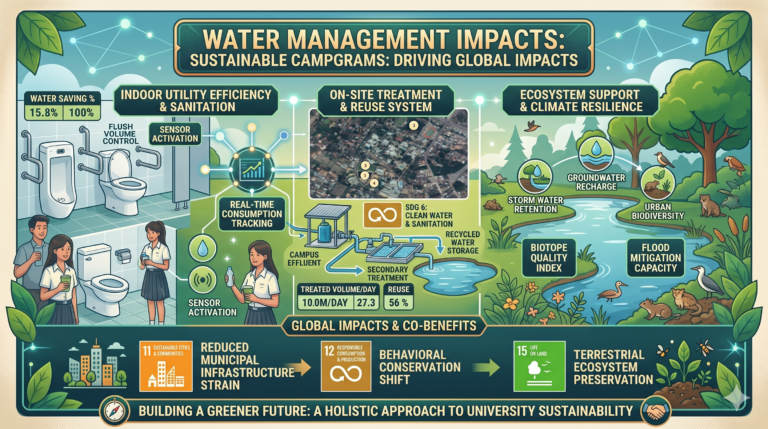
Integrated Impact of Water Management Programs on the SDGs The university’s water management initiatives are driven by a holistic framework. While centered around clean water infrastructure, the program generates cross-cutting impacts that simultaneously support four distinct Sustainable Development Goals (SDGs): [ SDG 6: Clean Water ] │ ┌────────────────────────┼────────────────────────┐ ▼ ▼ ▼ […]
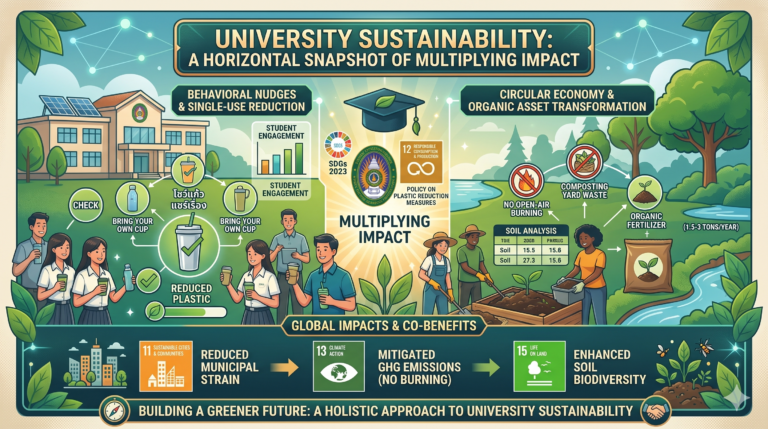
Integrated Impact of Waste Management Programs on the Sustainable Development Goals (SDGs) While the university’s baseline framework originates from SDG 12: Responsible Consumption and Production, the operational practices executed by the Buildings and Vehicles Ground Division demonstrate a powerful, systemic impact that cuts across multiple global goals. ♻️ SDG 12: Responsible Consumption and Production (Core […]