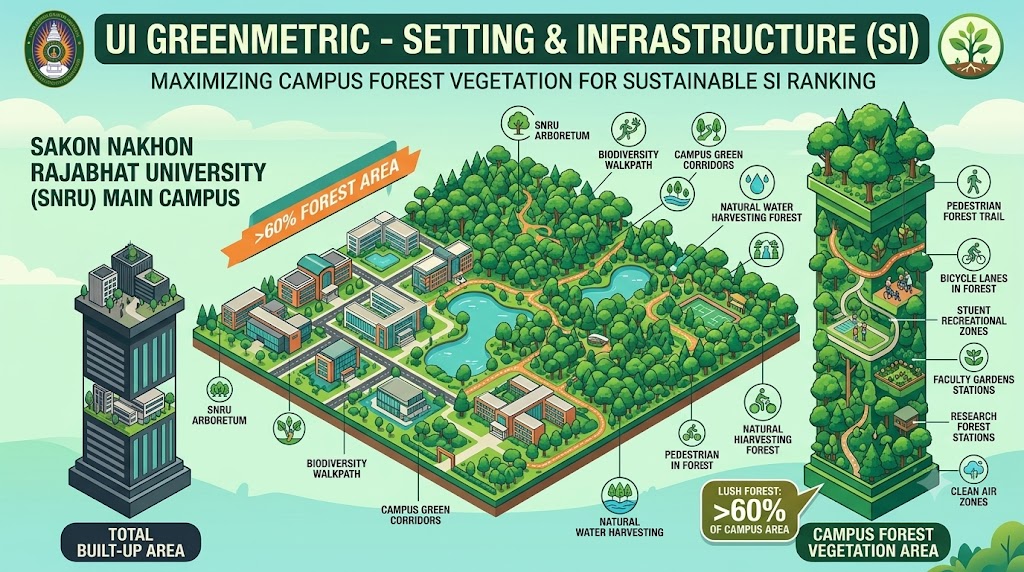
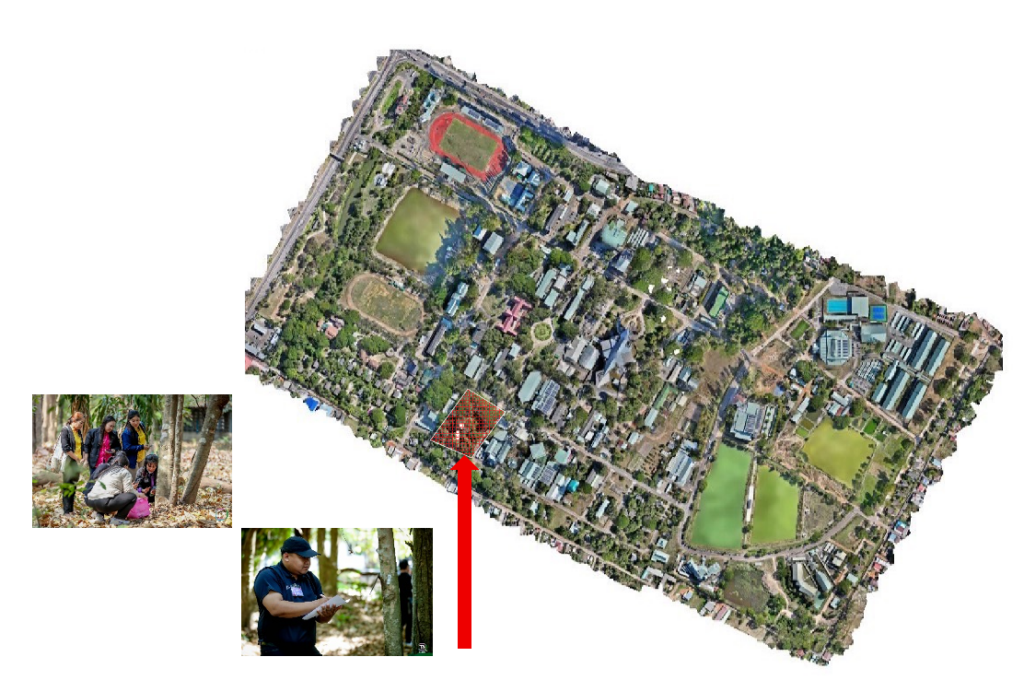
Out of the total university area of 1,018,416 m2 (1.05 km2), the forest vegetation cover accounts for 11,525 m2, which represents 1.13% of the total campus area.”
Description:
Sakon Nakhon Rajabhat University (SNRU) is committed to maintaining a sustainable and eco-friendly campus environment. Out of the total campus area of 1,018,416.00 m2, the university dedicatedly preserves 11,525.00 m2 as a forest vegetation cover, which accounts for 1.13% of the entire university grounds. This forested area consists of native tree species, dense canopy covers, and natural conservation zones that act as the university’s main carbon sink and biodiversity hub. In addition to the natural forest cover, the remaining open space of 873,909.00 m2 (which constitutes 85.81% of the total area) is strategically integrated with systematically planted vegetation, including landscaped gardens, roadside tree alignments, decorative lawns, and green pocket parks distributed across various academic clusters—such as the areas surrounding the Faculty of Education, the Faculty of Science and Technology, and the Ratchaphruek Stadium. These green spaces are managed under the university’s campus greening initiative to reduce heat island effects and enhance the
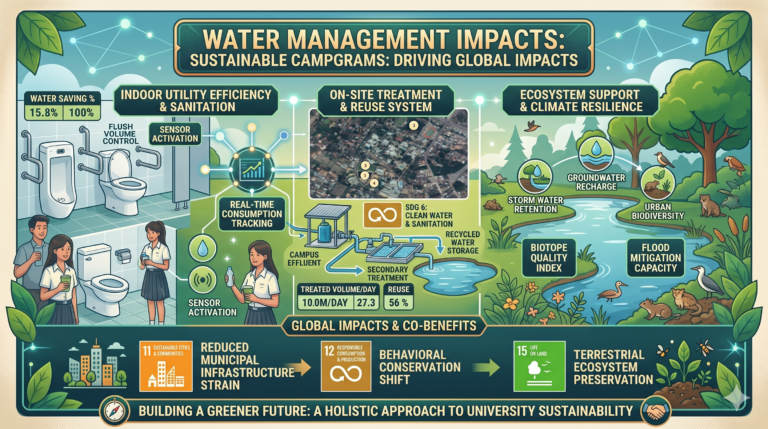
Integrated Impact of Water Management Programs on the SDGs The university’s water management initiatives are driven by a holistic framework. While centered around clean water infrastructure, the program generates cross-cutting impacts that simultaneously support four distinct Sustainable Development Goals (SDGs): [ SDG 6: Clean Water ] │ ┌────────────────────────┼────────────────────────┐ ▼ ▼ ▼ […]
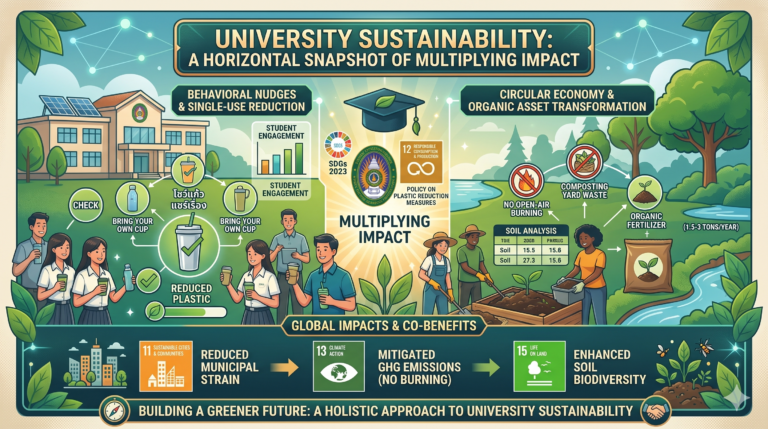
Integrated Impact of Waste Management Programs on the Sustainable Development Goals (SDGs) While the university’s baseline framework originates from SDG 12: Responsible Consumption and Production, the operational practices executed by the Buildings and Vehicles Ground Division demonstrate a powerful, systemic impact that cuts across multiple global goals. ♻️ SDG 12: Responsible Consumption and Production (Core […]
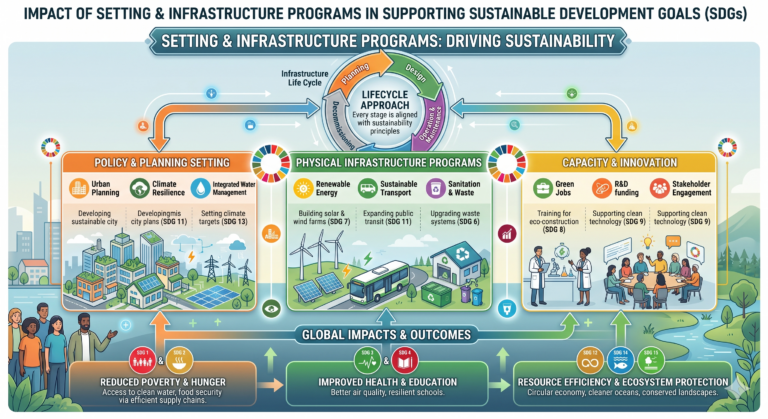
The Impact of Setting & Infrastructure Programs on Supporting the Sustainable Development Goals (SDGs) Sakon Nakhon Rajabhat University (SNRU) Sakon Nakhon Rajabhat University (SNRU) strategically leverages its physical master plan, spatial resources, and safety infrastructure to drive progress toward the United Nations Sustainable Development Goals (SDGs). By transitioning the campus into a functional “Living Laboratory,” […]