Campus Planted Vegetation Description Total Campus Area: 1,018,416.00 m2 (1.05 km2) Total Area Covered in Planted Vegetation: 162,893.00 m2 (15.99% of the total area)
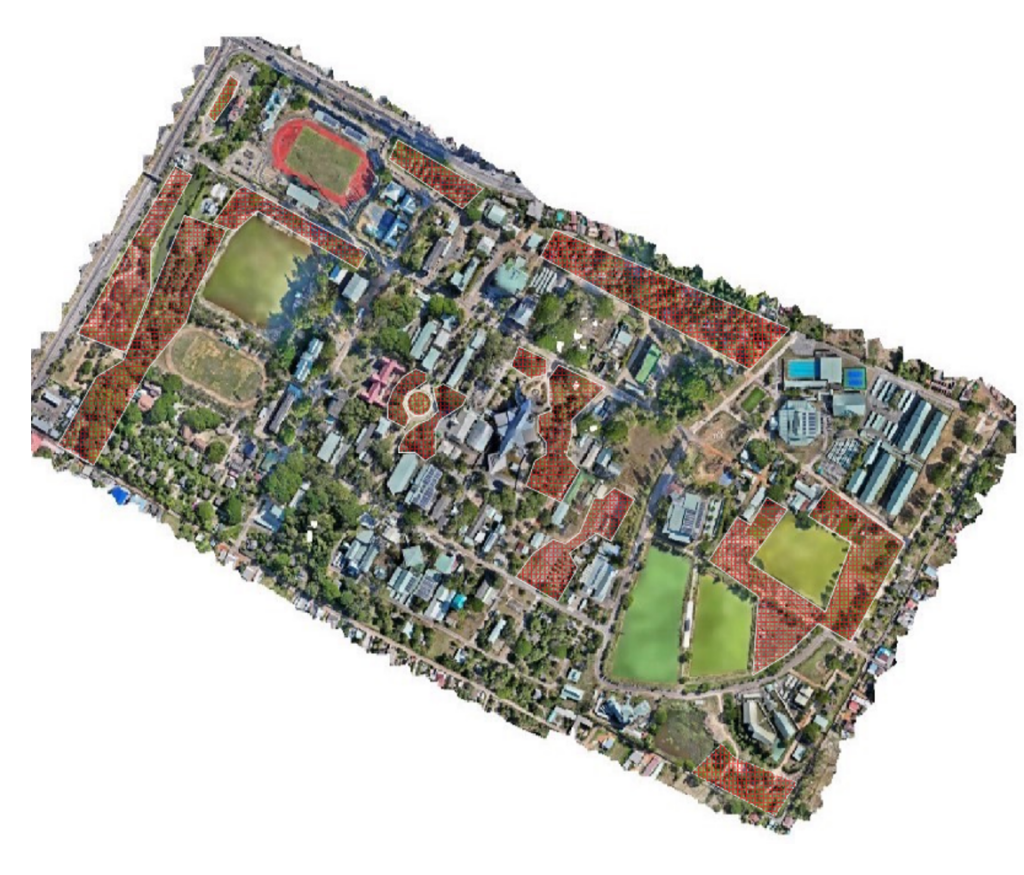
Sakon Nakhon Rajabhat University (SNRU) proactively integrates managed greenery into its urban campus environment. Out of the total campus area of 1,018,416.00 m2, a significant portion measuring 162,893.00 m2 is dedicated to deliberately planted vegetation, which constitutes 15.99% of the entire university grounds. As illustrated in the provided aerial master plan map, all claimed areas under this indicator have been precisely mapped and highlighted with patterned grid overlays to verify their exact spatial distribution across the campus. These designated areas encompass managed lawns, cultivated gardens, landscaped infrastructure, and decorative tree lines that surround key university complexes. Significant pockets of these planted vegetation spaces can be clearly identified on the map, including:
Academic Courtyard Greenery: Distributed green patches nestled among individual faculty buildings and administrative centers, helping to decrease ambient temperatures and enhance the ecological aesthetic for the campus community.
Perimeter Green Buffers: Dense lines of planted trees and vegetation running along the campus borders (such as the long stretches visible on the upper and left boundaries of figure).
Institutional and Recreational Greenery: Landscaped zones integrated around active facilities, notably surrounding the main athletic areas (near the sports stadium and running track in the upper-left quadrant) and encompassing the expansive lawns and garden structures located towards the bottom-right section of the campus.
Sakon Nakhon Rajabhat University (SNRU) demonstrates a structured, significant impact on the United Nations Sustainable Development Goals (SDGs) through its diverse portfolio of education, research, and community outreach programs. As documented in the university’s institutional reporting and performance showcases, the curriculum and academic initiatives directly support at least 6 to 7 distinct SDGs: This comprehensive […]
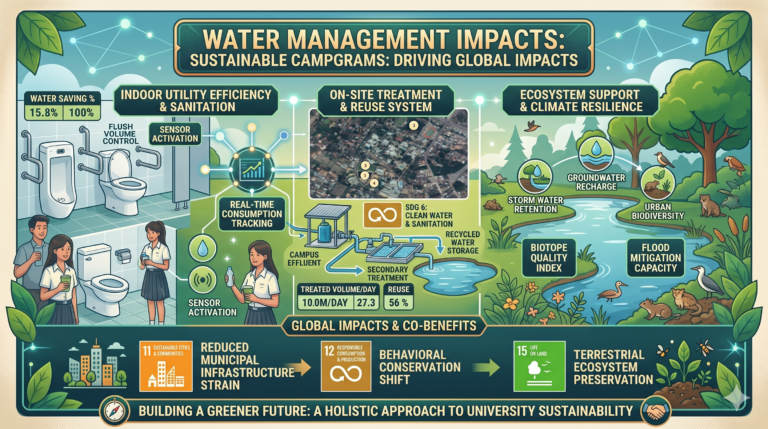
Integrated Impact of Water Management Programs on the SDGs The university’s water management initiatives are driven by a holistic framework. While centered around clean water infrastructure, the program generates cross-cutting impacts that simultaneously support four distinct Sustainable Development Goals (SDGs): [ SDG 6: Clean Water ] │ ┌────────────────────────┼────────────────────────┐ ▼ ▼ ▼ […]
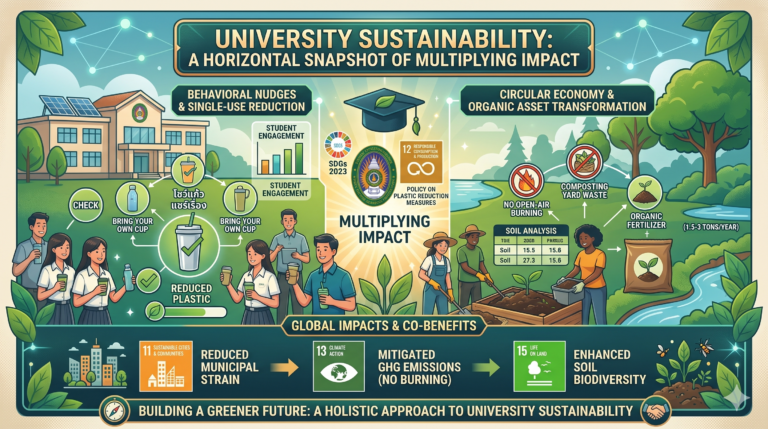
Integrated Impact of Waste Management Programs on the Sustainable Development Goals (SDGs) While the university’s baseline framework originates from SDG 12: Responsible Consumption and Production, the operational practices executed by the Buildings and Vehicles Ground Division demonstrate a powerful, systemic impact that cuts across multiple global goals. ♻️ SDG 12: Responsible Consumption and Production (Core […]