This image provides an overview of the Water Recycling Program Implementation (WR.2) at Sakon Nakhon Rajabhat University in Thailand.
The document is divided into two main sections:
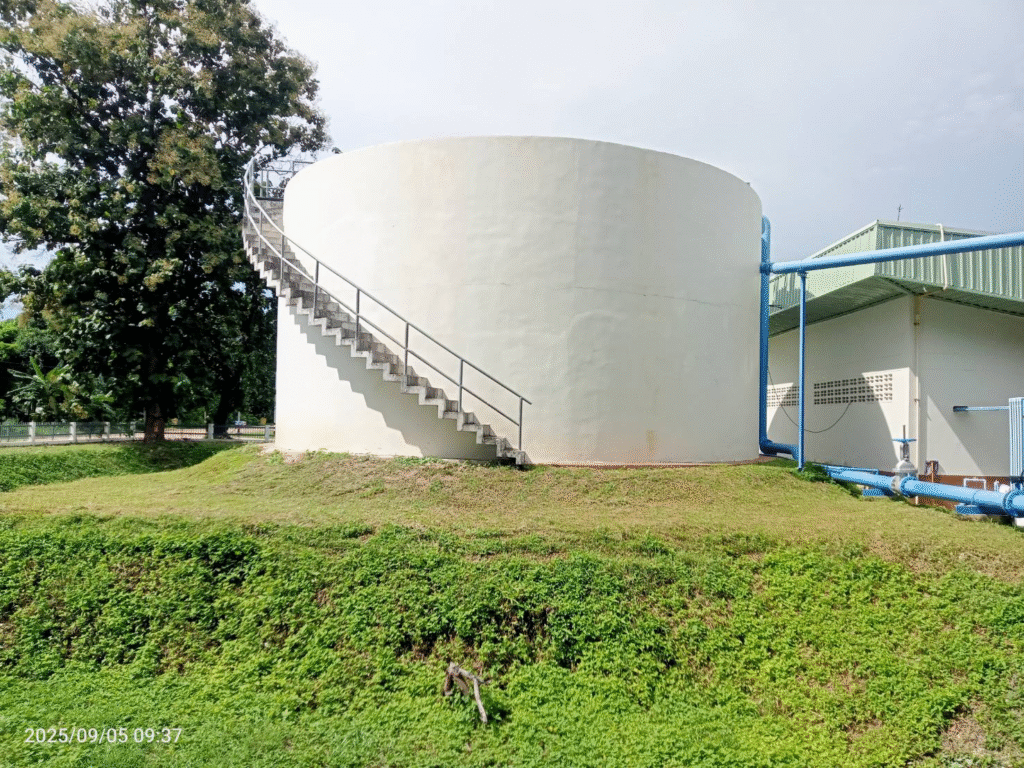
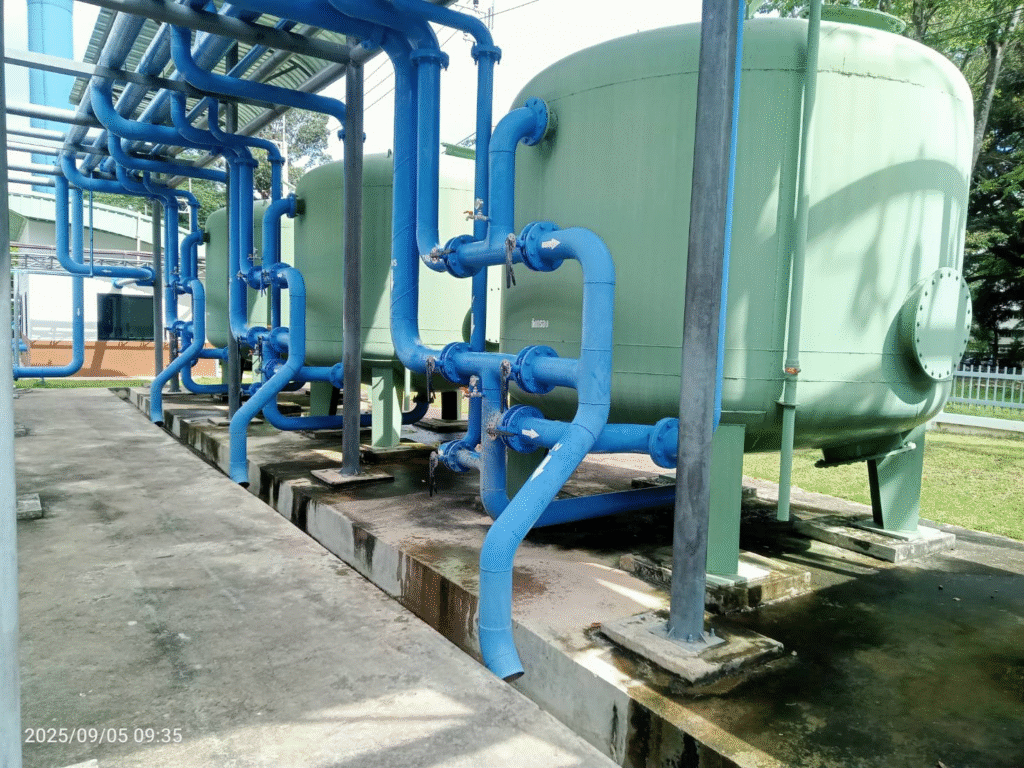
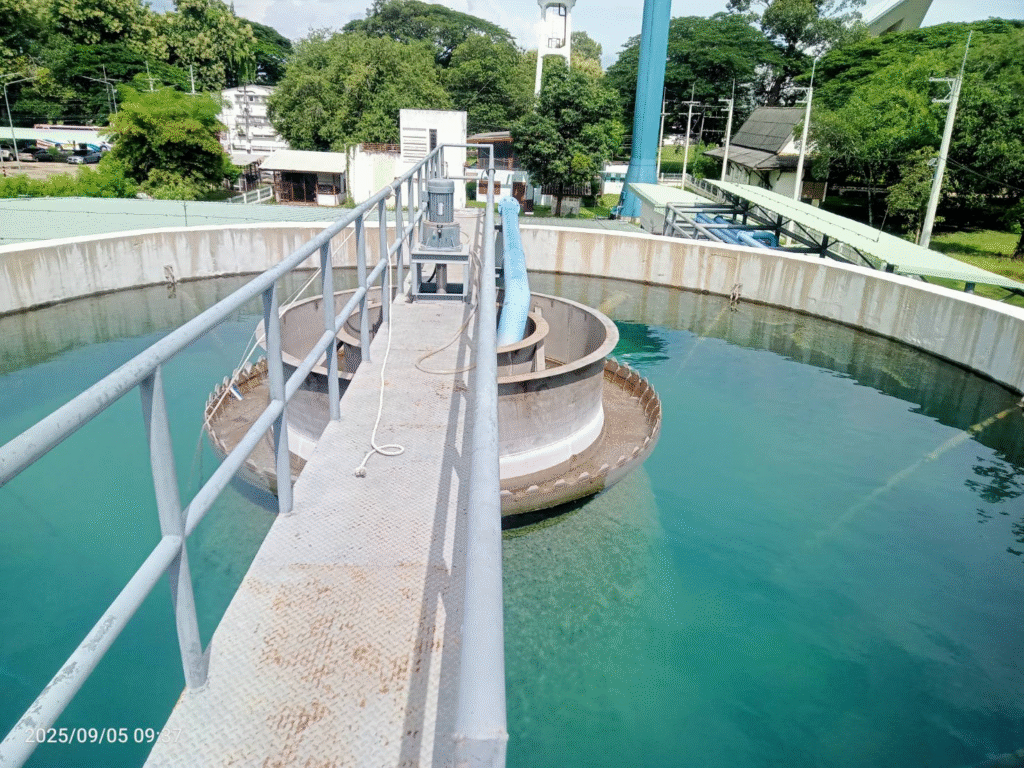
There are three photographs showing the physical equipment of the university’s water recycling facility. These include:
A large white water storage tank.
Water treatment basins or clarifiers.
A system of filtration tanks, pipes, and valves used in the water treatment process.
These images illustrate the infrastructure in place for water recycling.
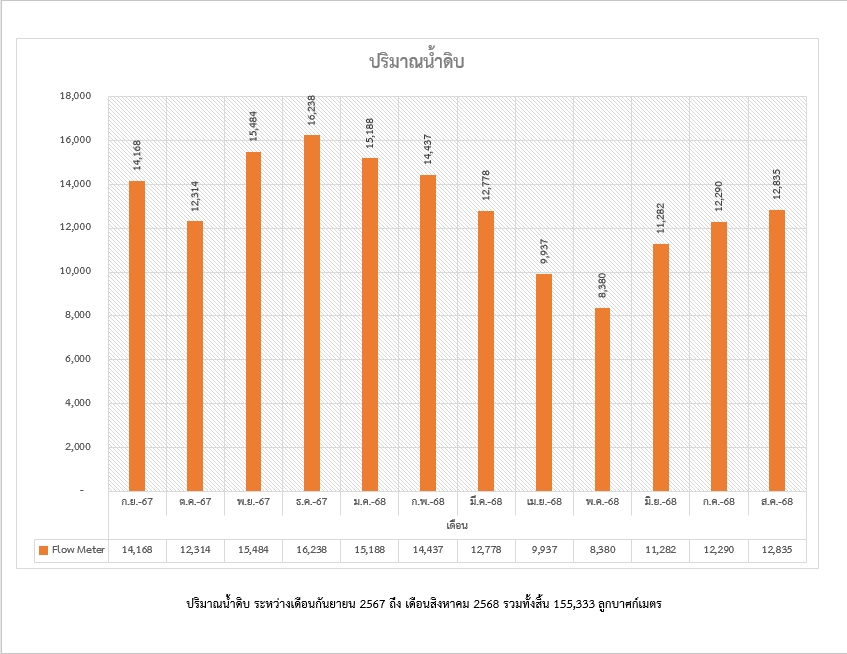
There is a bar chart titled “ปริมาณน้ำดิบ” (Raw Water Volume). This chart displays the monthly volume of raw water consumed from October 2024 (ต.ค.67) to September 2025 (ก.ย.68).
The vertical axis represents the volume, while the horizontal axis represents the months.
Each orange bar shows the consumption for a specific month, with the exact value listed below it. For example, in October 2024, the volume was 14,148 cubic meters.
The chart shows fluctuations in water usage throughout the year, with the highest consumption in December 2024 (16,039) and the lowest in April 2025 (8,360).
A note below the chart states that the total raw water volume for this 12-month period was 151,203 cubic meters.
In summary, the image showcases the university’s water recycling program by presenting both the physical facilities used for treatment and a data-driven chart that tracks the amount of raw water consumed over a full year.
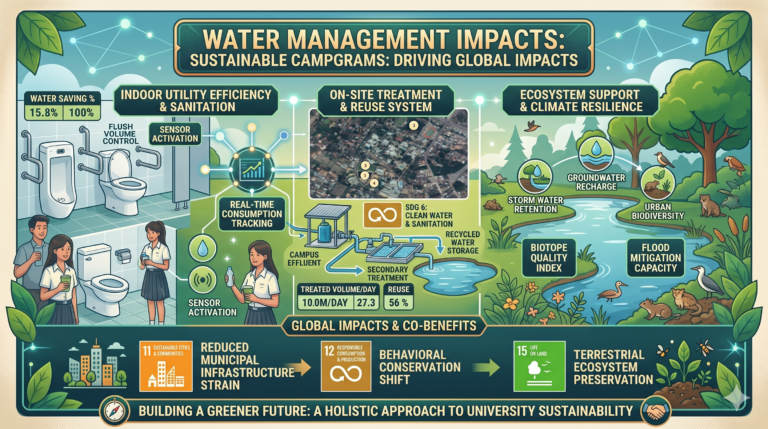
Integrated Impact of Water Management Programs on the SDGs The university’s water management initiatives are driven by a holistic framework. While centered around clean water infrastructure, the program generates cross-cutting impacts that simultaneously support four distinct Sustainable Development Goals (SDGs): [ SDG 6: Clean Water ] │ ┌────────────────────────┼────────────────────────┐ ▼ ▼ ▼ […]
The report form is a monthly report on the operation of the wastewater treatment system and effluent quality. Picture 1. The university’s wastewater treatment facilities employ three types of aeration equipment, namely, roots blowers, diaphragm air pumps, and submersible aerator pumps. A total of 62 units are currently in operation, consisting of both single-phase and […]
The use of water-efficient appliances such as hand-washing taps, urinals, and sprinkler systems provides significant environmental and operational benefits in the context of UI GreenMetric sustainability assessment. These technologies are designed to minimize water consumption while maintaining functional performance in daily campus activities. Accordingly, water-efficient hand taps, often equipped with sensor or low-flow mechanisms, reduce […]