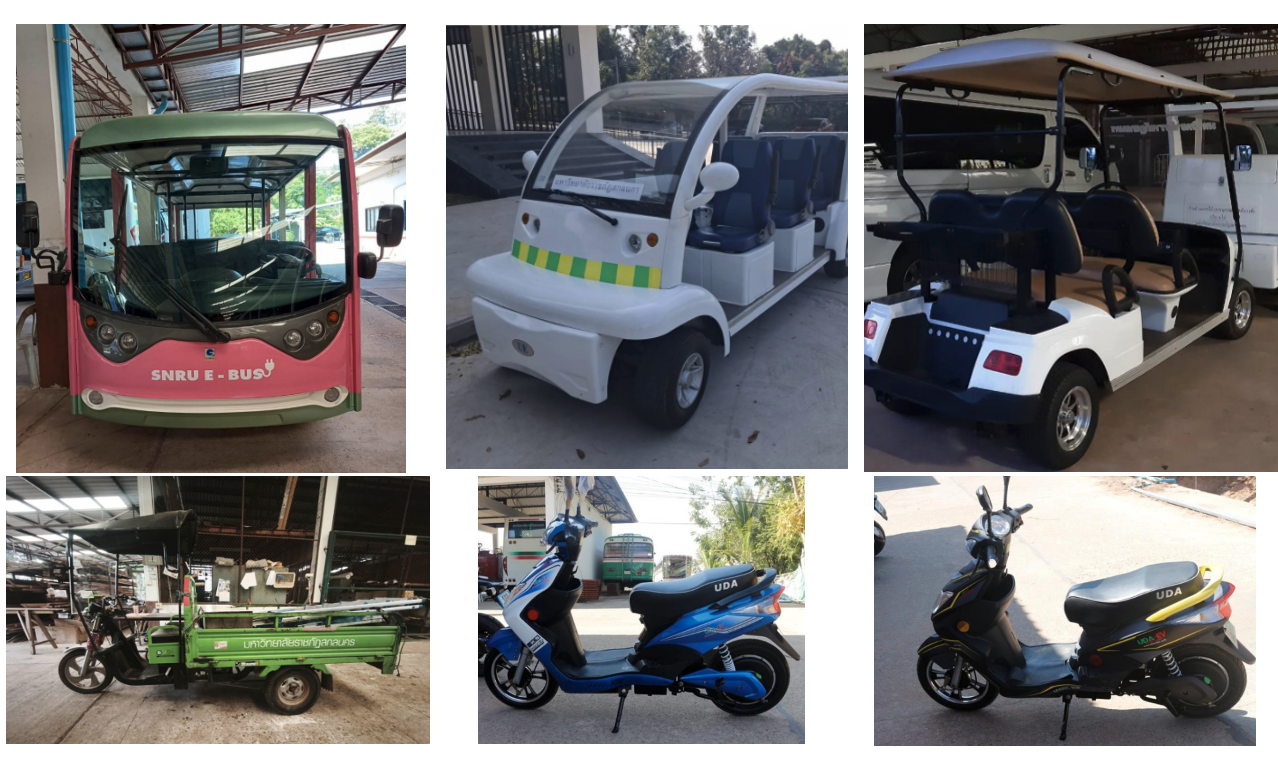
Sakon Nakhon Rajabhat University actively provides and maintains various types of Zero Emission Vehicles (ZEVs) as part of its central fleet to support eco-friendly transportation on campus.
According to the university’s asset records, the following zero-emission electric vehicles are provided for campus operations and community transit:
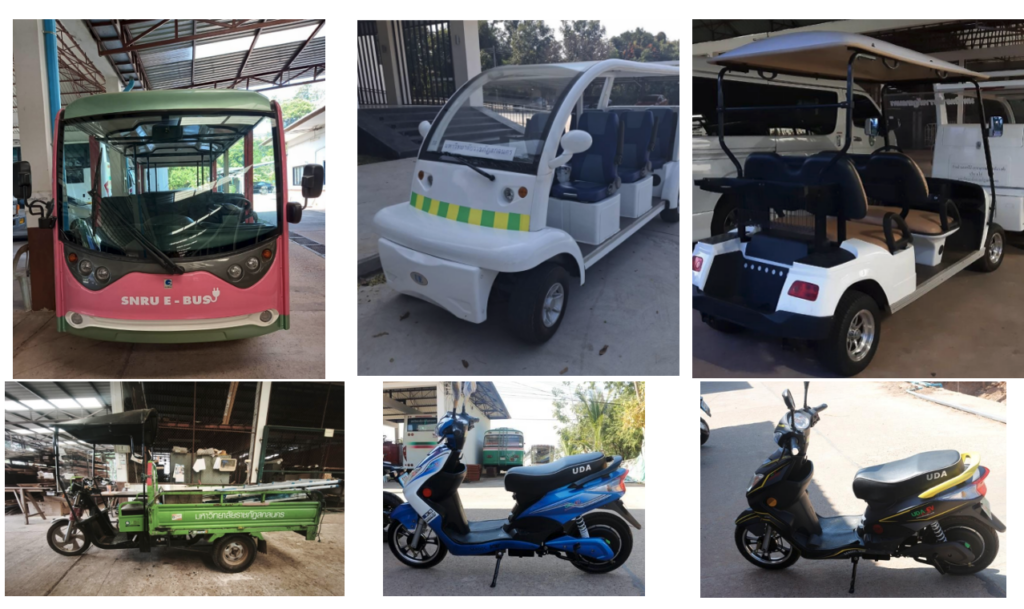
Electric Trams (SNRU E-BUS): A 22-seat electric tram fleet utilized for transporting students and personnel along designated routes across campus.
Electric Golf Carts: Includes multiple electric golf units (such as 5-seat and 3-seat configurations) explicitly marked for short-distance internal campus transit.
Electric Tricycles & Electric Bicycles: The university manages smaller electric mobility options, including an electric tricycle for utility purposes and “UDA”- brand electric bicycles for energy-saving, eco-friendly travel.
Because these vehicles are part of the university’s central service infrastructure managed by institutional funds, they are provided to the campus community free of charge to promote environmental sustainability.
ZEV are available and provided by Sakon Nakhon Rajabhat university for free
Sakon Nakhon Rajabhat University (SNRU) is a university for local development under the Rajabhat University Act B.E. 2547 (2004). Through its Local Development Strategy, it helps make Sakon Nakhon and the surrounding area liveable, safe, resilient, and sustainable. In FY2025, SNRU ran 38 main projects under this strategy, broken down into 208 sub-projects in 64 […]
Sakon Nakhon Rajabhat University (SNRU) demonstrates a structured, significant impact on the United Nations Sustainable Development Goals (SDGs) through its diverse portfolio of education, research, and community outreach programs. As documented in the university’s institutional reporting and performance showcases, the curriculum and academic initiatives directly support at least 6 to 7 distinct SDGs: This comprehensive […]
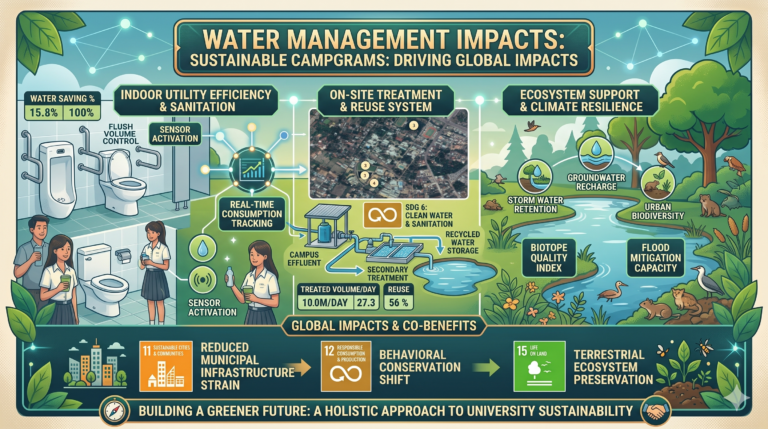
Integrated Impact of Water Management Programs on the SDGs The university’s water management initiatives are driven by a holistic framework. While centered around clean water infrastructure, the program generates cross-cutting impacts that simultaneously support four distinct Sustainable Development Goals (SDGs): [ SDG 6: Clean Water ] │ ┌────────────────────────┼────────────────────────┐ ▼ ▼ ▼ […]