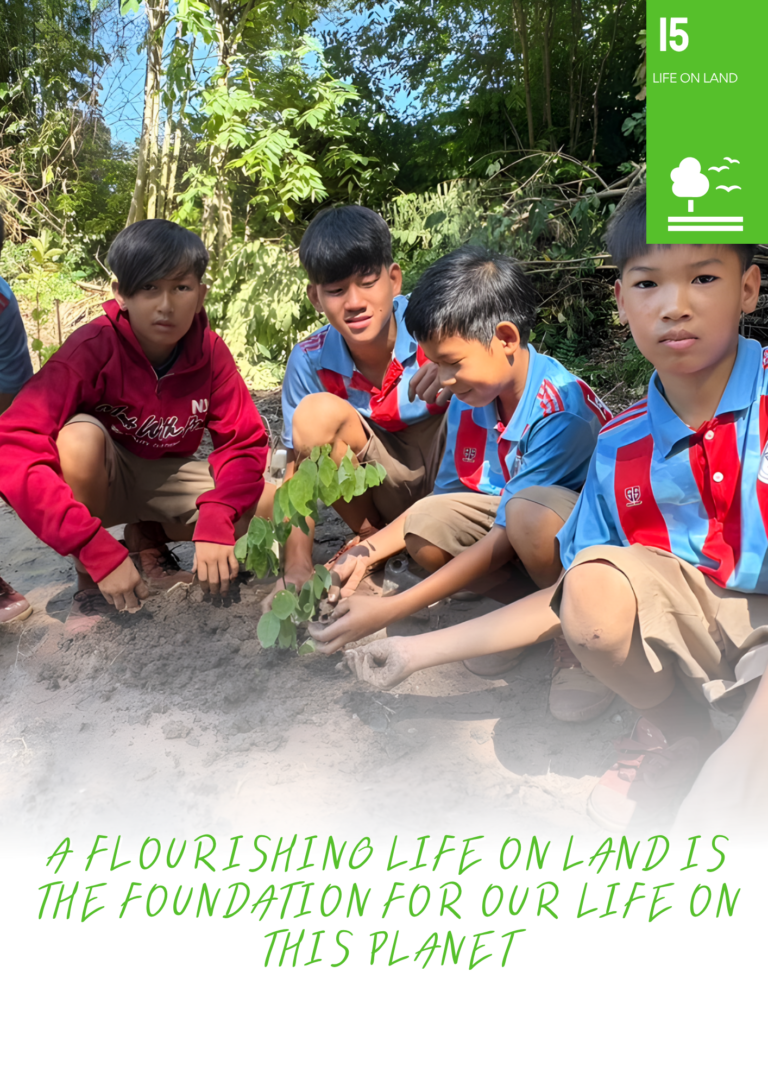
Sakon Nakhon Rajabhat University has recently undertaken a project focused on preserving and expanding biodiversity within existing ecosystems, particularly protecting endangered habitats. The project involves field research and hands-on activities where students and researchers work directly in natural settings to study and document the local flora and fauna.
Participants engage in activities such as identifying and recording various plant and animal species, analyzing soil samples, and monitoring water quality to understand and support these areas’ ecological health. This initiative aims to conserve the current biodiversity and raise awareness of the importance of sustaining ecosystems under threat. Through such projects, the university demonstrates its commitment to ecological stewardship and hands-on education in environmental sciences.
Sakon Nakhon Rajabhat University (SNRU) lies between the Phu Phan mountain range and the Nong Han wetland, an area rich in dry dipterocarp forest, dry evergreen forest, and native plants. The university treats the conservation of land ecosystems as a mission that ties together research, teaching, and community service. Two university policies guide this work: […]
Sakon Nakhon Rajabhat University (SNRU) demonstrates a structured, significant impact on the United Nations Sustainable Development Goals (SDGs) through its diverse portfolio of education, research, and community outreach programs. As documented in the university’s institutional reporting and performance showcases, the curriculum and academic initiatives directly support at least 6 to 7 distinct SDGs: This comprehensive […]
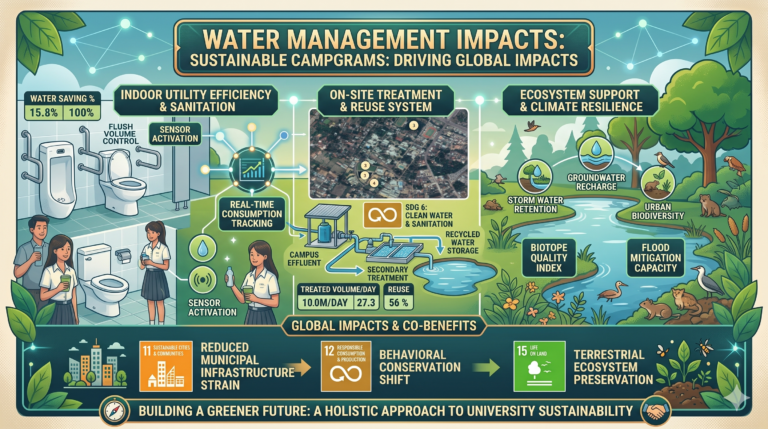
Integrated Impact of Water Management Programs on the SDGs The university’s water management initiatives are driven by a holistic framework. While centered around clean water infrastructure, the program generates cross-cutting impacts that simultaneously support four distinct Sustainable Development Goals (SDGs): [ SDG 6: Clean Water ] │ ┌────────────────────────┼────────────────────────┐ ▼ ▼ ▼ […]