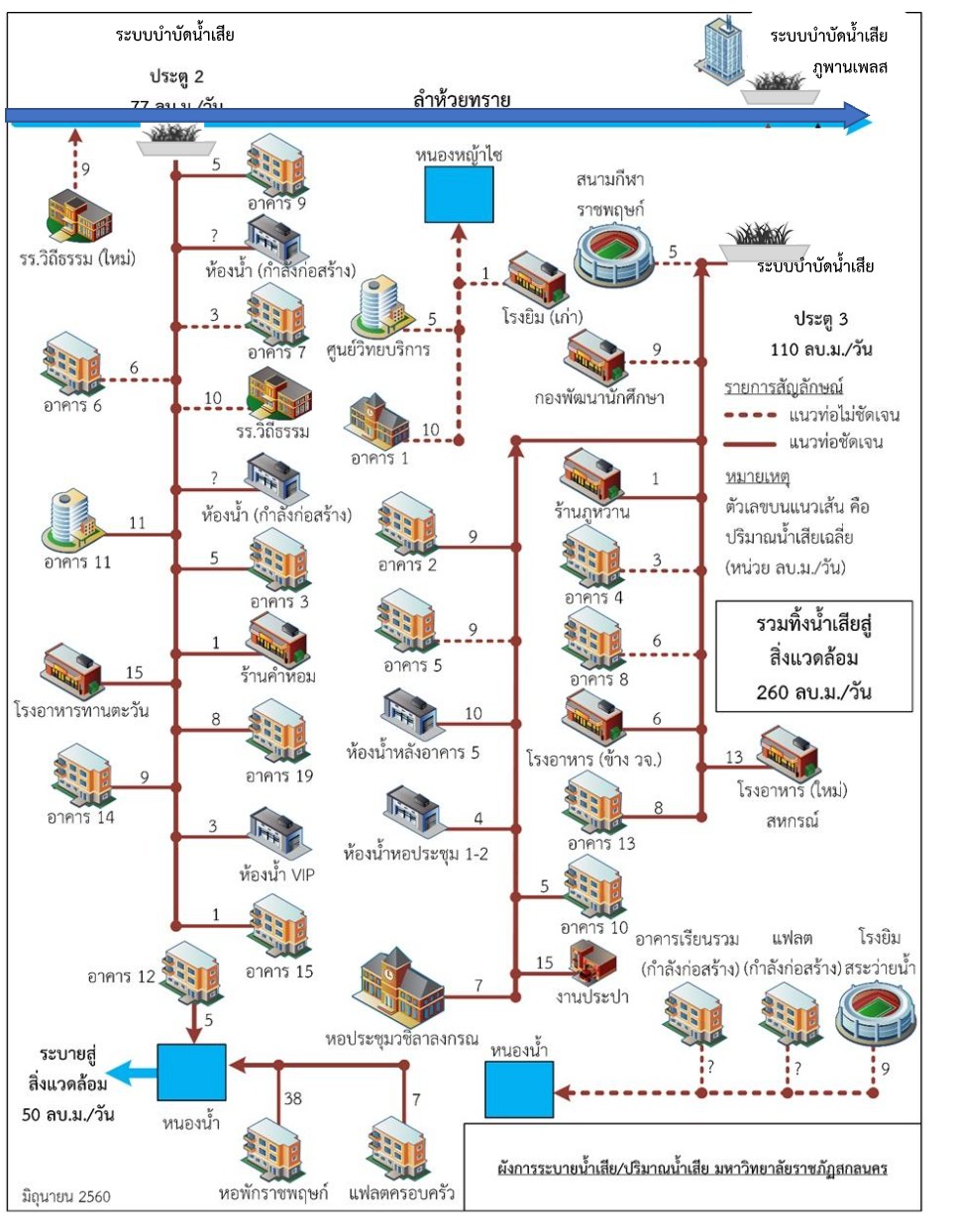
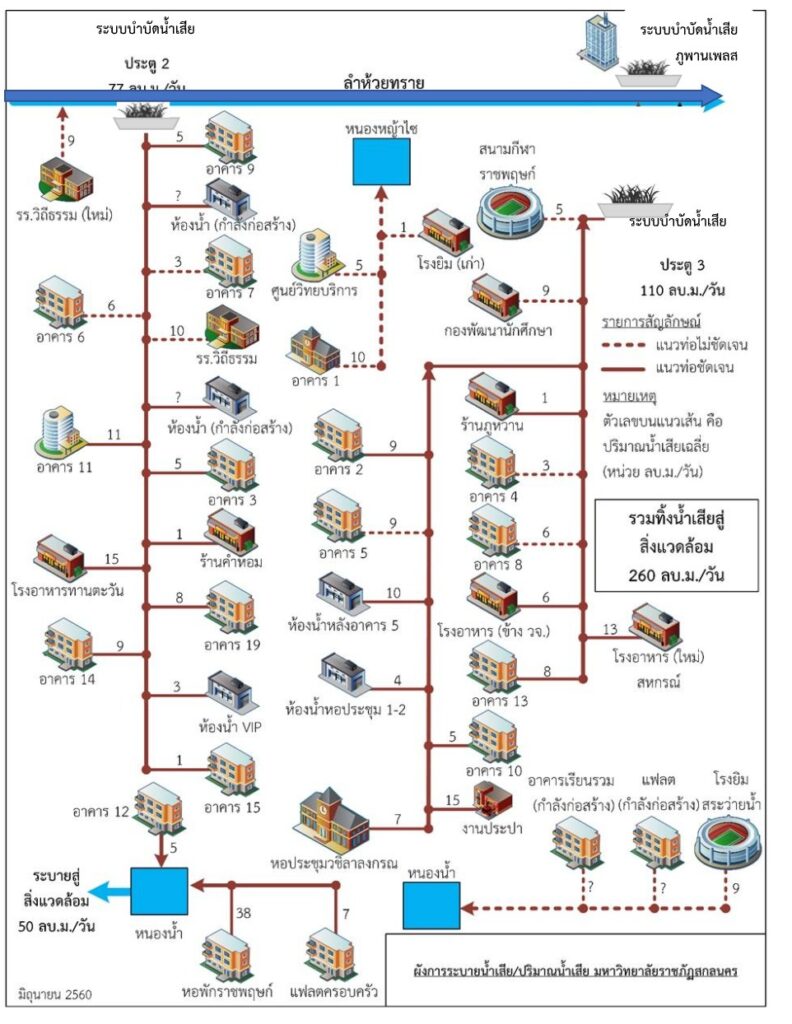
The wastewater treatment system at Sakon Nakhon Rajabhat University is a structured network designed to collect and treat wastewater across multiple campus facilities, ensuring adequate water management and environmental conservation.
According to the layout, wastewater generated from various buildings—including classrooms, dormitories, dining halls, and administrative offices—is directed into a centralized pipeline network that transports wastewater to different treatment stations. The map categorizes treatment into various phases, with specific discharge points marked as “Prasup 2” and “Prasup 3,” indicating areas where wastewater is pre-treated before moving on to larger processing systems.
The system can treat up to 260 cubic meters of wastewater per day. Treated wastewater from these primary treatment points flows into holding ponds for further sedimentation and filtration. The process concludes with water discharged to environmentally controlled zones or reused for non-potable purposes such as irrigation of campus greenery. The design illustrates a commitment to sustainable water management by ensuring that all wastewater undergoes treatment to reduce environmental impact. By incorporating holding ponds and recycling water wherever possible, Sakon Nakhon Rajabhat University strives to conserve water resources and promote eco-friendly practices in alignment with environmental standards.
Sakon Nakhon Rajabhat University (SNRU) demonstrates a structured, significant impact on the United Nations Sustainable Development Goals (SDGs) through its diverse portfolio of education, research, and community outreach programs. As documented in the university’s institutional reporting and performance showcases, the curriculum and academic initiatives directly support at least 6 to 7 distinct SDGs: This comprehensive […]
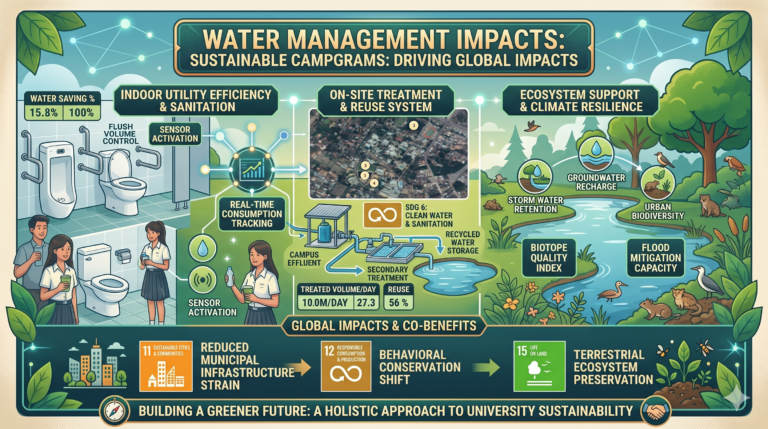
Integrated Impact of Water Management Programs on the SDGs The university’s water management initiatives are driven by a holistic framework. While centered around clean water infrastructure, the program generates cross-cutting impacts that simultaneously support four distinct Sustainable Development Goals (SDGs): [ SDG 6: Clean Water ] │ ┌────────────────────────┼────────────────────────┐ ▼ ▼ ▼ […]
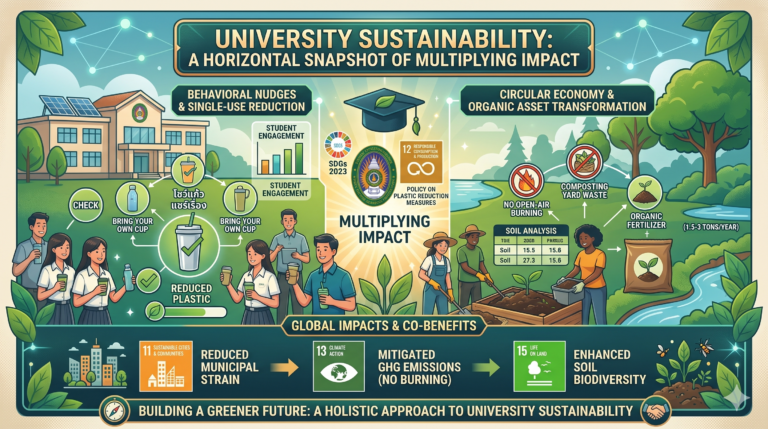
Integrated Impact of Waste Management Programs on the Sustainable Development Goals (SDGs) While the university’s baseline framework originates from SDG 12: Responsible Consumption and Production, the operational practices executed by the Buildings and Vehicles Ground Division demonstrate a powerful, systemic impact that cuts across multiple global goals. ♻️ SDG 12: Responsible Consumption and Production (Core […]